
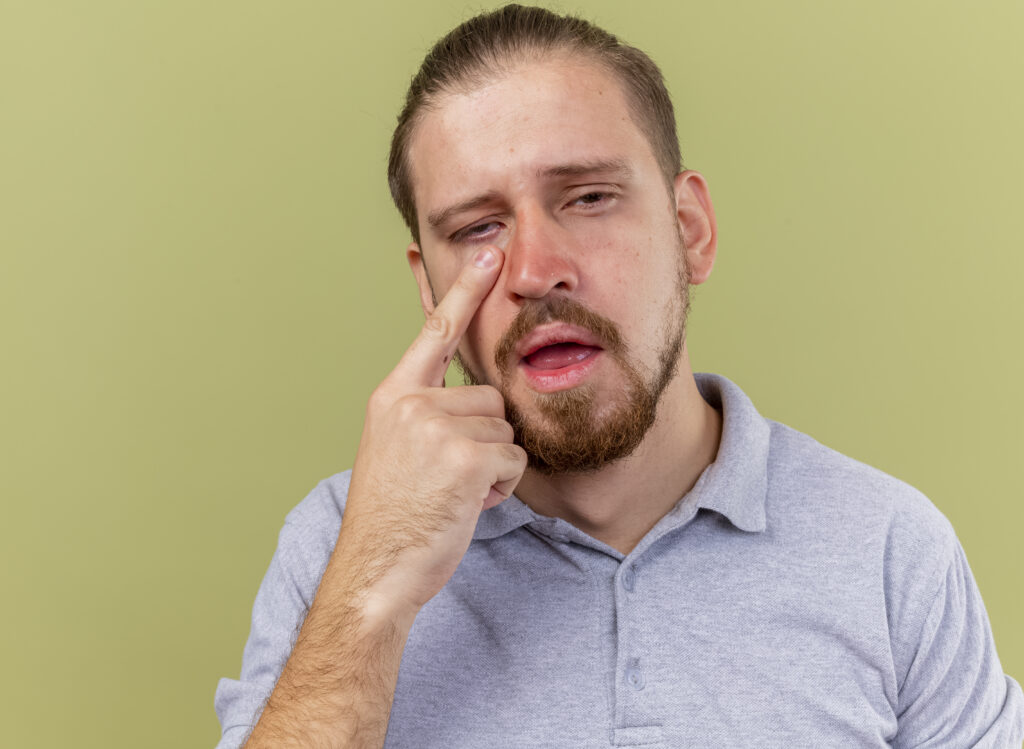
Eyeball licking, also known as worming or oculolinctus, is exactly what the name describes. One person licks another person’s eyeball. What began as a rumored social media trend has real and documented health consequences that eye doctors and public health professionals take seriously. This guide explains what worming eyes involves, where the trend came from, and the specific infections and injuries it causes, including some that can result in permanent vision loss.
What Is Worming or Eyeball Licking?
Worming is the slang term for oculolinctus, the practice of licking another person’s eyeball. The word comes from the Japanese term for the act. It typically involves one person licking or sucking on the eyeball of another.
The practice has appeared in social media content, particularly among teenagers, as a form of dare culture and intimacy signaling. Its spread mirrors other dangerous social media challenges that gain traction through shock value and peer pressure rather than any genuine benefit.
From a medical standpoint, the human eye is one of the most vulnerable surfaces on the body. The conjunctiva, the thin mucous membrane covering the white of the eye and lining the eyelids, has direct blood vessel access and almost no barrier protection against pathogens introduced from outside.
Where Did the Trend Come From?
Reports of worming as a trend first circulated widely in 2013, linked to stories from Japan about outbreaks of eye infections among young people. Initial coverage suggested a significant public health incident. Follow-up reporting found that some of the specific outbreak claims were exaggerated or unverified.
However, the practice itself is real and documented in clinical literature. Individual cases of eye infections from oculolinctus have been reported by optometrists and ophthalmologists in multiple countries. The trend gained traction again through social media platforms where challenge culture drives engagement.
The medical community is clear: whether or not the 2013 outbreak was exaggerated, the health risks of eyeball licking are genuine, well-understood, and serious.
Why the Eye Is Extremely Vulnerable to Oral Bacteria
The human mouth contains hundreds of bacterial species, many of which the eye has no natural defense against. The mouth’s normal microbial environment, adapted to the oral cavity, becomes a source of infection when introduced to eye tissue.
The eye’s defense mechanisms include tears, which contain lysozyme and other antimicrobial proteins, and the blink reflex, which removes surface debris. These defenses work well against environmental exposure but are overwhelmed by the direct introduction of concentrated oral bacteria.
The cornea, covering the front of the eye, has no blood vessels of its own. It relies on the surrounding tissue and tear film for nutrients and immune support. This makes it particularly slow to fight infections once they establish.
The conjunctiva, by contrast, is richly vascular. Infections here can spread quickly to surrounding eye structures and, in severe cases, enter the bloodstream.
Health Risks: The Infections Eyeball Licking Causes
Each of these conditions can result from a single instance of eyeball licking. Some have permanent consequences.
Conjunctivitis (Pink Eye)
Both viral and bacterial conjunctivitis can spread through eyeball licking. The bacteria in saliva trigger an inflammatory response in the conjunctiva within hours. Symptoms include redness, swelling, discharge, itching, and a gritty sensation.
Bacterial pink eye from oral bacteria can be more resistant to treatment than standard conjunctivitis because the bacteria are less commonly encountered by the eye’s immune system. Standard antibiotic drops typically clear it, but the infection must be identified correctly first.
Herpes Simplex Virus (Ocular Herpes)
This is the most serious infectious risk from eyeball licking. Herpes simplex virus type 1, which causes cold sores around the mouth, is present in approximately 67 percent of the global adult population. Many carriers are asymptomatic and do not know they carry the virus.
When HSV-1 is transferred to the eye, it causes ocular herpes, also called herpetic keratitis. The virus infects the cornea directly, causing painful ulceration and inflammation. The cornea has nerve fibers running through it, making corneal herpes extraordinarily painful.
Ocular herpes does not fully resolve. The virus stays dormant in the nerve ganglia and can reactivate repeatedly throughout life, each time causing additional corneal scarring. Severe or repeated infections can cause permanent vision impairment or blindness requiring corneal transplantation.
Corneal Ulcers
A corneal ulcer is an open sore on the surface of the cornea. It can develop from bacterial, viral, fungal, or parasitic infection. The tongue itself causes microscopic abrasions on the corneal surface, and bacteria from the mouth colonize these wounds almost immediately.
Symptoms include severe eye pain, redness, watery discharge, blurry vision, and a visible white spot on the cornea. Corneal ulcers require urgent treatment with intensive antibiotic, antiviral, or antifungal eye drops. Untreated ulcers can perforate the cornea, resulting in permanent scarring and vision loss.
Chlamydia Trachomatis
Chlamydia, typically known as a sexually transmitted infection, can affect the eyes. Ocular chlamydia causes a persistent form of conjunctivitis that does not respond to standard pink eye treatment. It requires specific antibiotic treatment once correctly identified. This is another organism that can transfer from the mouth to the eye through oculolinctus.
Other Bacterial Infections
The mouth harbors species including Staphylococcus aureus, Streptococcus, Haemophilus influenzae, and various anaerobic bacteria. Any of these can cause serious eye infections when introduced to the conjunctiva or corneal surface. Some, like MRSA (methicillin-resistant Staphylococcus aureus), are particularly difficult to treat.
Physical Injury From the Tongue Itself
Infection is not the only risk. The tongue’s surface is covered with papillae, small raised projections that give it its rough texture. These papillae scratch the corneal surface during contact.
Even a single contact can cause a corneal abrasion, an extremely painful scraping of the corneal surface layer. Symptoms of a corneal abrasion include sharp eye pain, a strong sensation that something is in the eye, excessive tearing, and significant light sensitivity.
Corneal abrasions heal in 1 to 3 days in most cases, but they are open wounds during that time. Any bacteria present at the time of injury enter the wound directly, dramatically increasing infection risk.
The eyeball also tolerates pressure poorly. Aggressive licking or suction places mechanical stress on the eye structures that the eye is not designed to handle.
Can Eyeball Licking Cause Blindness?
Yes. Not in every case, and not immediately from a single incident in most circumstances. But the pathway from eyeball licking to blindness is a real and documented one.
The most direct route is through ocular herpes. An initial herpes infection in the eye can be treated and managed, but the virus remains permanently in the body. Each recurrence damages the cornea further. Repeated scarring eventually creates permanent opacity in the cornea, blocking vision. At that point, a corneal transplant is the only option, and transplants carry their own failure and rejection risks.
Bacterial corneal ulcers, if untreated or treated too late, can perforate the cornea. A perforated cornea is a sight-threatening emergency that can result in permanent blindness in that eye.
The risk of a single act of eyeball licking causing immediate blindness is low. The risk of it starting a chain of events that eventually compromises vision is real.
What to Do If You or Your Child Has Already Tried It
Do not panic, but do act promptly.
- Rinse the eye gently with clean water or saline solution.
- Do not rub the eye.
- Call your eye doctor the same day and explain what happened.
- Watch for symptoms over the following 48 to 72 hours: redness, discharge, pain, light sensitivity, or vision changes.
- If symptoms develop, see an eye doctor immediately. Do not wait to see if it clears on its own.
Early identification of a herpes infection or bacterial corneal ulcer dramatically improves the outcome. Most infections caught within the first 24 to 48 hours respond well to targeted treatment.
How to Talk to Teens About This Trend
Telling teenagers not to do something because it is gross or weird is rarely effective. The conversation needs to be grounded in specific, credible information about real consequences.
Useful talking points:
- Two thirds of adults carry herpes simplex virus without knowing it. The person licking your eye cannot tell you they are virus-free even if they want to.
- Ocular herpes cannot be cured. Once it is in your eye it can come back for the rest of your life.
- A corneal ulcer from this can require surgery. In severe cases it requires a transplant.
- The trend is not actually as widespread as social media makes it appear. Most teens who seem to endorse it online have not actually done it.
Open, specific, non-alarmist conversations work better than lectures. If a teenager feels they can ask questions without judgment, they are more likely to share if they have been exposed.
Frequently Asked Questions
What is worming eyes?
Worming eyes is a slang term for eyeball licking, also called oculolinctus. It refers to the practice of one person licking another person’s eyeball. The term worming originated from Japanese slang for the act. It carries significant health risks including bacterial and viral eye infections, corneal injuries, and in serious cases, permanent vision damage.
Is eyeball licking actually a trend?
Reports of eyeball licking as a social trend first emerged around 2013. Some early outbreak reports were later found to be exaggerated, but the practice itself is real and has been documented in clinical case reports. It continues to surface periodically in social media challenge culture. Whether it is widespread or rare, the medical risks are the same.
Can you get herpes from someone licking your eye?
Yes. Herpes simplex virus type 1, which causes cold sores, can be transmitted from the mouth to the eye through eyeball licking. This causes ocular herpes or herpetic keratitis, a serious corneal infection. The virus stays in the body permanently and can recur, causing cumulative corneal scarring with each episode.
What infections can you get from eyeball licking?
The main infection risks include bacterial conjunctivitis from oral bacteria, herpes simplex viral infection of the cornea, bacterial or fungal corneal ulcers, and potentially chlamydia trachomatis. The corneal abrasion caused by the tongue’s rough surface also creates an open wound that any oral bacteria can colonize immediately.
Is eyeball licking dangerous?
Yes, from a medical standpoint. The eye has limited defenses against the concentrated bacteria and viruses present in saliva. Even a single contact can introduce herpes virus or pathogenic bacteria to the cornea. The most serious outcomes, including permanent scarring from recurrent herpes infections and corneal ulcers that do not heal, can lead to vision impairment requiring surgery.
Final Thoughts
Eyeball licking is one of those social media trends where the shock value dramatically outweighs any perceived benefit. The eye is among the most sensitive and vulnerable surfaces on the human body. Introducing oral bacteria and viruses to it is not a harmless dare.
The herpes risk alone is reason enough to avoid this practice entirely. Two thirds of adults carry HSV-1 without symptoms. One contact is enough to establish a corneal infection that stays for life. If you or someone you know has been exposed, see an eye doctor the same day and watch for symptoms. Early treatment makes an enormous difference.