
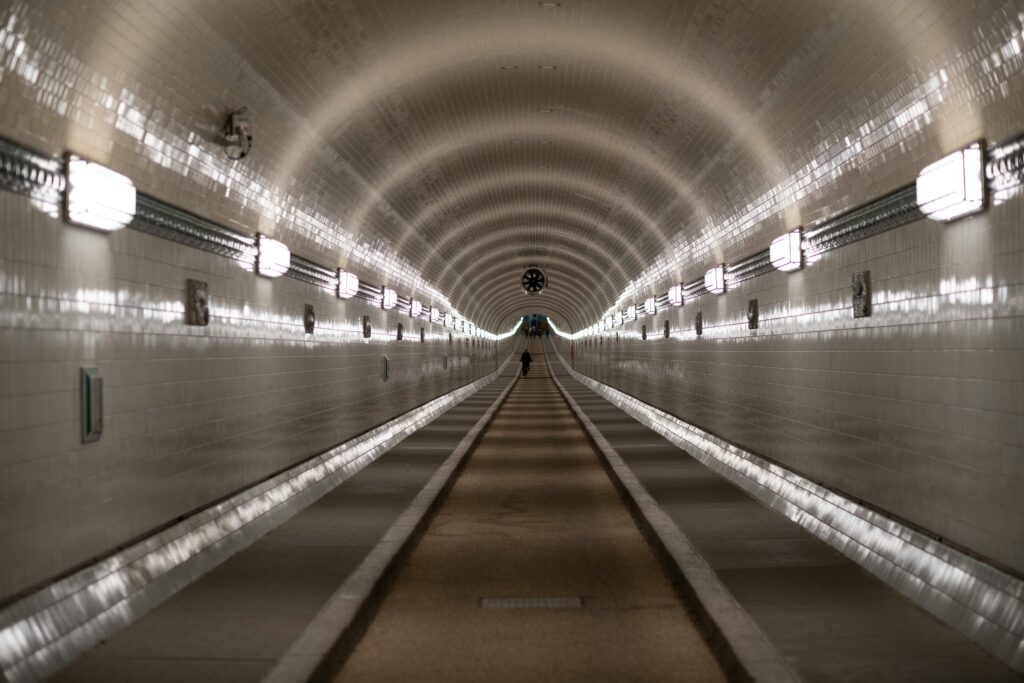
How are underwater tunnels built beneath rivers, harbors, and open ocean is one of those engineering questions that seems almost impossible until you understand the actual methods involved. These structures carry millions of people daily — by car, rail, and on foot — through environments that would otherwise require lengthy detours or bridge crossings limited by shipping traffic. This guide breaks down every stage of how underwater tunnels are built, from initial surveys to the three main construction methods, and explains the serious engineering challenges that make each project uniquely complex.
Why Build an Underwater Tunnel at All?
Bridges are the obvious solution when you need to cross water. But bridges are not always practical or permitted. Active shipping lanes require significant vertical clearance, making bridge construction extremely expensive. Environmental regulations sometimes prohibit structures that alter the visual landscape. In earthquake-prone or high-wind areas, tunnels offer protection that surface bridges cannot.
Underwater tunnels are also entirely weatherproof. Snow, ice, and high winds do not affect them. They carry road traffic, rail systems, utilities, water mains, fiber optic cables, and sewer infrastructure. In dense urban areas, they avoid the surface disruption that any above-ground structure would cause.
The trade-off is cost and construction complexity. Underwater tunnels are almost always more expensive and technically demanding than equivalent bridges. Whether that trade-off is worth making depends on the specific geography, usage requirements, and regulatory environment of each project.
Stage 1: Site Investigation and Geotechnical Survey
Before any construction begins, engineers spend months — sometimes years — studying the site. The data gathered at this stage determines which construction method is viable and where the tunnel must be aligned.
Geotechnical Surveys
Soil borings and core samples are taken from the waterbed at regular intervals along the proposed tunnel route. These reveal what the tunnel will pass through: soft clay, sand, gravel, rock, or some combination. Different materials require completely different excavation approaches and ground support systems.
Unexpected soil conditions mid-project are one of the most common causes of delays and cost overruns in tunnel construction. Thorough geotechnical investigation at the start prevents most of these surprises.
Hydrographic Studies
Hydrographic surveys map the underwater topography, current patterns, tidal ranges, and water depths along the route. This data determines how construction equipment will be positioned and operated on the water surface and informs decisions about cofferdams and dewatering systems.
Environmental Assessment
Every major underwater tunnel project requires an environmental impact assessment. This evaluates effects on aquatic habitats, water quality, marine or river traffic, and nearby communities. Regulatory approval is based on this assessment and it shapes many construction constraints including work schedules, noise limits, and permitted disposal methods for excavated material.
Stage 2: Tunnel Design and Engineering
With survey data in hand, the design team develops the tunnel geometry, structural specifications, and construction methodology. No two underwater tunnels are identical because no two sites are identical.
Key design variables include the tunnel’s required diameter or cross-section, structural wall thickness, waterproofing system, ventilation requirements, drainage systems, and lining materials. Modern design uses 3D modeling and finite element analysis to simulate how the tunnel structure will behave under water pressure, soil loading, seismic events, and temperature changes before a single shovel of earth is moved.
The Federal Highway Administration’s Technical Manual for Design and Construction of Road Tunnels provides the baseline standards that most US tunnel projects follow, covering everything from geotechnical analysis to final structural specifications.
How Are Underwater Tunnels Built: The 3 Main Methods
The answer to how are underwater tunnels built depends primarily on the water depth, soil conditions, tunnel length, and what the tunnel needs to carry. Three fundamentally different approaches exist, each suited to different conditions.
Method 1: Bored Tunnels (Tunnel Boring Machine)
Bored tunnels are the dominant method for long underwater tunnels in hard soil or rock, and for tunnels that pass under major urban areas where surface disruption must be minimized. The Channel Tunnel connecting England and France and the Transbay Tube in San Francisco Bay are both bored tunnels.
A Tunnel Boring Machine (TBM) is a massive rotating cutting head — typically 4 to 15 meters in diameter — that grinds through soil and rock simultaneously while installing precast concrete lining segments directly behind the cutter head. The machine essentially builds the tunnel as it moves forward.
The TBM maintains a pressurized environment at the cutting face to prevent water and soil from collapsing into the excavation. Different types of TBMs handle different soil conditions: earth pressure balance machines work in soft, waterlogged ground; slurry shield TBMs use pressurized bentonite slurry to stabilize the cutting face in very soft or loose material.
Excavated material — called spoil — is conveyed back through the tunnel on a continuous belt system and removed from the launch shaft. The TBM advances steadily, typically several meters per day, with workers installing lining segments and managing all mechanical systems from behind the cutter head.
Best suited for: Long tunnels, deep water crossings, urban environments, hard or mixed ground conditions.
Method 2: Cut-and-Cover Tunnels
Cut-and-cover is the oldest and most straightforward underwater tunnel method. It is practical in shallow water with a soft, workable waterbed — typically river crossings less than 10 to 15 meters deep.
The process begins with dredging a trench in the river or harbor bed. Temporary retaining walls, cofferdams, or sheet piling are installed on either side of the trench to hold back the surrounding water and soil and create a working zone. In some cases the area is fully dewatered so workers can operate in dry conditions.
The tunnel structure is then built within this protected zone — either cast in place using reinforced concrete formwork or by lowering prefabricated sections into the trench. Joints between sections are sealed with waterproof gaskets and grouted. Once the tunnel shell is complete and watertight, it is covered with backfill material — typically graded stone and then the original riverbed sediment — and the dewatering equipment is removed.
Cut-and-cover is generally the least expensive method for shallow crossings. The main limitation is that it creates significant disruption to water traffic during construction and can disturb the waterbed ecology substantially.
Best suited for: Shallow river crossings, harbors with manageable depths, locations with soft workable beds and limited shipping traffic.
Method 3: Immersed Tube Tunnels
Immersed tube tunneling is the preferred method for wide, deep water crossings where boring is impractical and cut-and-cover would require excessive dredging. The Detroit-Windsor Tunnel, the Oresund Fixed Link between Denmark and Sweden, and the BART transbay tube all use immersed tube construction.
The process starts on land. Large tunnel segments — typically 100 to 150 meters long and constructed from reinforced concrete or steel — are prefabricated in a dry dock or casting yard. Each segment is built to precise tolerances and tested for watertightness before it ever touches the water.
Once complete, the segment’s open ends are sealed with temporary steel bulkheads and the segment is floated out to the installation site using tugs and positioning barges. Meanwhile, a trench has been dredged in the waterbed along the tunnel alignment and a prepared gravel or concrete foundation bed has been laid in the trench bottom.
The segment is then ballasted with water — filling internal tanks to increase its weight — until it sinks slowly and precisely onto the prepared foundation. This is one of the most technically demanding phases: GPS positioning systems, remotely operated vehicles, and underwater cameras guide the segment into exact alignment with the previously placed segment, sometimes to within millimeter tolerances.
Once seated, divers and robotic equipment connect the Gina seal — a massive rubber gasket — between the new segment and its neighbor. Water is pumped from between the bulkheads and the water pressure difference compresses the seal tightly, creating a watertight joint. The temporary steel bulkheads are then removed and the joint inspected from inside.
This is repeated for each segment until the full tunnel length is connected. The completed tunnel is then backfilled and the trench covered with protective rock armor to prevent damage from ship anchors and currents.
Best suited for: Wide channels, moderate to deep water, locations with good access for floating heavy equipment, areas where minimizing disruption to shipping is important.
The Biggest Engineering Challenges in Underwater Tunnel Construction
Water Pressure
Every meter of water depth adds approximately 0.1 bar of pressure against the tunnel structure. A tunnel 30 meters below the surface faces 3 bar of continuous external pressure — equivalent to 3 times atmospheric pressure pressing on every square meter of the tunnel walls and roof. The structural design must account for this pressure across the full lifespan of the tunnel, which is typically 100 to 120 years.
Waterproofing and Sealing
Even microscopic gaps in the tunnel lining or joint seals allow water infiltration under pressure. Over time, small leaks accelerate corrosion of reinforcing steel, degrade concrete through freeze-thaw cycles, and compromise structural integrity. Multiple redundant waterproofing systems — membrane layers, injection grouting, and drainage collection — are standard in all modern underwater tunnels.
Soft or Variable Ground Conditions
Underwater soil profiles are often heterogeneous — varying from hard rock to soft clay within short distances. A TBM optimized for one soil type may perform poorly in another. Geotechnical surprises are the most common cause of project delays. Ground improvement techniques including jet grouting, ground freezing, and compressed air pressurization are used when particularly difficult ground conditions are encountered.
Worker Safety in Pressurized Environments
Workers in hyperbaric (pressurized) tunnel environments face risks including decompression sickness if they ascend to normal atmospheric pressure too quickly. Strict medical screening, controlled decompression protocols, and on-site medical facilities with hyperbaric treatment chambers are mandatory on pressurized tunnel projects. Modern TBMs largely remove workers from the pressurized cutting face, but some interventions still require human entry.
Navigation and Weather
For immersed tube and cut-and-cover construction, working on active waterways requires constant coordination with port authorities and maritime traffic management. Heavy weather can halt floating operations for days at a time. Temporary work structures like cofferdams must withstand storm surges and tidal variations that may exceed those recorded during the initial site survey.
Notable Underwater Tunnels Around the World
Understanding how underwater tunnels are built is easier with real examples that illustrate each method at scale.
- Channel Tunnel (England–France): 50 km long, bored using TBMs through chalk marl beneath the English Channel. Three parallel tunnels — two rail, one service — completed in 1994.
- Oresund Tunnel (Denmark–Sweden): 4 km immersed tube section forming part of the Oresund Fixed Link. Twenty prefabricated concrete segments each 55 meters long were floated and sunk into place.
- BART Transbay Tube (San Francisco Bay): 5.8 km immersed tube carrying BART trains beneath the bay. Completed in 1969 and still operating, it sits in a seismically active zone and has been retrofitted for earthquake resistance.
- Detroit-Windsor Tunnel (USA–Canada): One of the earliest vehicular immersed tube tunnels, completed in 1930, carrying road traffic under the Detroit River.
- Marmaray Tunnel (Istanbul): Immersed tube bored tunnel combination beneath the Bosphorus Strait connecting Europe and Asia, completed in 2013.
Underwater Tunnels vs. Bridges: Which Is the Right Choice?
The decision between a tunnel and a bridge comes down to several practical factors rather than one being inherently superior.
- Shipping clearance: Active shipping lanes with tall vessels require extreme bridge heights or movable spans. A tunnel eliminates this constraint entirely.
- Weather resilience: Tunnels are unaffected by wind, ice, and snow that regularly close bridges in northern climates.
- Visual impact: Some coastal and heritage locations prohibit large surface structures. A tunnel leaves the landscape unchanged.
- Cost: Bridges are generally less expensive for spans under about 1 kilometer in moderate conditions. Tunnels become more competitive for longer or deeper crossings where bridge construction costs escalate rapidly.
- Multi-purpose use: Tunnels can carry utilities, water mains, and fiber optic cables alongside traffic more easily than bridge structures.
Frequently Asked Questions
How are underwater tunnels built without flooding?
Each construction method uses a different approach to keep water out during building. Bored tunnels use pressurized TBMs that maintain a sealed environment at the cutting face. Cut-and-cover tunnels use cofferdams or sheet piling to create a dewatered working zone. Immersed tube tunnels are built on land, sealed with watertight bulkheads, and then floated into position before being sunk into a prepared trench. In all cases, multiple waterproofing layers are applied to the final structure.
How long does it take to build an underwater tunnel?
Construction time varies enormously by method, length, and complexity. A short cut-and-cover crossing beneath a small river might take 18 months. A major immersed tube project like the Oresund Tunnel took approximately 3 years of active construction after several years of planning and design. The Channel Tunnel required 6 years of construction. Large TBM bored projects typically advance at 10 to 30 meters per day.
What is the deepest underwater tunnel in the world?
The Ryfast tunnel in Norway, completed in 2019, reaches a maximum depth of 292 meters below sea level, making it the world’s deepest road tunnel. It was constructed using the drill-and-blast method through solid rock rather than the TBM or immersed tube methods used in softer underwater conditions.
How are underwater tunnels waterproofed?
Waterproofing is applied at multiple levels. The concrete lining itself is designed with low permeability mixes and additives. External membranes — typically PVC or HDPE sheets — are applied over the outer structure before backfilling. Joints between tunnel segments use compressed rubber gaskets and are grouted from the inside. Internal drainage systems collect any minor seepage and pump it away continuously.
Can underwater tunnels collapse?
Underwater tunnels are engineered with very significant safety factors and are subject to regular inspection under national standards like the FHWA National Tunnel Inspection Standards in the US. Complete structural collapse is extremely rare in modern tunnels built to current standards. The main risks are localized water infiltration and joint degradation over long periods, which are managed through regular inspection and maintenance programs.
Final Thoughts
How underwater tunnels are built is a question with a genuinely complex answer — one that varies with every project depending on soil, depth, length, and purpose. The three core methods — bored TBM tunneling, cut-and-cover, and immersed tube — each represent a different engineering solution to the same fundamental problem: creating a dry, structurally sound passage through an environment defined by water pressure, unstable ground, and constant movement.What they all share is the requirement for meticulous planning, advanced engineering, and disciplined execution over years of construction. The result — a tunnel that carries millions of people safely beneath rivers and seas for a century or more — is one of the most enduring achievements in civil engineering.