
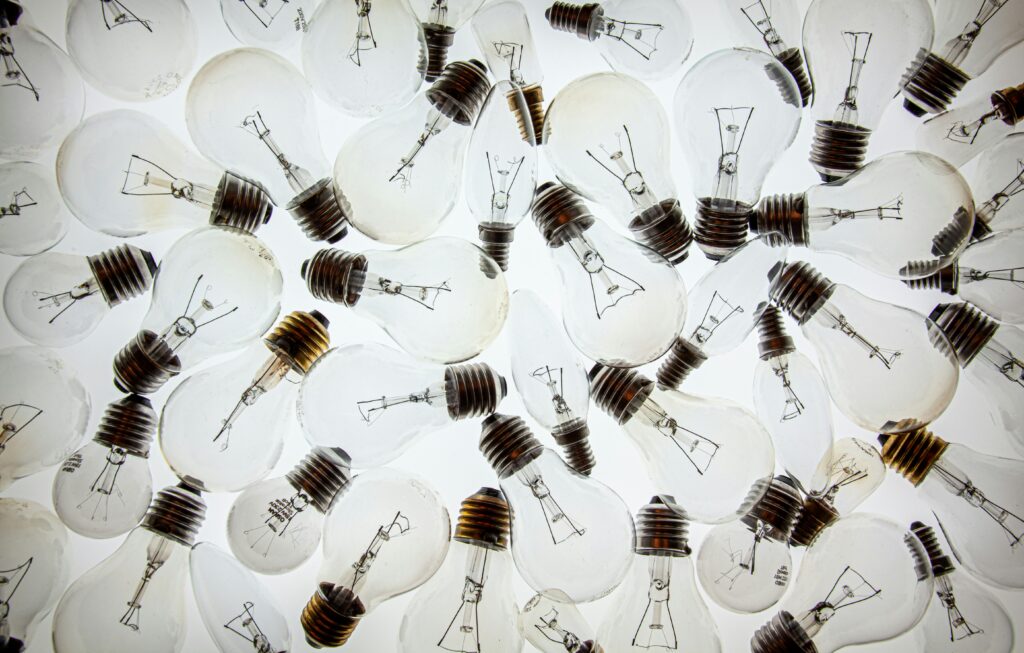
The impact of the incandescent light bulb on human civilization is almost impossible to overstate. In less than fifty years, a single invention eliminated thousands of years of total dependence on fire, candles, and natural daylight. It extended productive hours, transformed medicine and surgery, created the modern factory, made cities safe after dark, and gave birth to entirely new industries. Understanding how the light bulb changed the world requires understanding just how constrained and dangerous life was before it existed.
Life Before the Light Bulb: The World Ruled by Darkness
For the vast majority of human history, darkness was an absolute constraint on daily life. When the sun set, useful activity largely stopped. Work, reading, craftsmanship, and social gathering were all limited by the availability and quality of fire-based light.
Candles and oil lamps provided light, but poor and uneven light that produced substantial soot, smoke, and fire hazard. Open flames in homes and workplaces caused devastating fires — entire cities were regularly destroyed. The Great Fire of London in 1666 and the Chicago Fire of 1871 were extreme but not unusual examples of the constant danger fire-based lighting posed.
The cost of lighting was also significant. Candles were expensive enough that working-class families used them sparingly. Whale oil lamps were an improvement but required continuous supply of a resource that took years and considerable danger to harvest. Kerosene lamps, introduced in the mid-1800s, were cheaper but still required fuel and produced heat, smell, and fire risk.
Hospitals performed surgery by daylight whenever possible and by inadequate candlelight when they could not wait. Schools had limited hours in winter. Factories and workshops stopped production when natural light failed. Crime flourished in the genuinely dark streets of even the largest cities. The world operated in permanent negotiation with the limits of available light.
The Invention of the Incandescent Light Bulb: What Actually Happened
The history of the light bulb is more complicated than the popular narrative of Edison’s solitary genius. The development of electric light was a collaborative process spanning decades and multiple countries.
The Arc Lamp: First Electric Light (1835)
The first practical electric light was not Edison’s incandescent bulb but the arc lamp, developed in London in the 1830s. Arc lamps passed electricity between two carbon electrodes, creating an intensely bright arc of light. They were genuinely revolutionary for street lighting and large outdoor spaces, but completely impractical for indoor domestic use. They burned at temperatures that required mounting on tall poles for safety and produced light too intense and harsh for enclosed spaces.
The Race to the Incandescent Bulb
Throughout the 1870s, inventors in Britain, the United States, and Canada competed to solve the incandescent light problem: creating a bulb that produced steady, usable light without burning out quickly. British inventor Joseph Swan demonstrated a working incandescent bulb in Newcastle in 1878, shortly before Edison’s more famous demonstration.
Thomas Edison patented his incandescent bulb in the United States in 1879, using a carbonized bamboo filament that could sustain light for over 1,200 hours — far longer than any previous attempt. Edison’s crucial contribution was not simply inventing the bulb but developing the entire electrical infrastructure needed to deliver electricity to homes and businesses: generators, wiring, switches, meters, and distribution systems.
Edison’s Pearl Street Station in New York City, opened in 1882, was the world’s first central power station, delivering electricity to 59 customers in a one-square-mile area. Within two years it served over 500 customers. The modern electrical grid was born.
The AC/DC War and the Spread of Electric Light
Edison built his system on direct current (DC) electricity, which could only travel short distances. Nikola Tesla and George Westinghouse championed alternating current (AC), which could travel long distances at high voltage and be stepped down for household use. The ‘War of Currents’ in the late 1880s and 1890s eventually settled in favor of AC, enabling power stations to serve entire cities and regions rather than single neighborhoods.
By 1910, electric lighting was installed in most new urban construction in developed countries. By 1930, electrification had reached most American cities. Rural areas took longer — the US Rural Electrification Act of 1936 was specifically designed to bring electricity to farms and small towns that private utilities had not found profitable to serve.
Impact of the Incandescent Light Bulb on Society
The societal impact of the incandescent light bulb unfolded across every dimension of organized human life. Few single inventions in history have touched as many aspects of daily existence as quickly.
The Transformation of Work and Productivity
Before electric light, factories and workshops were limited to daylight hours in many operations. Tasks requiring visual precision — assembling small components, textile work, metalwork — were particularly constrained. Electric lighting eliminated this constraint entirely.
Factories could now operate at full capacity regardless of the hour or season. The night shift became possible. Industrial output increased dramatically. Economists estimate that the extension of working hours enabled by electric light contributed substantially to the productivity gains of the early 20th century that raised living standards across the developed world.
Office work was also transformed. Law firms, banks, newspapers, and government offices had previously shut down at dusk in winter. Electric lighting extended the practical working day and allowed organizations to scale in ways that candlelit offices simply could not support.
Impact on Medicine and Public Health
The impact of the incandescent light bulb on medicine was profound and immediate. Surgery, which had previously been performed primarily in daylight hours and near windows, could now be conducted at any hour under consistent, bright illumination. Surgical theaters and operating rooms with proper electric lighting became standard by the early 20th century.
Hospital wards with reliable lighting improved nursing care and monitoring of patients overnight. Medical education improved as dissection and examination could be conducted under adequate light. Diagnosis improved as doctors could properly illuminate examination rooms.
Beyond hospitals, electric light contributed to public health by reducing fire risk in homes and workplaces. Open flame lighting caused enormous numbers of accidental fires annually. House fires from knocked-over lamps and candles were a leading cause of residential deaths in the pre-electric era. Electric lighting dramatically reduced this risk.
What Effect Did the Electric Lamp Have on Businesses?
The electric lamp fundamentally changed the economics and operations of virtually every business category. Retail shops could stay open after dark for the first time, extending trading hours and enabling the evening shopping culture that remains standard today. The department store as a commercial form — large, brightly lit spaces designed for extended browsing — was made possible by electric lighting.
Restaurants and entertainment venues gained new business in evening hours. Theaters, already using gas lighting, switched to the vastly safer and more controllable electric light and expanded evening programming. The hotel industry was transformed by the ability to offer guests reliable, safe, clean lighting in every room.
Newspapers gained the ability to produce night editions using night shifts, accelerating the development of a 24-hour news culture. Banks and financial institutions extended their operating hours. The entire concept of a business operating after dark was a product of the electric light.
Urban Life and Public Safety
City streets at night were genuinely dangerous in the pre-electric era. Gas lighting, introduced in the early 19th century, improved street illumination in wealthy areas but was expensive, uneven, and created its own fire and explosion hazards. Electric street lighting, rolled out from the 1880s onward, transformed urban life after dark.
Crime rates in well-lit areas fell measurably. Evening commerce, recreation, and social activity expanded. The social geography of cities changed — areas that had been dangerous after dark became accessible. The modern city’s assumption that public spaces are safe and usable around the clock is entirely dependent on artificial lighting.
Education and Literacy
Evening education — adult literacy classes, night schools, public lectures — expanded dramatically once classrooms could be reliably lit. The spread of literacy in the late 19th and early 20th centuries was supported by the ability to read comfortably after dark. Libraries extended their hours. Self-education, previously limited to those wealthy enough to burn candles generously, became accessible to working-class people with electric lighting.
The Environmental Cost: From Incandescent to LED
The incandescent light bulb’s impact was overwhelmingly positive for human welfare, but it came with a significant environmental cost that only became fully apparent in the late 20th century. Incandescent bulbs are extraordinarily inefficient — approximately 90 percent of the energy they consume is released as heat rather than light. Only about 10 percent becomes visible light.
As electric lighting spread to hundreds of millions of homes and businesses worldwide, the aggregate energy demand from lighting became enormous. In the United States alone, lighting accounted for approximately 20 percent of total electricity consumption at the peak of incandescent use. Most of that electricity was generated by burning coal and natural gas.
Compact Fluorescent Lamps (CFLs)
Fluorescent lighting, first commercialized by George Inman at General Electric in 1938, was significantly more efficient than incandescent lighting but initially limited to long tubes suitable for offices and commercial spaces. The development of compact fluorescent lamps (CFLs) that could fit standard incandescent sockets brought fluorescent efficiency to homes.
CFLs use approximately 75 percent less energy than incandescent bulbs for the same light output. Their adoption in the 1990s and 2000s produced measurable reductions in residential electricity consumption. However, their mercury content created disposal concerns and their warm-up time and light quality were sources of consumer dissatisfaction.
LED: The Current Revolution
Light-emitting diodes (LEDs) represent the most significant advance in lighting efficiency since Edison’s incandescent bulb. The foundational science was discovered by British scientist Henry Joseph Round in 1907, who observed light emission from silicon carbide crystals. Practical visible-light LEDs were achieved in 1962 by Nick Holonyak Jr. at General Electric, working with gallium arsenide phosphide.
Modern LEDs use 75 to 80 percent less energy than incandescent bulbs and last 15 to 25 times longer. The US Department of Energy estimates that widespread LED adoption has already saved hundreds of billions of dollars in electricity costs in the US alone and prevented hundreds of millions of metric tons of CO2 emissions.
The transition from incandescent to LED lighting represents a full circle: the same innovation drive that led Edison to create an efficient alternative to candles and gas lamps has produced, 140 years later, a lighting technology that makes the incandescent bulb itself obsolete.
The Light Bulb and Human Biology: The Unintended Consequence
The impact of the incandescent light bulb extended to human biology in ways that were not fully understood for decades after its invention. Human circadian rhythms — the internal biological clocks that regulate sleep, hormones, metabolism, and mood — evolved over millions of years in response to the natural cycle of daylight and darkness.
Artificial lighting, particularly the blue-wavelength light produced by incandescent bulbs and even more intensely by modern LEDs and screens, suppresses melatonin production when experienced after dark. This delays sleep onset, reduces sleep quality, and disrupts circadian rhythm.
Research over the past three decades has linked chronic circadian disruption from artificial light exposure to increased rates of obesity, type 2 diabetes, cardiovascular disease, depression, and certain cancers. Shift workers — who work at night under artificial light — show measurably higher rates of these conditions.
Modern lighting manufacturers now produce ‘warm’ bulbs with lower color temperatures that minimize blue light emission for evening use, and ‘daylight’ bulbs with higher color temperatures for workspaces. The understanding that the type and timing of light exposure matters for health represents a new dimension of the light bulb’s ongoing impact on human life.
Frequently Asked Questions
What was the impact of the incandescent light bulb on society?
The impact of the incandescent light bulb on society was transformative across virtually every dimension: it extended productive working hours, made surgery and medical care safer, allowed businesses to operate after dark, reduced fire risk from open-flame lighting, improved urban safety, enabled adult education, and changed the fundamental relationship between human activity and the natural light cycle. It is considered one of the most consequential inventions in human history.
When was the incandescent light bulb invented?
Thomas Edison patented the incandescent light bulb in the United States in 1879, using a carbonized bamboo filament. British inventor Joseph Swan demonstrated a similar device independently in 1878. Edison’s crucial additional contribution was developing the complete electrical distribution infrastructure — generators, wiring, meters, and switching — needed to deliver electricity to multiple customers, demonstrated with the Pearl Street Station in New York City in 1882.
When did light bulbs become common in homes?
Electric lighting in urban homes became standard in new construction in most developed countries by around 1910 to 1920. Widespread adoption in existing housing stock took longer. In the United States, approximately 35 percent of homes had electricity by 1920, rising to nearly 80 percent by 1940. Rural areas, served by the Rural Electrification Act of 1936, reached full electrification by the 1950s.
What problem did the light bulb solve?
The light bulb solved the fundamental problem of reliable, safe, controllable indoor lighting. Previous solutions — candles, oil lamps, gas lamps — were expensive, produced soot and fire hazard, provided uneven and inadequate light, and were entirely consumed in use. The incandescent bulb provided consistent, bright, adjustable light with no combustion products, no smoke, and minimal fire risk, at declining cost as manufacturing scaled.
Why is the incandescent light bulb important historically?
The incandescent light bulb is historically important because it enabled the practical electrification of homes and businesses, which in turn made possible every other electrical appliance and technology that followed. It was the driving application that created the demand for electrical infrastructure — the power stations, transmission lines, and distribution networks that now underpin all of modern technological civilization. Without the light bulb creating demand for electricity, the timeline of electrification and every technology that depends on it would have been substantially delayed.
Final Thoughts
The impact of the incandescent light bulb on human civilization extends far beyond the simple fact of artificial light. It broke the ancient constraint of solar dependence, created the conditions for industrial scale, enabled modern medicine and education, built the electrical infrastructure that every subsequent technology from radio to the internet requires, and reshaped the relationship between human biology and the environment.
The incandescent bulb itself has now been superseded by the LED — a more efficient heir that carries forward the same fundamental transformation. But the original invention, patented in a New Jersey laboratory in 1879, remains one of the clearest cases in history where a single innovation permanently changed what it means to be human.