
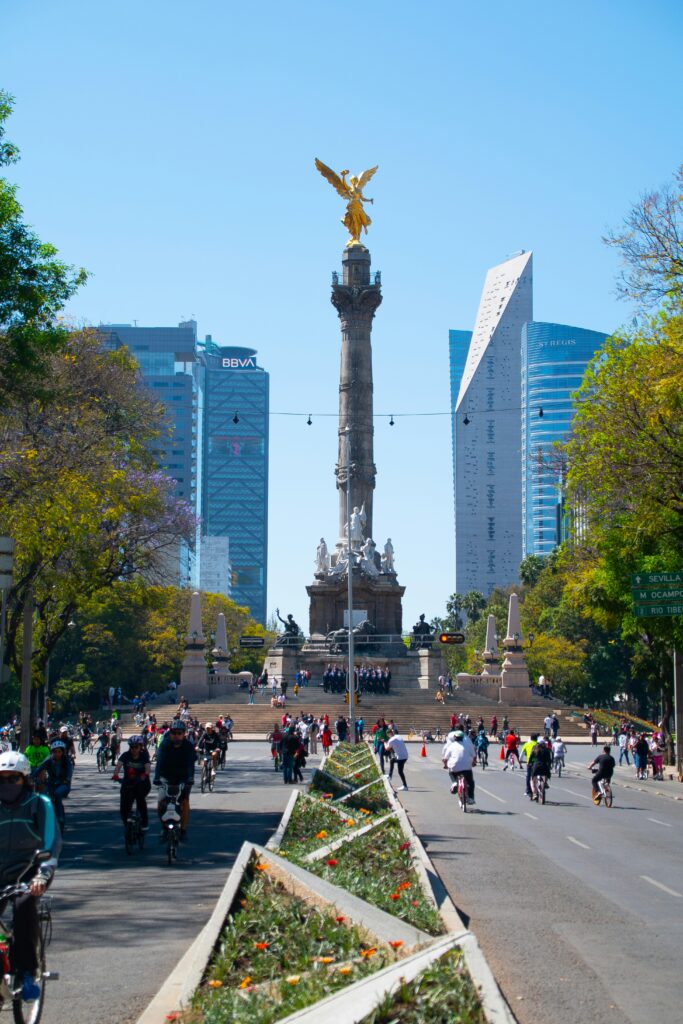
Mexico City — CDMX, Ciudad de Mexico — is one of the most extraordinary travel destinations in North America. The largest city on the continent, with a metropolitan population of over 21 million, it is a place where ancient Aztec ruins sit beneath colonial-era cathedrals, where world-class museums and Michelin-recognized restaurants compete for your attention on every block, and where the sheer density of cultural experience can be genuinely overwhelming for first-time visitors. But once you know how to navigate it, Mexico City rewards you with an experience that few cities anywhere can match.
This guide covers everything you need to plan a Mexico City vacation — what to see and do, which neighborhoods to stay in, where to eat, how to get around, how many days to allow, safety considerations, and a practical 4-day itinerary you can use as a starting framework.
Why Visit Mexico City?
Mexico City is a world capital of food, art, and history that is frequently underestimated by American travelers who associate Mexico primarily with beach resorts. The city has more museums than almost any other city in the world — over 150 by most counts — including the National Museum of Anthropology, which houses one of the most important pre-Columbian artifact collections on earth. The food scene ranges from ancient market stalls serving 500-year-old recipes to restaurants that consistently appear on the World’s 50 Best Restaurants list. The city’s neighborhoods are as architecturally distinct as different European cities, shifting from Art Deco and Beaux-Arts grandeur to modernist residential streets to Spanish colonial historic districts within a few miles.
For American travelers, Mexico City is also remarkably accessible and affordable. Direct flights from most major US cities run 3–4 hours. The city’s peso-denominated economy means dining, transport, and accommodation cost a fraction of comparable quality in New York or Los Angeles. And the city’s altitude — at 7,350 feet above sea level — gives it a year-round spring climate that most beach destinations in Mexico cannot match.
Mexico City Vacation: How Many Days Do You Need?
| Trip Length | What You Can Cover | Best For |
| 3–4 days | Centro Histórico, Coyoacán, Chapultepec, Roma/Condesa, one day trip | First-time visitors; long weekend |
| 5–6 days | Above + Polanco, San Ángel, Xochimilco, more time per neighborhood | Most visitors; comfortable pace |
| 7–10 days | Above + day trips to Teotihuacan, Puebla, Tepoztlán or nearby cities | Deep dive; return visitors |
Five days is the sweet spot for a first Mexico City vacation — enough time to see the major attractions without feeling rushed, with one full day trip to Teotihuacan and some room to explore neighborhoods at a relaxed pace.
Best Neighborhoods to Stay in Mexico City
La Roma Norte — Best Overall for First-Time Visitors
La Roma Norte is the most popular neighborhood choice for international visitors and for good reason. Tree-lined streets of early 20th-century Art Nouveau and Porfiriato-era buildings, hundreds of independent cafes and restaurants, walkable access to Condesa and the Reforma corridor, and a lively but not overwhelming nightlife scene make it an ideal base. The neighborhood has a vaguely European feel — wide sidewalks, leafy parks, and buildings with decorative facades that recall Paris or Buenos Aires more than the typical image of Mexico. Airbnb and boutique hotel options are plentiful at mid-range prices.
La Condesa — Residential and Walkable
Adjacent to Roma Norte and sharing much of its character, La Condesa is slightly quieter and more residential. Parque México and Parque España — two of the nicest green spaces in the city — anchor the neighborhood, which is particularly pleasant for morning coffee and weekend brunches. If you find Roma accommodations are fully booked or priced higher, Condesa is an equally good alternative and the two neighborhoods are easily walkable between.
Polanco — Upscale and Convenient for Museums
Polanco is Mexico City’s most upscale neighborhood — luxury hotel brands (W, Andaz, Presidente InterContinental), high-end international dining, designer shopping along Presidente Masaryk Avenue, and direct proximity to Chapultepec Park and the National Museum of Anthropology. For travelers prioritizing convenience to the major museums and willing to pay premium accommodation prices, Polanco is the right choice. For budget-conscious travelers, it is likely not the best value compared to Roma or Condesa.
Centro Histórico — History Immersion
Staying in the Historic Center puts you within walking distance of El Zócalo, the Metropolitan Cathedral, Templo Mayor, and Palacio de Bellas Artes. It is the most historically dense part of the city and fascinating to explore during the day. At night, the center is quieter than Roma or Condesa and some streets can feel deserted after 9pm. For visitors whose primary interest is history and museums rather than dining and nightlife, it can be a rewarding choice.
Best Things to Do in Mexico City
1. El Zócalo and the Historic Center
Rating: 4.7/5 (323,640 reviews) | Free entry | Open daily
El Zócalo — Plaza de la Constitución — is one of the largest city squares in the world and the heart of Mexico City’s historic center. Built on the ruins of the Aztec capital Tenochtitlan, the square is surrounded by the Metropolitan Cathedral (the largest in the Americas, construction spanning 1573–1813), the National Palace (housing Diego Rivera’s extraordinary mural depicting Mexican history from the Aztecs to the Revolution), and the ruins of Templo Mayor. The square hosts major national events, Day of the Dead celebrations, Independence Day ceremonies, and year-round concerts. Standing in the Zócalo surrounded by 500 years of layered history is genuinely unlike anywhere else on earth.
The surrounding Centro Histórico extends for several blocks in every direction and contains hundreds of colonial-era buildings, churches, markets, and the Palacio de Bellas Artes. Plan a minimum of a half day to explore the area thoroughly.
2. Palacio de Bellas Artes
Rating: 4.8/5 (192,863 reviews) | Entry from 95 pesos | Open Tuesday–Sunday 11am–6pm (Sunday from 8am)
The Palace of Fine Arts is Mexico City’s most architecturally stunning building — a white marble Art Nouveau exterior with a distinctive blue, green, and gold tile dome, built between 1904 and 1934. Inside, it houses the country’s most important collection of muralism: Diego Rivera, José Clemente Orozco, David Alfaro Siqueiros, and Rufino Tamayo all painted large-scale works on its interior walls. The Rivera mural ‘Man at the Crossroads’ (1934) — a recreation of the famous Rockefeller Center mural that was destroyed — covers an entire upper-floor wall and is one of the most politically charged and visually powerful works in 20th-century art.
3. Chapultepec Park and Castle
Castle rating: 4.8/5 (87,816 reviews) | Castle entry charged (~$3 USD for foreign visitors) | Tuesday–Sunday 9am–5pm
Chapultepec Park is one of the largest urban parks in the world — roughly twice the size of Central Park — and contains the National Museum of Anthropology, the Chapultepec Zoo (free), the Tamayo Museum, the Modern Art Museum, and the castle itself. Chapultepec Castle sits on a rocky hilltop at the park’s center and served successively as a military academy, an imperial palace during the reign of Maximilian I, and the presidential residence until 1939. It is now a national history museum with sweeping views over the city’s Paseo de la Reforma corridor. Arrive at opening (9am) to avoid lines and the midday heat.
4. National Museum of Anthropology
Rating: 4.8/5 (90,366 reviews) | Entry 210 pesos (~$10 USD) | Tuesday–Sunday 9am–5pm
The National Museum of Anthropology is the finest pre-Columbian cultural museum in the world — a comprehensive collection of artifacts from the Aztec (Mexica), Maya, Olmec, Zapotec, Teotihuacan, and dozens of other civilizations that preceded and coexisted with the Aztec empire. The Aztec Sun Stone (commonly called the Aztec Calendar), one of the most recognizable objects in Mesoamerican history, anchors the Mexica Room. The museum’s scale is immense — plan at least three hours, and a full day to do it justice. The building itself, designed by Pedro Ramírez Vázquez and completed in 1964, is architecturally outstanding.
5. Frida Kahlo Museum (La Casa Azul)
Rating: 4.5/5 (44,270 reviews) | Entry from 270 pesos | Tuesday–Sunday 10am–6pm (Wednesday opens 11am) | Advance booking essential
Frida Kahlo’s family home — the Blue House, La Casa Azul — in the Coyoacán neighborhood is one of Mexico City’s most visited attractions and one that requires advance planning. Timed-entry tickets sell out weeks in advance and can only be purchased online through the museum’s website or third-party booking platforms. The museum displays personal belongings, clothing, the artist’s wheelchair and corset collection, original artworks, and the studio where she worked. Coyoacán itself is worth a half day of exploration — cobblestone streets, colonial architecture, artisan markets, and the peaceful Jardín Centenario plaza make it the most picturesque traditional neighborhood in the city.
6. Day Trip to Teotihuacan
Entry 90 pesos (~$4.50 USD) | Open daily 8am–5pm | About 50km northeast of Mexico City
Teotihuacan is one of the most important archaeological sites in the Americas — a pre-Aztec city that at its peak around 450 AD was the largest city in the Western Hemisphere with a population of approximately 125,000 people. The site’s two main structures, the Pyramid of the Sun (the third largest pyramid in the world) and the Pyramid of the Moon, are connected by the broad Avenue of the Dead. Note that climbing the pyramids is no longer permitted to protect the ancient structures, but the site is still extraordinary to walk through.
Getting there: Organized day tours from Mexico City typically depart at 7–8am and return by 3pm, often including transport, guide, and additional stops. Independent travelers can take a bus from the Terminal Central de Autobuses del Norte (around 1 hour, very affordable). Arrive early — by 9am — to explore before the midday heat and tour group rush.
7. Xochimilco Floating Gardens
Xochimilco is the remaining section of the ancient canal and lake system that once covered the entire Valley of Mexico — the only surviving portion of the Aztec chinampas (floating gardens) that fed Tenochtitlan before the Spanish drained the lake system. Renting a trajinera (colorful flat-bottomed boat) and floating through the canals while mariachi bands on passing boats serenade you is a genuinely unique experience. Weekend afternoons are lively and social; weekday mornings are quieter and more atmospheric. Located about 25km south of the city center — allow half a day and factor in traffic.
8. Explore Roma and Condesa Neighborhoods
Roma and Condesa are where Mexico City’s creative class lives, eats, and gathers — the two neighborhoods that best represent contemporary CDMX culture. Wandering these areas on foot reveals Art Nouveau apartment buildings with hand-painted facades, independent bookshops and design studios, third-wave coffee houses, and some of the best restaurant density of any neighborhood in North America. The Saturday organic market at Parque México (in Condesa) is excellent. Parque Luis Cabrera in Roma Norte is a good focal point on Sunday mornings when locals gather for coffee, street food, and people-watching.
Where to Eat in Mexico City
Mexico City is one of the great food cities of the world — a culinary capital that blends 3,000 years of indigenous cooking tradition with Spanish colonial influence, waves of immigration from Lebanon, China, France, and Japan, and a contemporary fine dining scene that generates consistent international recognition. The range spans from street tacos at 20 pesos per serving to multi-course tasting menus at internationally ranked restaurants.
What to eat
- Tacos al pastor: Spit-roasted pork with pineapple, onion, and cilantro on small corn tortillas. The Lebanese-influenced trompo (vertical spit) preparation is unique to Mexico City and one of the city’s most iconic foods.
- Tamales: Corn masa steamed in corn husks or banana leaves with fillings of chicken, pork, rajas (chili strips), or mole. Breakfast staple — sold from wheeled carts early morning throughout the city.
- Chilaquiles: Fried tortilla chips simmered in salsa verde or roja, topped with crema, cheese, and egg — the essential Mexico City breakfast dish.
- Mole: Mexico’s most complex sauce, made with dozens of ingredients including chilies, chocolate, nuts, and spices. Mole negro (Oaxacan style) and mole poblano (from Puebla) are both widely available.
- Esquites and elotes: Corn kernels (esquites) or corn on the cob (elotes) with lime, chili powder, mayonnaise, and cheese — ubiquitous street food at any time of day.
- Churros: At Churros El Moro — open 24 hours, a Mexico City institution since 1935 — the original Mexican churro, thin and crispy with rich hot chocolate for dipping.
Restaurant recommendations
- Maximo Bistrot (Roma Norte): One of the most consistently praised contemporary Mexican restaurants in the city. Seasonal menu, outstanding quality, reservations essential weeks in advance.
- El Parnita (Roma Norte): Casual, neighborhood Mexican with excellent tacos, tlayudas, and mezcal. No reservations — arrive early or expect to wait on weekends.
- Tacos Orinoco (multiple locations): Straightforward, outstanding tacos al pastor and carnitas. The Roma Norte branch is consistently ranked among the city’s best taqueras.
- Azul Histórico (Centro Histórico): Traditional Mexican cuisine in a beautiful colonial courtyard inside the Centro. Good location if you are spending the day in the historic center.
- Mercado Roma (Roma Norte): A curated food market with around 100 vendors covering regional Mexican street food, fresh produce, craft beer, and mezcal. Good for lunch when you want variety.
Getting Around Mexico City
Uber
Uber is the recommended transport option for most visitors — safe, cashless, affordable (typical city center rides run $3–$8 USD), and available throughout the day. Surge pricing applies during rush hour (8–10am and 6–9pm are the worst), and traffic in Mexico City can be severe enough that a 5km Uber ride takes 30–40 minutes at peak times. Budget extra time for evening restaurant reservations. Ride-share app InDriver also operates in the city and is sometimes cheaper than Uber.
Metro (Subway)
Mexico City’s Metro is the most affordable and often fastest way to cross the city — a flat fare of around 5 pesos (less than $0.30 USD) regardless of distance. The system covers 12 lines and 195 stations. For visitors, Line 1 (pink), Line 2 (blue), and Line 3 (olive) serve most major tourist areas including Centro Histórico, Chapultepec, and Polanco. The Metro is crowded during rush hours and pickpocketing is a known issue — keep bags in front of you and avoid peak hour if carrying valuables.
Ecobici (Bike Share)
Mexico City’s Ecobici bike-share network operates throughout Roma, Condesa, Polanco, and the Reforma corridor. A 7-day pass costs around $10 USD and allows unlimited 45-minute rides. Cycling is a genuinely practical way to get between Roma, Condesa, and Chapultepec — dedicated bike lanes run along many major streets and Sunday mornings bring Ciclovía, when Paseo de la Reforma closes to cars and opens to cyclists and pedestrians for the entire morning.
Turibus
The Turibus hop-on, hop-off double-decker bus is a practical option for first-time visitors wanting to cover multiple landmarks in one day without navigating independently. Routes cover the Historic Center, Chapultepec, Polanco, and Paseo de la Reforma. Sit on the upper deck for views — bring sunscreen, hat, and sunglasses as the UV index at Mexico City’s altitude is high.
Mexico City 4-Day Vacation Itinerary
Day 1: Historic Center and Bellas Artes
- Morning: El Zócalo — arrive by 9am before tour groups. Walk the plaza, enter the Metropolitan Cathedral, and visit the National Palace to see the Diego Rivera murals.
- Late morning: Templo Mayor — the Aztec ruins excavated directly adjacent to the Metropolitan Cathedral, with an excellent on-site museum.
- Lunch: Azul Histórico or a nearby market lunch — try tamales and agua fresca from street vendors near the Zócalo.
- Afternoon: Walk west along Madero Street to Palacio de Bellas Artes. Allow 1.5–2 hours for the murals and architecture. Walk the Alameda Central park.
- Evening: Dinner in Roma Norte — make a reservation at Maximo Bistrot or walk along Álvaro Obregón for options.
Day 2: Chapultepec, Anthropology Museum, and Polanco
- Morning (9am): National Museum of Anthropology — allow a minimum of 3 hours. The Mexica Room with the Sun Stone is the highlight but the entire museum warrants serious time.
- Afternoon: Walk through Chapultepec Park to Chapultepec Castle. The hike up is moderate and the views from the top are the best in the city. Allow 1.5–2 hours.
- Late afternoon: Walk north to Polanco. Browse Presidente Masaryk and the surrounding streets.
- Evening: Dinner in Polanco (upscale options) or head back to Roma/Condesa for a more casual dinner.
Day 3: Coyoacán, Frida Kahlo Museum, and Xochimilco
- Morning (10am): Frida Kahlo Museum — pre-booked timed entry essential. Allow 1.5–2 hours.
- Late morning: Explore Coyoacán — Jardín Centenario plaza, artisan market, cobblestone streets. Lunch at a local comedor (small family restaurant).
- Afternoon: Uber south to Xochimilco. Rent a trajinera for 2 hours through the canals. Weekend afternoon is liveliest; weekday if you prefer quiet.
- Evening: Return to Roma/Condesa for dinner and mezcal bar hopping.
Day 4: Teotihuacan Day Trip
- Depart by 7:30–8am: Either organized tour or bus from Terminal Central del Norte.
- Teotihuacan: Walk the Avenue of the Dead, the Pyramid of the Sun, the Pyramid of the Moon, and the Temple of the Feathered Serpent. Lunch at La Gruta (restaurant inside a natural cave near the site).
- Return by early afternoon: Back in the city by 3–4pm.
- Evening: Final dinner at a rooftop restaurant with city views — Torre Latino’s observation deck is nearby if you want sweeping night panoramas before your last Mexico City evening.
Mexico City Safety Tips for Tourists
Mexico City has a complex safety reputation that is often more severe in perception than in the day-to-day experience of visitors who take reasonable precautions. The tourist areas — Roma, Condesa, Polanco, Coyoacán, and the Historic Center during daylight hours — are generally safe for walking and exploring. The following practical guidelines apply:
- Use Uber rather than street taxis: Hailing taxis off the street in Mexico City is associated with express kidnapping risk. Book all rides through Uber or InDriver with the tracking active.
- Keep valuables out of sight: Pickpocketing occurs on the Metro and in crowded areas. Keep phones in front pockets or bags that zip closed. Avoid displaying expensive equipment unnecessarily in crowded market areas.
- Avoid lower-visibility streets at night: The major tourist neighborhoods are generally safe at night but stick to populated streets and well-lit areas. Avoid walking through unfamiliar neighborhoods after dark.
- Use ATMs inside banks or shopping malls: ATM skimming is a known risk at standalone street ATMs. Use machines inside bank branches or major shopping centers during business hours.
- Altitude awareness: At 7,350 feet, Mexico City’s altitude affects most visitors for the first 24–48 hours. Expect possible headaches, breathlessness on exertion, and fatigue. Stay hydrated, limit alcohol on your first day, and take it easy on arrival day.
- Drink bottled or filtered water: Tap water is not safe to drink in Mexico City. All hotels provide purified water and restaurants use it for cooking, but drink bottled water for direct consumption.
Practical Mexico City Vacation Tips
| Topic | What to Know |
| Currency | Mexican Peso (MXN). USD accepted at major hotels and tourist sites but at poor rates. Use pesos for best value. |
| Best time to visit | October–April: dry season, mild temperatures (65–75°F). May–September: rainy season (usually afternoon showers). December–January: cooler evenings. |
| Getting there | Direct flights from most US cities: 3–4 hours. Fly into Benito Juárez International Airport (MEX) or the newer AIFA airport (NLU, farther from city center). |
| Language | Spanish is the primary language. English is spoken at major tourist sites, upscale restaurants, and hotels in Polanco and Roma. Learning basic Spanish phrases is helpful. |
| Tipping | 15–20% at restaurants is customary. Tip hotel staff, tour guides, and Uber drivers in cash pesos. |
| Altitude | 7,350 feet (2,240m). Acclimatize on arrival day — rest, hydrate, avoid heavy exercise and alcohol. |
| Museum closures | Most major museums close on Monday. Plan your Historic Center and Anthropology Museum days for Tuesday–Sunday. |
| Frida Kahlo Museum | Book tickets online weeks in advance. Walk-up availability is essentially zero during high season. |
Frequently Asked Questions
Is Mexico City safe for tourists?
Mexico City is safer for tourists than its reputation often suggests, provided you take standard urban precautions. The neighborhoods of Roma, Condesa, Polanco, and Coyoacán are generally comfortable for walking, dining, and exploring. The main practical safety rules are: use Uber rather than street taxis, keep valuables secured in crowded areas, avoid unfamiliar streets at night, and use ATMs inside bank branches rather than standalone street machines. Hundreds of thousands of American tourists visit CDMX annually without incident.
How many days do you need in Mexico City?
Five days is the recommended minimum for a first visit — enough to cover the major attractions (Zócalo, Chapultepec, National Museum of Anthropology, Frida Kahlo Museum, Roma/Condesa neighborhoods) with one day trip to Teotihuacan and some time to explore at a relaxed pace. A 4-day trip is possible but requires efficient planning. A week allows you to include additional day trips to Puebla or Tepoztlán and explore more neighborhoods.
What is Mexico City known for?
Mexico City is known for: its extraordinary pre-Columbian and colonial history (built on the ruins of the Aztec capital Tenochtitlan); the world’s highest concentration of museums per capita; one of the most celebrated food scenes in Latin America and North America; iconic muralist art by Diego Rivera, Orozco, and Siqueiros; the Frida Kahlo Museum; Teotihuacan pyramids; and the vibrant neighborhood culture of Roma, Condesa, and Coyoacán. It is also known for its sinking — the city has subsided over 30 feet since the Spanish drained the lake on which it was built, and ongoing construction throughout the historic center addresses this continuously.
What is the best neighborhood to stay in Mexico City?
La Roma Norte is the best overall neighborhood for most first-time visitors — central, walkable, full of excellent cafes and restaurants, and reasonably priced for accommodation. La Condesa is equally good and slightly quieter. Polanco is the best choice for luxury travelers who prioritize proximity to Chapultepec and the National Museum of Anthropology. The Historic Center is the best choice for visitors primarily interested in history and architecture.
Is Mexico City expensive?
Mexico City is significantly cheaper than equivalent-quality travel in New York, Los Angeles, or most European capitals. A street taco costs 20–30 pesos (around $1–$1.50 USD). A sit-down lunch at a good neighborhood restaurant runs 150–300 pesos ($7–$15). A quality mid-range hotel in Roma Norte runs $80–$150 per night. Uber rides across the city average $3–$8. Total daily budget for a comfortable visit — good hotel, restaurant meals, entry fees — typically runs $80–$150 per person.
Final Thoughts
Mexico City is one of the great undervalued travel destinations for American tourists — a world-class city that combines history, art, food, and cultural experience at a cost that makes comparable European capitals seem extravagant by comparison. The 50km from your hotel in Roma Norte to the Pyramid of the Sun at Teotihuacan spans 2,500 years of continuous human civilization, and the city around you has been continuously inhabited for most of that time.
The keys to a great Mexico City vacation are: book the Frida Kahlo Museum tickets well in advance, use Uber consistently, spend most of your time in Roma/Condesa and the Historic Center, and allow yourself to wander without a fixed agenda — the city reveals itself most generously to visitors willing to follow an interesting street and see where it leads.