
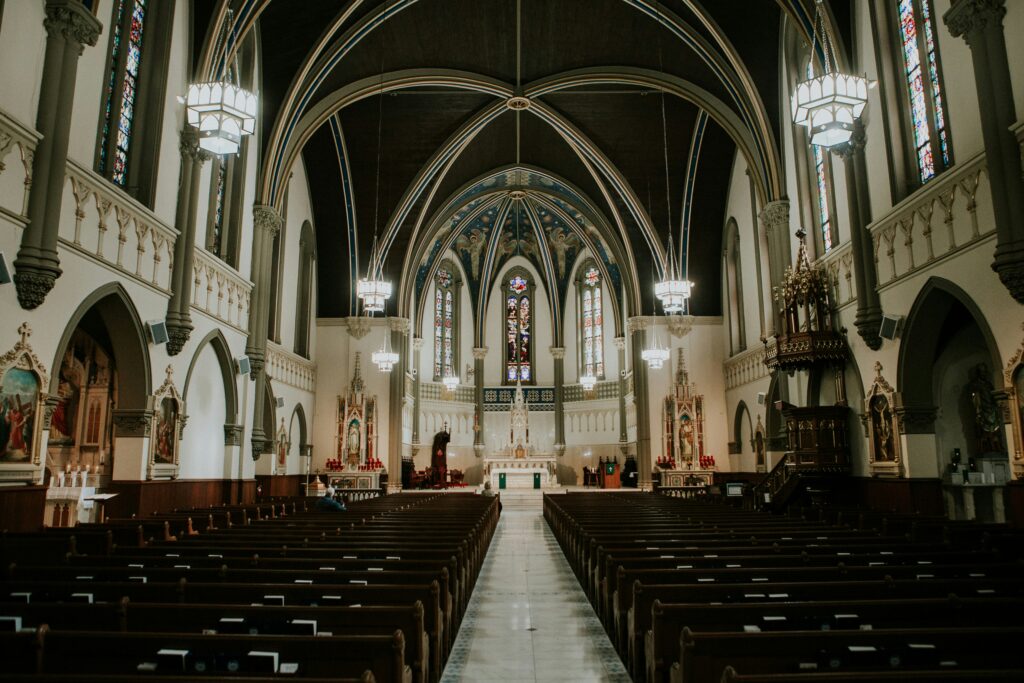
The question ‘What is the difference between Catholic and Christian?’ reflects a widespread misconception worth clearing up immediately: Catholics are Christians. The term ‘Christian’ refers to anyone who follows the teachings of Jesus Christ — and Catholics have done so since the founding of the Church. The question people are actually asking when they use this phrasing is usually: ‘What is the difference between Catholics and Protestant Christians?’
This guide explains that distinction clearly and fairly — covering the major theological differences between Catholic and Protestant (especially Evangelical and Baptist) Christianity across beliefs about Scripture, salvation, the sacraments, the Pope, Mary, and the afterlife.
First: Are Catholics Christians?
Yes. Catholicism is a denomination of Christianity — the largest single denomination in the world, with approximately 1.3 billion members globally. The Catholic Church is one of the oldest continuously existing institutions in human history, tracing its origins to the 1st century AD.
Christianity as a whole includes:
- Catholic: ~1.3 billion members worldwide; the largest single Christian denomination
- Eastern Orthodox: ~260 million members; includes Russian Orthodox, Greek Orthodox, Coptic, and others
- Protestant: ~900 million members; includes Evangelical, Baptist, Lutheran, Methodist, Presbyterian, Anglican, Pentecostal, and hundreds of other denominations
When someone asks ‘what’s the difference between Catholic and Christian,’ they are almost always asking about the differences between Catholics and Protestant Christians — specifically Evangelicals and Baptists, who make up the largest Protestant presence in the United States.
Brief History: How Did Catholicism and Protestantism Diverge?
Christianity was unified under what became the Catholic and Eastern Orthodox traditions for over 1,000 years after the Edict of Milan (313 AD) established Christian freedom in the Roman Empire. The Great Schism of 1054 separated the Eastern (Orthodox) and Western (Catholic) churches.
Protestantism emerged from the Protestant Reformation of the 16th century. Martin Luther, a German priest, publicly challenged what he viewed as corruptions and errors in Catholic teaching in 1517, beginning with his 95 Theses. He was followed by John Calvin, Ulrich Zwingli, and others who developed different theological frameworks, each of which generated its own denominational tradition.
The Protestant Reformation produced several foundational theological principles that distinguish Protestantism from Catholicism to this day, centered on the Five Solas — five Latin phrases that summarize the key departures from Catholic teaching: Sola Scriptura (Scripture alone), Sola Fide (faith alone), Sola Gratia (grace alone), Solus Christus (Christ alone), and Soli Deo Gloria (glory to God alone).
12 Key Differences Between Catholic and Protestant Christianity
1. Scripture — How Many Books and Whose Authority?
Catholic and Protestant Bibles contain different numbers of books:
- Catholic Bible: 73 books (46 Old Testament + 27 New Testament)
- Protestant Bible: 66 books (39 Old Testament + 27 New Testament)
The 7 additional books in the Catholic Bible — Tobit, Judith, 1 and 2 Maccabees, Wisdom, Sirach, and Baruch — are called ‘deuterocanonical’ by Catholics (meaning ‘second canon’) and ‘Apocrypha’ by Protestants. Martin Luther removed these books from his translation of the Old Testament in the 16th century, and Protestant Bibles have not included them since.
Beyond the book count, there is a fundamental difference in how each tradition views biblical authority. Protestants broadly hold to Sola Scriptura — the Bible alone is the supreme authority for Christian belief and practice. Catholics hold that the Bible and Sacred Tradition together constitute the Word of God, interpreted through the Church’s teaching authority (the Magisterium).
2. Sacred Tradition — Does the Church Have Equal Authority to the Bible?
Catholics believe that the deposit of Christian faith consists of both Scripture and Sacred Tradition — the oral and lived teaching of Christ passed down through the apostles and the Church. Both are considered equally authoritative and inseparable. The Church’s Magisterium (teaching authority) is believed to have been promised the guidance of the Holy Spirit in interpreting both.
Most Protestants reject Sacred Tradition as a source of equal authority to Scripture. They view the Bible as a complete, standalone revelation that does not require supplementary church tradition to be understood or applied. Many Protestants emphasize individual interpretation of Scripture, though this principle has itself generated significant diversity of belief within Protestantism.
3. Salvation — Faith Alone, or Faith and Works?
This is one of the most fundamental theological differences between Catholicism and Protestantism, and the central debate of the Reformation:
- Protestant view (Evangelical/Baptist): Salvation comes through faith alone (Sola Fide) — a person is saved by trusting in Jesus Christ as Lord and Savior. For many Evangelicals and Baptists, this is a one-time event that cannot be lost (‘once saved, always saved’).
- Catholic view: Salvation is an ongoing process involving faith, baptism, the sacraments, and cooperation with God’s grace throughout life. Catholics believe a person can lose their salvation through grave sin and that salvation must be ‘worked out’ until death (Philippians 2:12). Good works are not the basis of salvation but are necessary expressions of genuine faith.
This distinction is nuanced — Catholics do not believe people earn salvation through works. The Catholic position is that faith without works is incomplete (James 2:24), and that genuine saving faith is naturally expressed through action.
4. The Eucharist — Symbol or Real Presence?
The Eucharist (also called Holy Communion or the Lord’s Supper) is perhaps the most concrete and practical difference in how Catholics and Protestants worship:
- Catholic view (Real Presence): Catholics believe that when the priest consecrates the bread and wine at Mass, they substantially become the body and blood of Jesus Christ — a doctrine called transubstantiation. The Eucharist is considered the central act of Catholic worship, the ‘source and summit of Christian life’ (Catechism of the Catholic Church, paragraph 1324).
- Most Protestant view (Symbolic): Evangelicals and Baptists typically believe the bread and wine at Communion are symbolic representations of Christ’s body and blood — a memorial act, not a substantial transformation. Communion is a meaningful commemoration, but they do not believe Christ is physically present in the elements.
Some Protestant denominations (Lutheran, Anglican) hold intermediate positions — believing Christ is genuinely present in the Eucharist but disagreeing with the Catholic explanation of how.
5. The Pope — Universal Leader or Not?
Catholics believe the Pope is the Bishop of Rome and the successor to Saint Peter, who was given special authority by Jesus in Matthew 16:18-19 (You are Peter, and on this rock I will build my church). The Pope exercises supreme authority over the Catholic Church and is believed to speak infallibly on matters of faith and morals when invoking his authority ex cathedra.
Protestants do not recognize papal authority. Most Evangelical and Baptist churches have no hierarchical structure above the local congregation or denomination. Authority in Protestant traditions derives from Scripture and the community of believers, not from a centralized church leadership.
6. Mary — Venerated Saint or Simply Jesus’s Mother?
This is one of the most visible and emotionally significant differences between Catholic and Protestant practice:
- Catholic view: Mary holds a unique and exalted position in Catholic theology as the Mother of God (Theotokos). Catholic doctrine teaches that Mary was conceived without original sin (Immaculate Conception), remained a perpetual virgin, was assumed bodily into heaven (Assumption), and reigns as Queen of Heaven. Catholics ask Mary to intercede for them, pray the Rosary, and venerate her through statues and devotions.
- Protestant view: Most Protestants honor Mary as a devout woman specially chosen by God to be the mother of Jesus, but do not believe she was sinless, a perpetual virgin, or bodily assumed into heaven. Most Protestant traditions do not pray to Mary or use the Rosary, viewing these practices as without biblical basis.
Catholics draw a distinction between veneration (honoring Mary) and worship (which is reserved for God alone). Most Protestants find even veneration of Mary to be theologically inappropriate.
7. Saints — Intercessors or Just a Title?
Catholics canonize saints — individuals declared after investigation to have lived heroically virtuous lives and been confirmed in heaven through verified miracles. Catholics ask saints to intercede for them in prayer, just as they might ask a living friend to pray on their behalf.
Most Protestants use the term ‘saint’ to refer to all baptized Christians (following Paul’s usage in his letters). They do not pray to deceased saints, often viewing this as redirecting prayer away from God or approaching idolatry. Many Protestant traditions also lack formal canonization processes.
8. The Priesthood — Ordained Ministry or Universal Priesthood?
Catholics believe in a specific ordained priesthood that traces directly back through apostolic succession to the original twelve apostles. Only validly ordained priests can consecrate the Eucharist and administer certain sacraments. Catholic priests cannot marry (with limited exceptions in Eastern Catholic rites).
Most Protestant traditions reject ordained priesthood in the Catholic sense and emphasize the ‘priesthood of all believers’ — the idea that every Christian has direct access to God without requiring a priestly mediator. Protestant ministers and pastors are considered servants of the congregation, not holders of a specific sacramental office. Most Protestant traditions allow (and some require) married clergy.
9. The Sacraments — Seven or Two?
- Catholic sacraments (7): Baptism, Eucharist, Confirmation, Reconciliation (Confession), Anointing of the Sick, Holy Orders, Matrimony. Catholics believe the sacraments are genuine channels of divine grace instituted by Christ.
- Protestant sacraments (typically 2): Baptism and the Lord’s Supper (Communion). Protestants generally consider only these two to have been directly instituted by Christ. Many Protestant traditions call them ‘ordinances’ rather than ‘sacraments’ to avoid the Catholic implication that grace is automatically conveyed through the act.
10. Confession — To a Priest or Directly to God?
Catholics practice sacramental confession (the Sacrament of Reconciliation) — confessing sins to a priest, who absolves them in the name of Christ. Catholics believe Christ gave the apostles authority to forgive sins (John 20:23), and this authority passes through apostolic succession to ordained priests.
Most Protestants confess sins directly to God in prayer, holding that no human intermediary is necessary. Some Protestant traditions incorporate communal confession or pastoral counseling, but the Catholic doctrine that a priest must absolve mortal sins is rejected.
11. Purgatory — Intermediate State or Not?
Catholics believe in Purgatory — an intermediate state after death where souls who die in God’s grace but with remaining impurity are purified before entering heaven. Catholics pray for the souls in purgatory and believe these prayers are beneficial. The doctrine is referenced in 2 Maccabees 12 (one of the deuterocanonical books Protestants do not include) and in passages of the New Testament.
Most Protestants reject the doctrine of Purgatory as unbiblical (using the Protestant 66-book canon) and unnecessary — if salvation is by faith alone and Christ’s sacrifice is complete, no further purification is needed. The Protestant view is typically that souls go directly to heaven or hell after death.
12. Worship Style — Liturgical or Contemporary?
Catholic worship follows a structured liturgy — the Mass, which follows the same basic format worldwide and centers on the Eucharist. Ritual, ceremony, vestments, incense, kneeling, and the liturgical calendar (Advent, Lent, Easter) are central to Catholic practice.
Protestant worship varies enormously across denominations. Evangelical and Baptist services are typically more informal, centered on Scripture reading, sermons, and praise music. There is no fixed liturgy, and services may vary significantly week to week. Megachurch-style Evangelical worship often features contemporary music, projection screens, and a conversational preaching style.
Quick Reference: Catholic vs Protestant Comparison
| Belief / Practice | Catholic | Protestant (Evangelical/Baptist) |
| Are they Christians? | Yes | Yes |
| Bible books | 73 books | 66 books |
| Biblical authority | Bible + Sacred Tradition | Bible alone (Sola Scriptura) |
| Salvation | Faith + sacraments + works | Faith alone (Sola Fide) |
| Can lose salvation? | Yes — through grave sin | No — most believe ‘once saved, always saved’ |
| Eucharist | Real Presence (transubstantiation) | Symbolic memorial |
| Number of sacraments | 7 | Typically 2 ordinances |
| The Pope | Universal leader; Peter’s successor | Not recognized |
| Mary | Venerated; Queen of Heaven; perpetual virgin | Honored mother of Jesus; no special doctrine |
| Saints | Pray to saints as intercessors | Do not pray to saints |
| Confession | To priest (required for mortal sin) | Directly to God |
| Purgatory | Believe in it | Reject it |
| Clergy marriage | Not permitted (Latin Rite) | Permitted |
| Worship style | Formal liturgy (the Mass) | Varies; often informal/contemporary |
What Catholics and Protestants Agree On
Despite the significant differences, Catholics and Protestant Christians share a large common foundation:
- The Trinity: Father, Son, and Holy Spirit — three persons in one God
- The Incarnation: Jesus Christ is fully God and fully human
- The death and resurrection of Jesus Christ as central to Christian faith
- The authority of the New Testament
- Baptism and Communion as meaningful Christian practices
- The moral teachings of the Ten Commandments and the Sermon on the Mount
- The Second Coming of Christ
The Catechism of the Catholic Church explicitly acknowledges that Protestant Christians ‘are incorporated into Christ’ and ‘have a certain, though imperfect, communion with the Catholic Church.’ Most Evangelical and Baptist traditions similarly recognize Catholics as fellow Christians despite significant theological disagreements.
Frequently Asked Questions
Are Catholics Christians?
Yes. Catholics are Christians. The Catholic Church is one branch of Christianity and traces its origins to the 1st century. The question ‘what’s the difference between Catholic and Christian’ usually means ‘what’s the difference between Catholics and Protestant Christians.’
What is the biggest difference between Catholic and Protestant?
The most fundamental differences are: (1) authority — Catholics believe the Church and Sacred Tradition share authority with Scripture; Protestants hold the Bible alone as supreme (Sola Scriptura); (2) salvation — Protestants broadly teach salvation by faith alone (Sola Fide); Catholics teach faith plus sacraments and cooperation with grace; and (3) the Eucharist — Catholics believe in the Real Presence of Christ in the consecrated bread and wine; most Protestants view Communion as symbolic.
Do Catholics and Christians worship differently?
Yes — significantly. Catholic Mass follows a structured liturgy centered on the Eucharist, conducted the same way worldwide. Most Evangelical and Baptist worship services are informal, centered on preaching and contemporary music, with no fixed liturgical structure. Both are Christian worship, but the forms are very different.
Why do Catholics pray to Mary and saints?
Catholics believe that saints in heaven can intercede with God on behalf of those on earth — the same way a living friend might pray for you. Asking a saint to pray for you is understood as a form of intercessory prayer, not worship. Worship, in Catholic theology, is reserved for God alone. Protestants generally reject this practice, believing direct prayer to God is sufficient and that praying to the dead lacks biblical support in the Protestant canon.
Final Thoughts
The Catholic-Protestant distinction represents centuries of theological development following the Reformation. The disagreements are real, significant, and sometimes contentious — but they occur within a shared Christian foundation that both traditions affirm. Understanding the specific differences (Scripture, salvation, the Eucharist, Mary, the Pope) makes it much easier to understand why Catholics and Protestants worship differently, why their services look so different, and why they sometimes talk past each other on matters of faith.
Both traditions have produced rich theological, artistic, and cultural heritage. Both consider Jesus Christ central to Christian faith. The differences are genuine but should be understood in the context of the substantial common ground they share.