
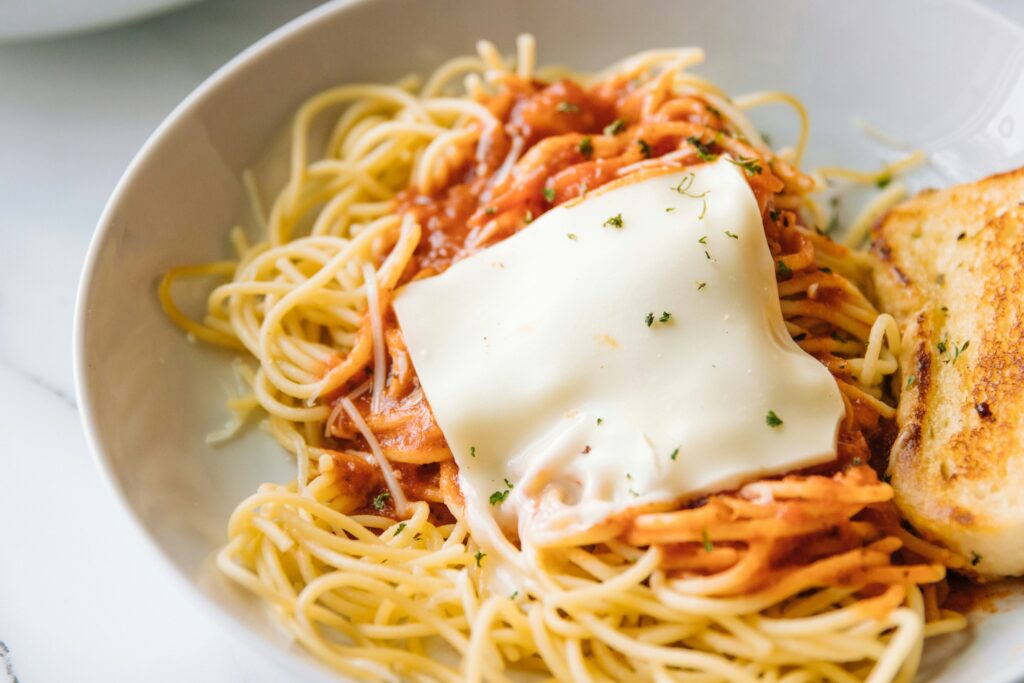
Walk into any Italian-American restaurant in the US and the menu will be full of dishes most Americans associate instantly with Italy: fettuccine Alfredo, chicken parmesan, spaghetti and meatballs, garlic bread, baked ziti. The surprising fact is that virtually none of these dishes exist in Italy. They were invented in America, by Italian immigrants, in response to the specific conditions of immigrant life in American cities.
This guide covers 15 of the most popular Italian-American dishes that do not exist in Italy, explains why they were invented here, and briefly covers what authentic Italian food actually looks like by comparison.
Why Italian-American Food Is Different from Italian Food
The explanation lies in the specific history of Italian immigration to America. Between approximately 1880 and 1924, more than four million Italians emigrated to the United States. The majority came from rural, impoverished areas of southern Italy and Sicily — not the prosperous northern regions. They settled overwhelmingly in dense urban centers, particularly New York, Boston, Chicago, and Philadelphia.
Several factors drove the development of a distinct Italian-American cuisine:
- Ingredient availability: The fresh vegetables, specific cheeses, cured meats, and regional produce of their home regions were not available in American cities. Substitutions and adaptations were inevitable.
- Meat accessibility: In southern Italy, meat was expensive and consumed infrequently — primarily by nobility and the wealthy. In America, beef, pork, and chicken were comparatively cheap and abundant. Italian immigrants, experiencing prosperity for the first time, added meat to dishes that would traditionally have been meatless.
- American portion culture: American food culture favored large portions. Italian-American restaurants adapted to this expectation — the enormous plates of pasta, the thick-cut steaks, the heaping servings — all reflect American sensibility rather than Italian restraint.
- Cultural assimilation: Second and third generation Italian-Americans adapted their grandparents’ cooking to suit their American identity, creating hybrid dishes that incorporated American ingredients and tastes while maintaining Italian framing.
- Restaurant economics: Early Italian-American restaurants catered to a broad American audience. Dishes were simplified, richened with cream and butter, and made reliably appealing rather than regionally authentic.
This new cuisine — Italian-American — is not inferior to authentic Italian food. It is its own distinct tradition with its own cultural significance, rooted in the immigrant experience of adaptation and optimism. Understanding where these dishes came from makes them more interesting, not less.
15 Popular Italian-American Dishes That Don’t Exist in Italy
1. Fettuccine Alfredo
Arguably the most famous Italian-American dish of all — and one that does not exist in Italy in the form Americans know it.
The dish takes its name from Alfredo di Lelio, a Roman restaurateur who in the 1920s created a simple pasta preparation called pasta al burro (pasta with butter) — egg pasta tossed with high-quality unsalted butter and Parmigiano-Reggiano. When American silent film stars Mary Pickford and Douglas Fairbanks visited his Rome restaurant on their honeymoon in 1927, they were so taken with the dish that they brought the recipe back to the US and the name ‘Fettuccine Alfredo’ spread into American restaurants.
The American version bears little resemblance to the original. American Fettuccine Alfredo uses heavy cream, additional butter, garlic, sometimes nutmeg, and often adds chicken or shrimp. The original Roman pasta al burro is made only with pasta, butter, and Parmesan — no cream. Ask for Fettuccine Alfredo in a Roman restaurant today and you will receive confusion.
2. Spaghetti and Meatballs
The most iconic Italian-American dish in popular imagination — immortalized in Lady and the Tramp (1955) — does not exist in Italy. Meatballs (polpette) exist in Italian cooking, but they are served as a separate meat course, not piled on top of spaghetti. Pasta dishes are the first course (primo piatto); meat dishes are the second course (secondo piatto). Mixing them together in a single bowl is an American invention.
The accessibility of meat in America is the driving factor: Italian immigrants who had rarely eaten meat could now afford it regularly, and adding generous quantities of meatballs to pasta was an expression of abundance.
Additionally, in authentic Italian pasta cooking, pasta is always cooked together with the sauce in the same pan for the final minute or two of cooking — it is never boiled separately and then topped with sauce at the table. The sauce-soaked-into-pasta technique is essential to Italian pasta and absent from most American preparations.
3. Chicken Parmesan (Chicken Parmigiana)
Eggplant Parmigiana (Melanzane alla Parmigiana) is an authentic Italian dish from Sicily and Campania. Chicken Parmigiana is not — it is an American substitution of chicken for eggplant, developed by Italian immigrants who had access to inexpensive chicken in America.
The preparation (breading, frying, tomato sauce, melted mozzarella, Parmesan) is modeled on the authentic eggplant dish, but the protein swap makes it a distinctly American creation. Veal Parmigiana (also common in Italian-American restaurants) represents a step closer to authentic Italian tradition, as veal scaloppine dishes do exist in Italian cooking — though not in this form.
4. Garlic Bread
Garlic bread — sliced Italian bread slathered with garlic butter and toasted — is one of the most universally loved Italian-American staples and essentially unknown in Italy. While Italian cooking certainly uses garlic extensively, the specific form of buttered, garlic-rubbed toasted bread served as a side dish to pasta is an American creation.
Italy has bruschetta — grilled bread rubbed with raw garlic and drizzled with extra-virgin olive oil, often topped with fresh tomatoes. This is the authentic antecedent. American garlic bread replaces raw garlic and olive oil with garlic butter, transforms bruschetta from a starter into a side dish, and serves it alongside pasta in a way Italian diners would find unusual.
5. Baked Ziti
Italy has a long tradition of baked pasta dishes (pasta al forno) that vary significantly by region. Baked ziti in its American form — ziti pasta, tomato meat sauce, ricotta, and melted mozzarella baked together in a casserole — does not have a direct Italian equivalent. Ziti itself is a pasta shape from Sicily. The specific American baked ziti recipe is an Italian-American creation, adapted from the principle of pasta al forno but in a form that does not correspond to any specific Italian regional dish.
6. Penne alla Vodka
Penne alla vodka is one of the most popular Italian-American pasta dishes — pasta in a sauce made from crushed tomatoes, heavy cream, and vodka. Its origin is disputed: various American chefs and New York restaurants in the 1970s and 1980s have claimed invention of the dish. It does appear in Italy with very limited regional presence, but it is not part of any established Italian culinary tradition and its spread is essentially American.
The combination of cream and tomato is also more broadly an Italian-American preference — Italian cooking strictly separates cream-based preparations (northern tradition) from tomato-based preparations. Mixing them is considered a culinary category error by most Italian cooks.
7. Pepperoni Pizza
One of the most important linguistic confusions in food: ‘pepperoni’ in Italian means bell peppers (peperoni) or chili peppers, not the cured pork salami familiar to Americans. Asking for ‘pizza con pepperoni’ in Italy will bring you a pizza with peppers.
The cured pork salami that Americans call pepperoni was developed by Italian-American butchers in New York in the early 20th century as a durable, shelf-stable cured meat. It is entirely an American product. Authentic Neapolitan pizza — the origin of pizza as a concept — uses ingredients like fresh mozzarella di bufala, San Marzano tomatoes, and fresh basil. Processed salami is not part of the authentic tradition.
8. Shrimp Scampi
In Italian culinary tradition, scampi refers to Nephrops norvegicus — the Norway lobster or Dublin Bay prawn, a small, clawed crustacean served grilled or sautéed in white wine, garlic, and olive oil. It is a specific and delicious Italian seafood preparation.
When Italian immigrants arrived in America, they found scampi unavailable. They substituted Gulf shrimp — a completely different crustacean — using the same preparation method, and called the result ‘shrimp scampi.’ The name is technically redundant (it means ‘shrimp shrimp’ in any language that recognizes scampi as its own thing) but has become entirely standard in American usage. The dish itself is genuinely delicious; its naming is simply the result of adaptation.
9. Cioppino
Cioppino is one of the most genuinely American Italian-American dishes — it was created in San Francisco, not brought from Italy. Italian fishermen working out of San Francisco Bay in the late 19th century prepared a seafood stew using whatever was left from the catch — shellfish, squid, rockfish, and other species considered low-value by the broader market — cooked in a tomato-based broth. The name may come from ciuppin, a fish soup from Liguria in northern Italy, but the San Francisco preparation is its own distinct creation.
Today cioppino is celebrated as a San Francisco culinary tradition. The Dungeness crab version of cioppino, featuring the iconic Pacific crab in season, is the most famous version.
10. Chicken Piccata
Piccata preparations (thin-sliced meat in a lemon, butter, and caper pan sauce) do exist in Italian cooking — veal piccata (piccata di vitello) is an authentic Italian dish. Chicken piccata is the American substitution of chicken for veal, reflecting both the cost difference (chicken is far cheaper than veal) and American preference for chicken as a default protein. The preparation technique is authentically Italian; the protein choice is American.
11. Angel Hair Pasta with Sauce
Angel hair pasta (capellini) exists in Italian cooking, but its use is specific: it is considered too delicate for thick, heavy sauces and is traditionally used in broth-based soups (minestrina) or with very light, refined sauces. Italian culinary tradition holds that pasta shape and sauce must be matched — robust shapes for robust sauces, delicate shapes for delicate sauces. Serving angel hair with a heavy meat sauce or Alfredo, as is common in Italian-American restaurants, would be considered a culinary mismatch by Italian cooking standards.
12. Italian-American Caesar Salad
Caesar salad is sometimes associated with Italian-American cuisine because of the Italian name and Italian dressing elements, but it was actually invented in Tijuana, Mexico, by Caesar Cardini, an Italian immigrant who moved to Mexico after Prohibition. The salad was first served at his Tijuana restaurant in 1924. It is neither Italian nor American — though it has become entirely embedded in the American restaurant experience.
13. Italian Wedding Soup
Despite the name, Italian wedding soup (minestra maritata) is not served at Italian weddings. The ‘wedding’ in the name is a translation of maritata, which means ‘married’ and refers to the ‘marriage’ of greens and meat in the soup — not a wedding celebration. The Italian original is a simple broth with leafy greens and small pieces of pork. The American version adds small meatballs and pasta, making it a heartier, more substantial dish that reflects American appetite and Italian-American adaptation.
14. Shrimp Fra Diavolo
Fra diavolo (meaning ‘brother devil’) refers to a spicy tomato sauce with hot chili. While spicy preparations do exist in southern Italian cooking (particularly in Calabria), the specific combination of shrimp in a spicy tomato sauce called ‘fra diavolo’ as a pasta dish is an Italian-American creation. It does not correspond to any named Italian dish.
15. The Enormous Portion
Perhaps the most pervasive Italian-American culinary characteristic is not a specific dish but the overall portion size. Italian restaurant meals in Italy are structured into multiple small courses: antipasto (starter), primo (pasta), secondo (meat or fish), contorno (side), dolce (dessert). Each course is modest. The idea of a single enormous plate of pasta with a side of garlic bread and a salad as a complete meal is distinctly American — Italian restaurants in Italy serve pasta in portions far smaller than American standards, as it is one course of a multi-course meal, not the entire meal.
What Is Authentic Italian Food?
To understand why Italian-American food diverged so dramatically, it helps to understand what authentic Italian food actually is:
- Intensely regional: Italian food is not one cuisine but dozens — Sicilian, Roman, Bolognese, Venetian, Neapolitan, Florentine — each with specific dishes, specific pastas, specific preparations. A Neapolitan would not recognize many Venetian dishes as familiar.
- Ingredient-focused: Italian cooking prioritizes exceptional raw ingredients over complex technique. A Caprese salad of great buffalo mozzarella, great tomatoes, and great olive oil needs nothing more.
- Seasonal: Italians traditionally cook with what is available and fresh at the moment. The idea of importing out-of-season ingredients for a dish is antithetical to Italian culinary thinking.
- Pasta as a first course, not a main: Pasta is the primo piatto — one course of several. A single bowl of pasta is not a complete Italian meal.
- Cheese rules: Italians do not put cheese on seafood pasta — this is a strict tradition in Italian cooking. A Roman would not put Parmesan on spaghetti alle vongole (clams).
Quick Reference: Italian vs Italian-American
| Dish / Element | In Italy | In Italian-America |
| Fettuccine Alfredo | Pasta al burro (butter + Parmesan only) | Heavy cream, butter, garlic sauce |
| Meatballs | Separate meat course (secondo) | On top of spaghetti |
| Chicken Parm | Does not exist | Breaded, fried, tomato, mozzarella |
| Garlic bread | Does not exist (bruschetta = different) | Buttered, toasted, ubiquitous |
| Pepperoni | Bell or chili peppers | Cured salami on pizza |
| Scampi | Norway lobster, specific crustacean | Shrimp in garlic butter |
| Portion size | Small; part of multi-course meal | Large; often the entire meal |
| Cream + tomato | Almost never combined | Common in Italian-American sauces |
Frequently Asked Questions
What is Italian-American food?
Italian-American food is a distinct cuisine developed by Italian immigrants to the United States from the 1880s onward. It adapts Italian ingredients and cooking traditions to American ingredient availability, portion preferences, and cultural context. It is not authentic Italian food, but it is not a corruption of it either — it is a separate culinary tradition with its own history, dishes, and cultural significance.
Is fettuccine Alfredo actually Italian?
The original pasta al burro created by Alfredo di Lelio in Rome was a simple preparation of pasta, butter, and Parmesan — and this dish does exist in Italy. The American version — with heavy cream, garlic, and additional richness — does not exist in Italy and was developed in American restaurants. The heavy cream version that Americans know as Fettuccine Alfredo is an American invention.
Do Italians eat spaghetti and meatballs?
Not in the form Americans are familiar with. Meatballs (polpette) exist in Italian cooking but are served as a separate meat course, not combined with pasta in a single bowl. Pasta and meat are different courses in Italian dining tradition.
Is garlic bread Italian?
Garlic bread as Americans know it — sliced Italian bread spread with garlic butter and toasted — is not Italian. Italy has bruschetta, which is grilled bread rubbed with raw garlic and drizzled with olive oil, but this is a different preparation. The buttered, toasted garlic bread common in American Italian restaurants is an Italian-American invention.
Final Thoughts
Italian-American cuisine is one of the great success stories of immigrant food culture. The dishes that Italian immigrants invented in New York, San Francisco, Boston, and Chicago — adapted to American ingredients, American portion sizes, and American tastes — became some of the most beloved foods in the entire country. Spaghetti and meatballs, chicken parmesan, and garlic bread are genuinely delicious, and their Italian-American heritage is worth celebrating on its own terms.
But understanding that these dishes are American inventions rather than authentic Italian traditions opens up the far richer and more varied world of actual Italian regional cooking — the carbonara and amatriciana of Rome, the pesto and focaccia of Liguria, the bistecca and ribollita of Tuscany, the ragù bolognese of Emilia-Romagna. That is a cuisine worth exploring separately from, and alongside, the Italian-American tradition that shaped so much of American food culture.