
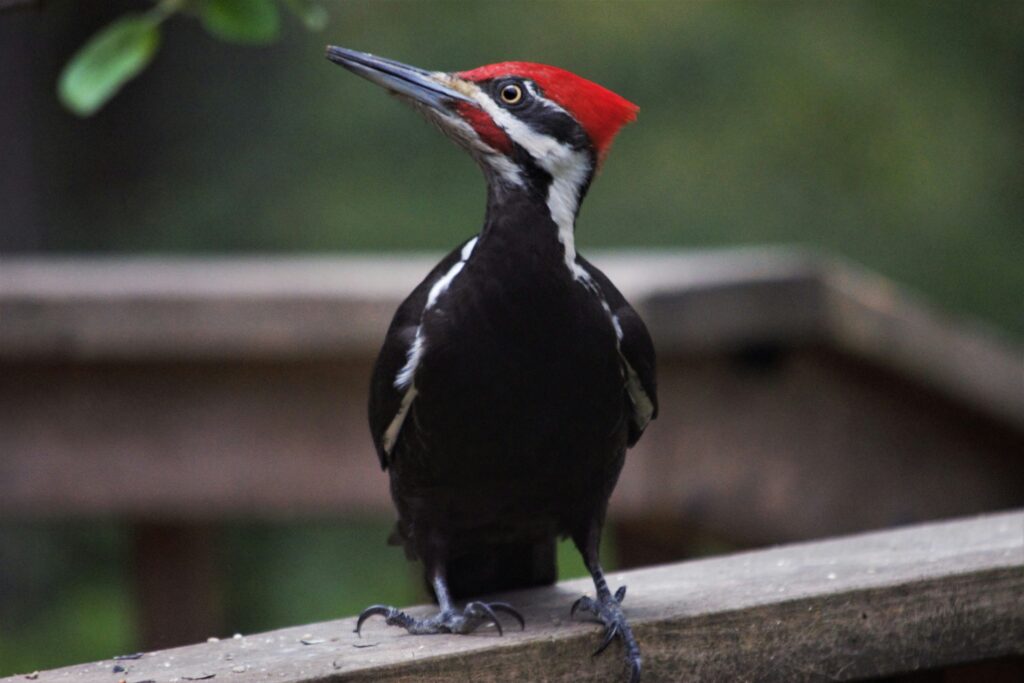
If you’ve ever heard a sound in your backyard that seemed too big and too loud to be a bird — followed by a flash of black, white, and red disappearing into the trees — there’s a good chance you’ve encountered a pileated woodpecker. As North America’s largest widespread woodpecker species, it’s an unmistakable bird once you know what to look for, but its size and preference for mature forest mean many backyard birders go years without spotting one.
This guide covers everything about the pileated woodpecker: how big it actually gets, how to tell males from females, what it eats, and what it takes to attract one to your own yard.
Pileated Woodpecker Quick Facts
| Trait | Detail |
| Size | Approximately 16-19 inches tall |
| Wingspan | Approximately 26-30 inches (about 2.5 feet) |
| Comparable size to | Roughly similar wingspan to an American Crow |
| Coloring | Black body with white stripes on the face and neck; bright red crest |
| Range | Found across most of the eastern US, parts of the Pacific Northwest, and much of Canada |
| Habitat | Mature forests with large, dead, or dying trees |
| Diet | Carpenter ants, wood-boring beetle larvae, other insects; also nuts, berries, and tree sap |
| Status | North America’s largest widespread woodpecker (the larger Ivory-billed Woodpecker is presumed extinct/critically rare) |
How Big Is a Pileated Woodpecker?
The pileated woodpecker is genuinely large for a woodpecker — standing roughly 16 to 19 inches tall, which is close to the size of an American Crow. Its wingspan reaches approximately 26 to 30 inches, or about 2.5 feet across. For comparison, most familiar backyard woodpeckers — Downy, Hairy, and Red-bellied Woodpeckers — are noticeably smaller, with the tiny Downy Woodpecker being North America’s smallest woodpecker species at under 7 inches.
Among living North American woodpeckers, the pileated is the largest widespread species. The only larger woodpecker historically found in North America, the Ivory-billed Woodpecker, is presumed extinct or exceptionally rare, making the pileated the largest woodpecker most birders will realistically ever see.
How to Identify a Pileated Woodpecker
The pileated woodpecker’s combination of size, coloring, and behavior makes it one of the more recognizable woodpeckers once seen — though its size alone often surprises people who weren’t expecting a woodpecker that large.
- Size and shape: Crow-sized, with a long neck and a distinctive flight pattern — strong, direct wingbeats rather than the bouncing flight of smaller woodpeckers
- Coloring: Mostly black body with bold white stripes running down the neck and face
- Crest: A tall, bright red crest on top of the head is the most eye-catching feature
- Sound: A loud, distinctive call often described as having a wild, almost tropical quality — and an extremely loud drumming sound when excavating wood
Male vs. Female Pileated Woodpecker
Both male and female pileated woodpeckers have the bright red crest on top of the head, which can make them look similar at a glance. The key distinguishing feature is on the face:
- Male: Has a red stripe along the jawline (the “mustache” stripe) extending from the base of the beak
- Female: Lacks the red jaw stripe — this area is black or dark instead
This is the most reliable way to tell the sexes apart in the field, and it’s visible even at a moderate distance with binoculars or a camera with reasonable zoom.
What Do Pileated Woodpeckers Eat?
Pileated woodpeckers are primarily insect eaters, with a particular preference for carpenter ants and wood-boring beetle larvae — insects that live deep inside dead and decaying wood. Their diet also includes:
- Carpenter ants (a major food source, often making up a large portion of their diet)
- Wood-boring beetle larvae and other insects living in dead wood
- Nuts and berries, particularly in fall and winter
- Tree sap in early spring
Their feeding behavior is dramatic to watch: a pileated woodpecker excavating a dead tree for carpenter ants will tear away large slabs of bark and wood in a short time, often leaving distinctive large rectangular holes — a telltale sign that a pileated has been working a tree, even if you don’t see the bird itself.
Where Do Pileated Woodpeckers Live?
Pileated woodpeckers are found across most of the eastern United States, parts of the Pacific Northwest and northern California, and much of forested Canada. Their habitat requirement is fairly specific: mature forest with large trees, particularly dead or dying ones that provide both food (insects living in decaying wood) and nesting cavities large enough for a bird this size.
This habitat preference is the main reason pileated woodpeckers are uncommon in newer subdivisions or young forest areas — there simply aren’t enough large dead trees to support them. In areas with older, more established trees — particularly near wooded parks, nature trails, or undeveloped land with mature hardwoods — sightings are considerably more likely.
How to Attract Pileated Woodpeckers to Your Yard
Attracting a bird this size to a yard is more about habitat than feeders, but there are practical steps that can help:
Leave Dead or Dying Trees Standing (When Safe)
The single biggest factor in attracting pileated woodpeckers is the presence of dead or dying trees — sometimes called “snags” — which house the insects these birds rely on. If a dead tree on your property doesn’t pose a safety risk to structures, fences, or where people walk, leaving it standing (even partially) can make a meaningful difference. A tree with a hollow base, peeling bark, or visible fungus is exactly the kind of feature that attracts foraging woodpeckers.
Before leaving any dead tree standing, assess whether it could fall on a structure, power line, fence, or area where people or pets spend time — safety should always come first.
Suet Feeders
While pileated woodpeckers are less reliable suet feeder visitors than smaller woodpeckers, suet cakes — particularly those marketed for woodpeckers — can occasionally attract them, especially in yards near suitable forest habitat. Bark butter, a spreadable suet product applied directly to tree trunks or branches, is another option some backyard birders use successfully. One consideration: bark butter can also attract squirrels in significant numbers, so it may not be ideal in yards already dealing with squirrel pressure.
Patience and Realistic Expectations
Even with ideal habitat nearby, pileated woodpeckers are far less frequent visitors than chickadees, nuthatches, or smaller woodpeckers. Many backyard birders near suitable habitat will see one only occasionally — sometimes the same individual returning to a favored dead tree over a period of months or years. A reliable food source (like a dying tree with active insect activity) is more likely to bring repeat visits than any feeder.
Pileated Woodpecker vs. Other Large Woodpeckers
| Species | Size | Key ID Feature | Notes |
| Pileated Woodpecker | 16-19 inches | Red crest; black body with white neck stripes | Largest widespread North American woodpecker |
| Northern Flicker | 11-14 inches | Brown/barred with spotted breast; white rump in flight | Common, often feeds on ground for ants |
| Red-bellied Woodpecker | 9-10.5 inches | Red cap/nape; barred black-and-white back | Common backyard feeder visitor |
| Hairy Woodpecker | 9-10 inches | Similar to Downy but larger, longer bill | Often confused with Downy Woodpecker |
| Downy Woodpecker | 5.5-7 inches | Smallest North American woodpecker | Most common feeder visitor |
Frequently Asked Questions
How big is a pileated woodpecker?
A pileated woodpecker stands approximately 16 to 19 inches tall, with a wingspan of roughly 26 to 30 inches (about 2.5 feet) — making it North America’s largest widespread woodpecker species, comparable in size to an American Crow.
How do you tell a male from a female pileated woodpecker?
Both sexes have a bright red crest, but males have an additional red stripe along the jawline (a “mustache” mark) that females lack. Females have a black or dark area where the male’s red jaw stripe appears.
What is the largest woodpecker in North America?
The pileated woodpecker is the largest widespread woodpecker in North America. The Ivory-billed Woodpecker, which was historically larger, is presumed extinct or critically rare, making the pileated the largest woodpecker most people will ever realistically encounter.
What do pileated woodpeckers eat?
Their diet is dominated by carpenter ants and wood-boring beetle larvae found in dead and decaying wood, supplemented with other insects, nuts, berries, and tree sap in early spring.
How can I attract a pileated woodpecker to my yard?
The most effective approach is habitat-based: leaving dead or dying trees standing (when safe to do so) provides the insect food source these birds rely on. Suet feeders designed for woodpeckers can occasionally attract them, though they’re far less reliable visitors to feeders than smaller woodpecker species. Yards near mature forest with large trees have the best chance of attracting one.
Final Thoughts
The pileated woodpecker’s size alone makes it one of the most memorable birds a backyard birder can encounter — and once you’ve heard its call or seen the size of the holes it leaves in a dead tree, you won’t mistake it for anything else. While it’s not a bird you can reliably summon with a feeder, yards near mature forest with standing dead trees stand the best chance of an occasional, unforgettable visit.