
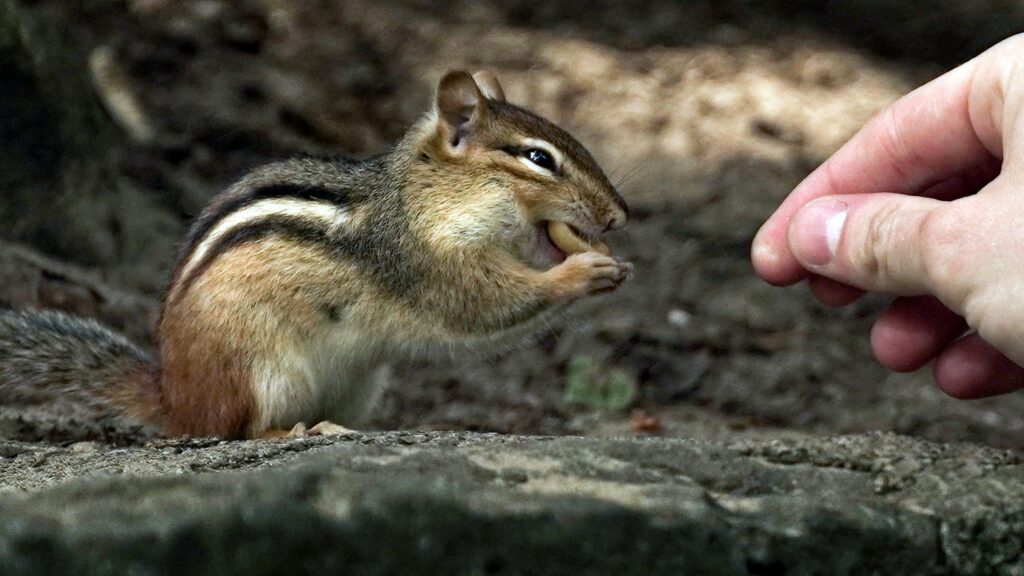
Chipmunks are entertaining to watch — until there are a dozen of them tunneling under your patio, raiding your bird feeders, and turning your lawn into a network of small sinkholes. A chipmunk or two rarely causes a problem, but because they’re rodents, their numbers can grow quickly when food is abundant, and a thriving colony can lead to structural damage, attract other pests, and create genuine headaches for homeowners.
This guide covers what actually works for getting rid of chipmunks — humane trapping, exclusion, and habitat changes — along with why poison and some popular “solutions” tend to cause more problems than they solve.
Why Chipmunk Populations Get Out of Control
If you feed birds, you’re likely also feeding chipmunks. Spilled seed beneath feeders is a reliable, abundant food source, and chipmunks will take full advantage of it. More food means more chipmunks, and more chipmunks means more burrows. A single chipmunk or two is usually harmless — but if you’re regularly seeing three or more at once, the population is likely growing faster than it appears.
The burrows themselves create secondary problems. An abandoned chipmunk burrow can collapse after rain, creating a small sinkhole in the yard. Worse, abandoned burrows are an attractive nesting site for other pests — including yellow jackets, which can move into an empty tunnel and establish a new colony.
Why You Should Avoid Poison for Chipmunks
Poison baits are sometimes suggested as a quick fix, but they create serious problems that outweigh the convenience:
- Secondary poisoning: A poisoned chipmunk doesn’t die instantly — it becomes an easy target for hawks, owls, raccoons, foxes, or even neighborhood cats and dogs, which can then be poisoned themselves by eating it
- Bird poisoning: Poison pellets placed on the ground are easily found and eaten by ground-feeding birds — sparrows, wrens, thrushes, towhees, and others — with fatal results
- Dead chipmunks in inaccessible places: Poisoned chipmunks often retreat to burrows, wall voids, or spaces under decks before dying, leading to unpleasant odors and secondary pest problems (flies, ants) that are difficult to resolve
For these reasons, poison is best avoided for chipmunk control in residential yards — both for ecological reasons and because of the practical mess it tends to create.
Do Electronic Traps Work for Chipmunks?
Electronic rodent traps — the kind that deliver an instant kill via electric shock — are widely used for rats and mice in commercial settings, and they are considered a humane option for those target species. However, they’re generally not the best choice for chipmunks. These devices are designed and sized for rats, not the body shape and behavior of chipmunks, and they tend to be expensive and require regular recharging. For a yard chipmunk problem driven by birdseed, a live-capture trap is typically more effective and far less expensive.
The Best Method: Humane Live Traps
A simple two-door metal live trap — the type widely sold under brands like Havahart — is one of the most effective and reusable tools for chipmunk removal. These traps are durable, easy to clean, and can be used repeatedly for years.
How to Set Up a Chipmunk Trap
- Placement: Set the trap directly beneath or near bird feeder stations, where chipmunks are already accustomed to finding food
- Bait: Use the same birdseed the chipmunks are already eating. Familiar food works better than “upgraded” bait like peanut butter, which can make chipmunks suspicious of an unfamiliar smell
- Timing: A small pile of fresh seed inside the trap is often enough to attract a chipmunk within 20-30 minutes
- Multiple traps: If you have several feeder stations, placing a trap at each one increases efficiency — especially with a larger population
Releasing Trapped Chipmunks
Once a chipmunk is trapped, it should be relocated to a suitable wild area — a park, wooded area, or large vacant lot a reasonable distance from your home, ideally with the landowner’s permission for private property. When transporting:
- Wear gloves when handling the trap — chipmunks may be agitated and can carry seeds in their cheeks that get scattered during transport
- Line the bottom of your vehicle with cardboard or a trash bag to catch any mess
- At the release site, choose an area with natural ground cover (grass, leaf litter, pine straw) and open one trap door — the chipmunk will typically exit quickly on its own
Reducing Food Sources: The Long-Term Fix
Trapping addresses the chipmunks you currently have, but the underlying cause — abundant food from bird feeders — will continue to attract new ones unless addressed. Practical steps:
- Use seed catchers or trays beneath feeders to reduce the amount of spilled seed reaching the ground
- Switch to feeders designed to minimize waste, such as tube feeders with smaller ports
- Clean up spilled seed regularly, especially in fall when chipmunks are actively stocking up for winter
- Consider feeders that exclude larger seed-eating animals while still serving songbirds
This doesn’t mean stopping bird feeding altogether — it means managing waste so the feeding station isn’t doubling as a chipmunk buffet.
Other Deterrent Methods
A few additional methods are sometimes used alongside trapping and food management, with varying effectiveness:
- Ultrasonic/sonic repellers: Battery or solar-powered devices that emit sounds intended to deter rodents from an area. Results are mixed and effectiveness tends to decrease as chipmunks become accustomed to the noise over time
- Natural predator scent: Products containing fox or coyote urine are sometimes used as a deterrent, though effectiveness varies and the scent needs frequent reapplication, especially after rain
- Excluding burrow access: Hardware cloth buried around the perimeter of patios, sheds, and decks can prevent chipmunks from tunneling underneath these structures in the first place
Dealing with Chipmunk Holes
Chipmunk burrow entrances are typically about 2 inches in diameter, often without the visible dirt mound that other burrowing animals (like groundhogs) leave behind, since chipmunks carry excavated dirt away in their cheeks. If you find active or abandoned burrows in your yard:
- Active burrows near trapping sites are good locations to set traps, as the chipmunk is likely to pass by repeatedly
- Once a chipmunk has been relocated, burrows can be filled with soil to prevent collapse and to discourage other animals (including yellow jackets) from moving in
- If burrows are causing structural concerns near a foundation, deck, or patio, filling combined with the hardware cloth exclusion method above helps prevent recurrence
Frequently Asked Questions
What is the best way to get rid of chipmunks?
The most effective and humane method is live-trapping with a simple two-door metal trap, baited with seed the chipmunks are already eating and placed near bird feeders or active burrows. Combined with reducing spilled birdseed, this addresses both the current chipmunks and the food source attracting new ones.
Should I use poison to get rid of chipmunks?
No. Poison creates serious secondary risks — poisoned chipmunks can be eaten by hawks, owls, and other wildlife (as well as pets), causing secondary poisoning. Poison pellets on the ground are also commonly eaten by ground-feeding birds. Dead chipmunks from poison often end up in inaccessible spaces like wall voids or under decks, leading to odor problems.
Do electronic traps work on chipmunks?
Electronic traps are designed primarily for rats and mice and aren’t ideal for chipmunks. They’re also relatively expensive and require recharging. A simple humane live trap is generally more effective and economical for chipmunk removal.
What attracts chipmunks to a yard?
Spilled birdseed beneath feeders is one of the most common attractants. Chipmunks are opportunistic feeders, and a reliable food source allows their population to grow quickly. Managing seed waste — through seed catchers, lower-waste feeders, and regular cleanup — reduces the underlying attraction.
How do I get rid of chipmunk holes in my yard?
Once a chipmunk has been trapped and relocated from a burrow, fill the hole with soil to prevent it from collapsing into a sinkhole and to discourage other pests — particularly yellow jackets — from moving into the abandoned tunnel. For burrows near structures, combining filling with buried hardware cloth around the perimeter helps prevent new burrows from forming in the same area.
Final Thoughts
Chipmunks aren’t dangerous, but an unmanaged population can quickly create yard damage, structural concerns, and secondary pest problems. The most effective approach combines humane live-trapping for chipmunks you currently have with reducing the spilled birdseed that’s likely attracting them in the first place. Avoiding poison protects birds, pets, and other wildlife from secondary harm — and a simple, reusable metal trap will generally serve a yard well for years.