
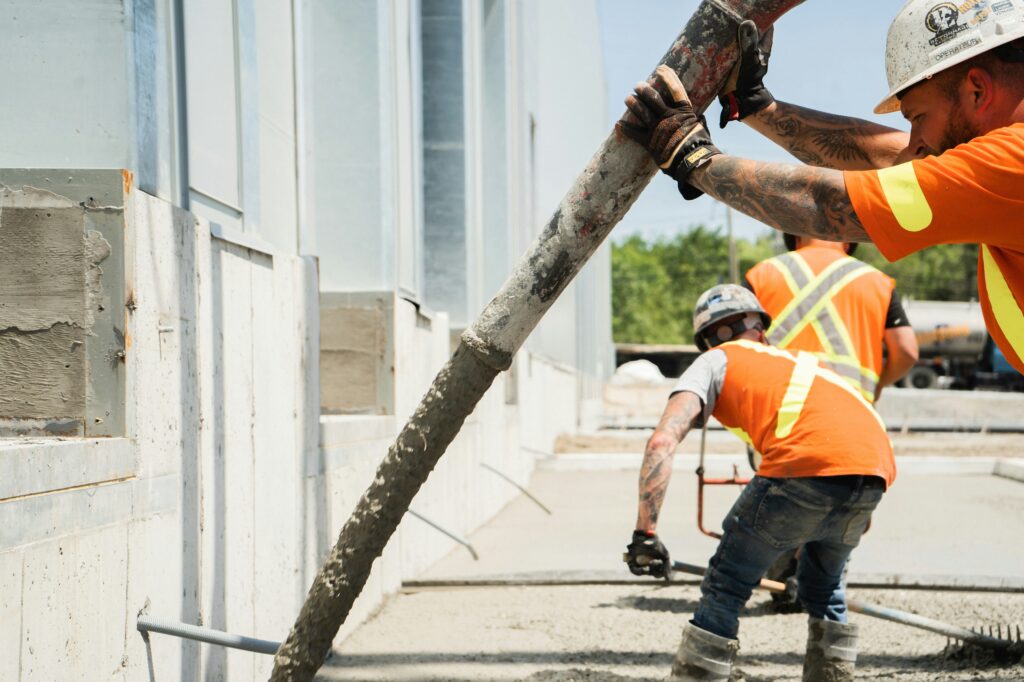
If you’ve just had a new driveway, patio, or walkway poured — or you’re planning a DIY concrete project this weekend — the question on everyone’s mind is the same: how long until I can actually use it? The honest answer is that concrete dries and cures in stages, and “dry to the touch” is very different from “ready to park a car on” or “strong enough for the long haul.”
This guide breaks down exactly how long does concrete take to dry at each stage, what’s actually happening during that time, and the factors — weather, mix type, and slab thickness — that can speed things up or slow them down.
Curing vs. Drying: Why the Difference Matters
These two words get used interchangeably, but they describe different processes — and understanding the difference will save you from making an expensive mistake on a new driveway or patio.
- Curing is the chemical process where concrete gains strength as cement reacts with water (hydration). This continues for about 28 days, and keeping the surface damp during the first week is what allows it to reach full strength.
- Drying is simply the excess water evaporating out of the slab. A driveway can look and feel completely dry within a day or two while still being weeks away from being fully cured underneath.
The practical takeaway: a concrete surface can be dry enough to walk on long before it’s cured enough to handle a car, a heavy planter, or a sealed coating without problems.
Concrete Drying Timeline: What to Expect
| Timeframe | Milestone | What You Can (and Can’t) Do |
| 24-48 hours | Initial set | Light foot traffic okay; no heavy objects, furniture, or equipment |
| 48-72 hours | Safe to walk on | Normal foot traffic fine; still avoid dragging heavy items or sharp impacts |
| 7 days | Safe to drive on | Cars and light vehicles generally okay for a standard driveway mix |
| 28 days | Fully cured | Full design strength reached; safe for heavy loads, sealers, and coatings |
The First 24-48 Hours
Fresh concrete sets up surprisingly fast — within a day or two it transitions from a wet, workable mix to a solid surface that can support light foot traffic. This is the most fragile period for a new slab. Keep pets, kids, and lawn furniture off it, and definitely don’t drive on it or set up a barbecue or planters yet. Footprints, paw prints, and dents left during this window are permanent.
After 48-72 Hours: Walking Is Fine
By the time you’re 2-3 days in, walking across a new walkway or patio is generally safe. The surface has gained enough strength to resist normal wear from people moving across it. Still avoid dragging furniture, grills, or anything with sharp feet that could scratch or gouge the surface while it continues to harden.
After 7 Days: Driving Is Usually Okay
This is the milestone most homeowners are waiting for with a new driveway — and the standard guidance is about one week before vehicles can drive on a properly poured slab. At this point, the concrete has developed roughly 60-70% of its eventual strength, which is enough to handle the weight and rolling stress of a typical car or light truck.
That said, this 7-day estimate assumes good curing conditions (moderate temperatures, proper moisture). In cold weather or with a thicker slab, it’s worth waiting a few extra days before backing the car in.
28 Days: Fully Cured
The widely cited 28-day mark is when concrete reaches its designed compressive strength — the number contractors and engineers reference when specifying a mix (like “4,000 PSI concrete”). This is also the point at which it’s generally safe to apply sealers, stains, or coatings, and to place heavy items like hot tubs, large planters, or storage sheds.
Concrete doesn’t stop gaining strength at 28 days — hydration continues slowly for months or even years — but 28 days is the benchmark used for practical planning purposes.
Factors That Affect Drying and Curing Time
Temperature
Concrete cures fastest in moderate, warm conditions — ideally between 50°F and 90°F. Hot weather speeds up the surface reaction, but if it’s too hot and dry, the surface can dry out faster than the interior, leading to cracking. Cold weather (below 50°F) significantly slows curing — hydration nearly stops below 40°F, which is why concrete poured in late fall or winter often needs extra protection (insulating blankets) and extra time before it’s ready for traffic.
Humidity
High humidity is actually helpful for curing — it slows surface evaporation, giving the hydration process more time to do its job evenly throughout the slab. In hot, dry, or windy conditions, the surface can dry out within hours of finishing, which weakens the top layer and can cause cracking. This is why contractors often spray new concrete with a fine mist of water or cover it with plastic sheeting during the first few days in dry climates.
Slab Thickness
A thicker slab takes longer to cure all the way through, even if the surface feels dry quickly. A standard 4-inch driveway slab and a thin 2-inch decorative topping won’t follow the same timeline — thicker sections retain moisture longer in the core, which is actually beneficial for strength as long as the surface isn’t drying out too fast in comparison.
Concrete Mix and Water Content
The ratio of water to cement in the mix has a big impact. A “wetter” mix (more water relative to cement) takes longer to dry and can result in a weaker, more crack-prone slab. A lower water-to-cement ratio dries faster and produces a denser, stronger finish — but is harder to work with and finish smoothly. Ready-mix suppliers calculate this ratio for the intended use (driveway vs. sidewalk vs. footing), so it’s generally not something a DIYer needs to adjust unless mixing bags themselves.
How to Help Concrete Cure Properly
Good curing practices in the first week make a real difference in the final strength and crack resistance of a new slab:
- Keep it damp: Lightly mist the surface with water periodically during the first 3-7 days, especially in hot or dry weather
- Cover it: Plastic sheeting over a new slab traps moisture and slows evaporation — especially useful overnight or during hot afternoons
- Use a curing compound: A sprayed-on curing compound forms a membrane that locks in moisture without the need for ongoing watering — common for larger DIY pours
- Avoid extreme temperature swings: Don’t pour concrete right before a hard freeze is forecast, and protect fresh concrete from direct, intense sun in very hot climates
- Be patient with edges and joints: Edges and exposed corners dry faster than the slab’s interior and are more prone to cracking if rushed
How to Tell If Concrete Is Dry Enough
For most homeowner projects — walking on a new walkway, parking on a new driveway — the standard timeline guidance (48 hours to walk, 7 days to drive, 28 days fully cured) is reliable enough without special testing.
If you’re planning to apply a sealer, paint, epoxy coating, or adhesive flooring (like tile or vinyl) over concrete, moisture matters more. A simple homeowner check: tape a square of plastic sheeting tightly to the surface and leave it overnight. If condensation forms underneath the next morning, the slab is still releasing significant moisture and isn’t ready for a sealed coating yet. For a more precise reading, a moisture meter (available at most hardware stores) gives a numeric reading you can compare against the coating manufacturer’s requirements.
Speeding Up Concrete Drying: What Actually Helps
- Warm weather: Pouring during mild, dry weather (rather than cold or very humid days) naturally speeds up the early stages
- Good airflow: Once past the initial cure period, ventilation and air movement help surface moisture evaporate for projects like garage floors before sealing
- Lower water content in the mix: A drier mix sets faster, though this is more relevant to contractors specifying the pour than to homeowners after the fact
- Avoid rushing the early days: Counterintuitively, the biggest “speed up” mistake is trying to dry concrete out too fast in the first 24-72 hours — this weakens the surface and can cause cracking that creates bigger problems than the wait ever would
Frequently Asked Questions
How long does concrete take to dry before walking on it?
Most concrete is safe for normal foot traffic within 24-48 hours after pouring. Light walking is generally fine at this stage, though it’s still best to avoid dragging heavy objects or anything with sharp feet across the surface for the first few days.
How long before I can drive on a new concrete driveway?
The standard guidance is about 7 days before driving on a new concrete driveway. At this point the concrete has reached roughly 60-70% of its full strength — enough to handle a typical car or light truck. In cold weather, waiting a few extra days is a good idea.
How long does concrete take to fully cure?
Concrete reaches its designed strength at approximately 28 days, which is the standard benchmark used for specifying mix strength (such as 4,000 PSI). This is also generally the point when it’s safe to apply sealers, coatings, or place heavy items like hot tubs and large planters. Concrete technically continues to gain strength slowly for months afterward, but 28 days is the practical milestone for most projects.
Does weather affect how long concrete takes to dry?
Yes, significantly. Concrete cures best between 50°F and 90°F. Cold weather slows curing dramatically — hydration nearly stops below 40°F — while hot, dry, or windy conditions can cause the surface to dry too quickly, leading to cracking. High humidity actually helps curing by slowing surface evaporation and giving the slab more time to gain strength evenly.
How can I make concrete dry faster without ruining it?
The safest way to support proper drying is to control the curing environment rather than forcing rapid evaporation: pour during mild weather, keep the surface protected from intense sun and wind in the first few days, and avoid extreme cold immediately after pouring. Trying to dry concrete too quickly in the first 24-72 hours — through intense heat or wind exposure — typically weakens the surface and causes cracking, which creates more work than the time saved.
Final Thoughts
The short version: 24-48 hours to walk on it, about a week before driving on it, and a full 28 days before it’s completely cured and ready for sealers or heavy loads. Weather is the biggest variable — mild, slightly humid conditions are ideal, while extreme heat, cold, or wind can throw the timeline off in either direction.
Whether you’re waiting on a new driveway, a backyard patio, or a DIY walkway, the same rule applies: patience in the first week pays off in a stronger, longer-lasting slab. Rushing it rarely saves real time and often costs more in repairs down the line.