
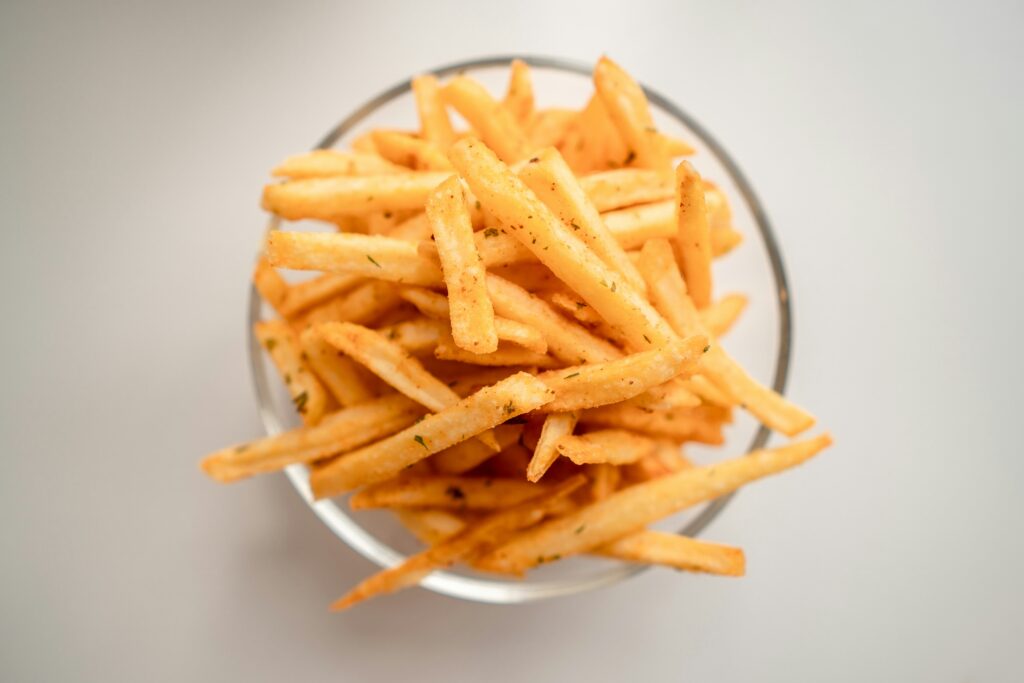
There are more types of french fry than most people realize — and the differences matter more than you might think. The cut affects surface area and crunch. The potato variety affects flavor and texture. The cooking method affects everything from color to calorie count.
Here is every major type of french fry explained: the cut, the best potato for it, how it is cooked, and what it is best served with. Plus: the difference between julienne and shoestring, which fries are actually healthier, and why Yukon Gold potatoes make surprisingly good fries.
French Fry Types: Quick Reference
| Fry Type | Cut Size | Best Potato | Texture |
| Shoestring | ⅛ inch | Russet | Very crispy, delicate |
| Julienne | ⅛–¼ inch | Russet | Ultra-thin, crunchy |
| Straight cut (standard) | ¼–½ inch | Russet | Balanced crispy/soft |
| Steak fries | ¾–1 inch | Russet or Yukon Gold | Thick, fluffy interior |
| Waffle fries | Criss-cross grid | Russet | Max surface area, extra crispy |
| Curly fries | Spiral cut | Russet | Crispy edges, tender center |
| Crinkle cut | Ridged ½ inch | Russet | Extra crispy from ridges |
| Wedge fries | Large wedge | Russet or Idaho | Thick, skin-on option |
| Sweet potato fries | Any cut | Sweet potato | Softer, naturally sweet |
| Beer battered | Standard cut | Russet | Thick, crunchy coat |
| Duck fat fries | Any cut | Russet | Rich, extra crispy |
| Yukon Gold fries | Any cut | Yukon Gold | Buttery, slightly softer |
Classic French Fry Cuts
Shoestring Fries
The thinnest standard fry cut — approximately ⅛ inch wide. Shoestring fries have the highest surface area to interior ratio of any fry style, meaning they are almost entirely crust with minimal soft interior. They cook fast (2–3 minutes in 375°F oil) and go cold and limp faster than thicker cuts.
Best known examples: Five Guys serves shoestring-style fries. The thin cut maximizes crunch but also maximizes sogginess risk if held too long.
Julienne Fries
Julienne is a knife cut, not a specific fry style — it refers to cutting into thin matchstick-shaped strips, typically ⅛ inch square. In the context of french fries, julienne fries are essentially shoestring fries cut very precisely with uniform dimensions. The term comes from French cuisine and refers to the knife technique.
Practically: julienne fries and shoestring fries are the same thing. The terms are often used interchangeably.
Straight Cut (Standard) Fries
The most common fry cut in American restaurants and fast food — approximately ¼ to ½ inch wide. This is the cut you get at McDonald’s (which uses a specific 9/32-inch cut), Burger King, and most casual dining chains. It provides a good balance of exterior crunch and soft interior.
Russet potatoes are the standard choice for straight cut fries. Their high starch and low moisture content creates the textural contrast between crispy exterior and fluffy interior that defines a classic fry.
Steak Fries
The opposite end of the thickness spectrum from shoestring — steak fries are thick-cut, typically ¾ to 1 inch wide. They have substantially more soft potato interior relative to crispy exterior. Often served skin-on, which adds flavor and texture. The skin-on variation is sometimes called ‘board fries’ or ‘plank fries.’
Yukon Gold potatoes work particularly well for steak fries — their naturally buttery, slightly sweet flavor comes through more in thick cuts where there is more interior to taste. Russet potatoes also work well for a more neutral, starchy base.
Waffle Fries
Waffle fries are made using a mandoline with a waffle/lattice blade attachment. The potato is turned 90 degrees between each pass, creating a grid pattern with holes throughout. This maximizes surface area — more surface than any other fry style — resulting in more total crunch per fry. Chick-fil-A’s waffle fries are the most well-known example.
Curly Fries
Curly fries require a spiral cutter or specifically designed curly fry cutter tool. The spiral cut creates extended surface area and more ridges than a straight cut, and the fries naturally curl as they fry. Arby’s curly fries are the most famous — they use a seasoned coating that adds to the crunch. Home curly fry cutters are available and work reasonably well.
Crinkle Cut Fries
Crinkle cut fries use a ridged blade that creates a corrugated, wavy edge on each fry. The ridges increase surface area slightly and create more textural variation — the tips of the ridges crisp up more than the valleys. Crinkle cuts also hold condiments better than straight cuts, which is why they are popular with dipping sauces.
Wedge Fries
Potato wedges are cut from whole potatoes — each potato is halved and then cut into 4–6 wedges per half. This produces large, chunky pieces that are typically baked or fried with the skin on. The skin adds flavor and a rustic texture. Often seasoned more heavily than other fry styles. Idaho potatoes (a variety of Russet grown specifically in Idaho) are traditionally used.
Specialty French Fry Styles
Beer Battered French Fries
Beer battered fries have a thick, crispy coating made from a batter of flour, beer (typically a light lager or ale), salt, and seasonings. The beer adds flavor and carbonation, which lightens the batter and creates a crispier, more porous coating than plain flour. The batter is applied to par-cooked fries and then deep fried again — a double cooking process.
Beer battered fries are distinctly different from standard fries — more like a fried food with a potato interior than a classic fry. They are heartier, heavier, and better suited to holding up under heavy toppings like cheese sauce or pulled pork.
For a step-by-step beer battered fries recipe, The Kitchn’s battered fries guide covers the batter ratios and double-fry technique that gives you the thickest, crispiest crust.
Duck Fat French Fries
Duck fat fries are the premium tier of fry cooking. Duck fat has a high smoke point (approximately 375°F), a rich, savory flavor with subtle gamey undertones, and produces a crust that is simultaneously crispy and deeply flavorful in a way vegetable oils cannot replicate.
Many high-end restaurant burger joints and steakhouses serve duck fat fries as their house fry. They are significantly more expensive to make at home but the result is genuinely different — richer, more complex, and crispier than standard fries.
Beef Tallow Fries
Beef tallow — rendered beef fat — produces fries with a savory, slightly beefy undertone that vegetable oils cannot replicate. This was how McDonald’s made their fries until 1990, and many food historians consider it responsible for the flavor that made McDonald’s fries iconic. Tallow has a high smoke point (approximately 400°F) and produces a very crispy exterior that stays crispy longer than oil-fried fries.
Yukon Gold French Fries
Yukon Gold potatoes have a naturally buttery, slightly sweet flavor, a medium starch content, and a golden-yellow flesh. Fries made from Yukon Golds are slightly softer and less crispy than Russet fries due to their lower starch content, but their flavor is more complex. They work particularly well for thick-cut applications where the interior flavor matters more — steak fries and wedges.
Red potato fries follow the same principle — lower starch, moister flesh, slightly softer fry, but more distinct flavor than a Russet.
Sweet Potato Fries
Sweet potato fries occupy a specific niche — they are made from sweet potatoes (Ipomoea batatas), which are not the same vegetable as regular potatoes. Sweet potatoes have higher sugar content, more fiber, and significantly higher Vitamin A than regular potatoes. They also have a higher moisture content, which makes achieving crispiness more difficult.
Sweet Potato Fries Nutrition
| Nutrient | Regular Fries (medium) | Sweet Potato Fries (medium) |
| Calories | ~340 | ~360 |
| Total fat | ~17g | ~20g |
| Carbohydrates | ~44g | ~46g |
| Fiber | ~4g | ~5g |
| Vitamin A | Low | High — ~200% DV |
| Vitamin C | ~10% DV | ~30% DV |
The nutrition difference: sweet potato fries are not dramatically lower in calories or fat than regular fries when deep fried — the difference mostly comes from the vegetable itself. Baked or air-fried sweet potato fries have substantially fewer calories than the deep-fried version.
Getting crispy sweet potato fries: the high moisture content makes crispiness harder to achieve than with regular potatoes. Soak sliced sweet potatoes in cold water for 30 minutes, dry thoroughly, coat in a thin layer of cornstarch, and cook at a higher temperature (425–450°F for oven). The cornstarch creates a barrier that helps the exterior crisp up.
Are French Fries Gluten Free?
Plain french fries made from potatoes and fried in dedicated oil are naturally gluten free. However, many fries are not safe for people with celiac disease or serious gluten intolerance for several reasons:
- Cross-contamination: fryers used for battered foods, onion rings, or breaded items contaminate the oil with gluten — a common issue in restaurants
- Battered fries: beer battered or flour-coated fries contain gluten in the coating
- Some frozen fry brands: a small number use modified food starch or other gluten-containing additives — always check the label
In fast food: McDonald’s fries in the US contain natural beef flavor derived from wheat and milk derivatives — not gluten-free. In the UK, McDonald’s fries are cooked in dedicated fryers and are considered gluten free. Five Guys fries are cooked in peanut oil in dedicated fryers and are gluten free. Always verify current status directly with the restaurant, as policies change.
For the best seasonings to use on each fry type, see our complete french fry seasoning guide with 7 homemade blends including the cajun recipe and Old Bay blend that work on every cut.
Can You Eat French Fries After Wisdom Teeth Removal?
Yes — soft, non-crispy fries are generally safe after wisdom teeth removal once the first 24 hours have passed. The key is avoiding hard, crunchy textures that could disrupt the blood clot in the extraction site. Limp, soft fast food fries that have cooled and lost their crispiness are safer than fresh, crispy fries.
Avoid: crunchy shoestring fries, thick steak fries with hard edges, any fry eaten hot enough to irritate the wound. Sucking through a straw is more dangerous than eating soft fries — the suction pressure is what can dislodge a blood clot. Ask your oral surgeon for specific guidance, as healing timelines vary.
Are French Fries Healthy?
Standard deep-fried french fries are not a particularly nutritious food — a medium serving from a fast food restaurant typically contains 300–400 calories, 15–20g of fat, 40–50g of carbohydrates, and high sodium. However, potato itself is a nutritious food — a good source of potassium, vitamin C, and B vitamins. The frying process adds the majority of the calories and fat.
Healthier alternatives that still satisfy:
- Air-fried fries: same cut, 75–80% less fat than deep-fried
- Oven-baked fries: coat in a thin layer of olive oil, bake at 425–450°F
- Sweet potato fries (air fried): lower glycemic index, much higher Vitamin A
- Thick-cut vs thin-cut: thicker fries absorb less oil per gram of potato during frying than thin fries
Bottom Line
| ✅ Most crispy | Waffle or shoestring — maximum surface area |
| ✅ Best flavor | Duck fat or beef tallow fries — richest, most complex |
| ✅ Best potato | Russet for crispiness; Yukon Gold for buttery flavor in thick cuts |
| ✅ Healthiest | Air-fried sweet potato fries — highest nutrients, least oil |
| ✅ Julienne vs shoestring | Same thing — julienne is the knife cut name; shoestring is the fry name |
| ✅ Gluten free? | Plain potato fries yes; battered fries no; check fryer cross-contamination |
Frequently Asked Questions
What are all the different types of french fries?
The main french fry types are: shoestring, julienne, straight cut (standard), steak fries, waffle fries, curly fries, crinkle cut, wedge fries, sweet potato fries, beer battered fries, duck fat fries, and seasoned fries. Variations include home fries (pan-fried potato pieces), steak fries with skin on, and specialty cuts like tornado/twister fries.
What is the difference between julienne fries and shoestring fries?
Julienne is a culinary knife cut — thin, uniform matchstick strips typically ⅛ inch square. Shoestring is a specific fry style name. In practice, they refer to the same type of fry — very thin, crispy strips. The terms are used interchangeably in most restaurant and home cooking contexts.
Are sweet potato fries healthier than regular fries?
Sweet potato fries have more Vitamin A (roughly 200% of the daily value per serving), more fiber, and a lower glycemic index than regular potato fries. However, when deep fried, the calorie and fat content is very similar. The health advantage of sweet potato fries is most pronounced when baked or air fried rather than deep fried.
What are duck fat french fries?
Duck fat fries are fried in rendered duck fat instead of vegetable oil. Duck fat has a smoke point around 375°F, a rich savory flavor, and produces a fry that is crispy, complex in flavor, and stays crispy longer than oil-fried equivalents. They are a premium restaurant fry style. Duck fat is available at specialty grocery stores and online.
What potato is best for french fries?
Russet (Idaho) potatoes are the standard choice — high starch, low moisture, and fluffy interior texture that crisps up beautifully. Yukon Gold potatoes produce a slightly softer, more buttery fry that works well in thick cuts. Avoid waxy potatoes like red potatoes for classic crispy fries — their high moisture content prevents the crispy exterior from forming properly.