
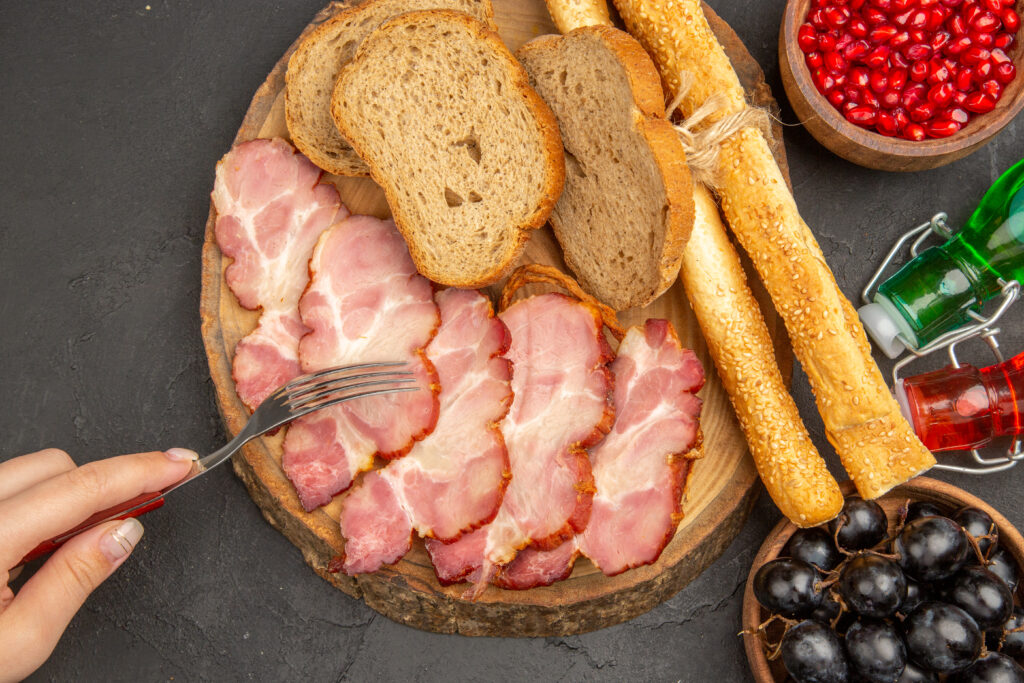
Pancetta vs guanciale, and bacon are three cured pork products that look similar, taste vaguely related, and are frequently — and incorrectly — used interchangeably. They come from different cuts, are processed differently, and have genuinely distinct flavor profiles that matter when you are cooking.
More practically: using the wrong one in certain Italian recipes is a very common mistake that changes the dish. This guide covers what each one is, exactly how they differ, which recipes call for which, and how to substitute when you can’t find the right one.
The Quick Comparison
| Feature | Pancetta | Guanciale | Bacon |
| Cut | Pork belly | Pork jowl/cheek | Pork belly (sides) |
| Shape | Rolled cylinder | Flat triangular slab | Flat strips |
| Curing method | Salt, pepper, spices; dried | Salt, pepper, spices; air-dried | Brined/cured, often smoked |
| Smoked? | No | No | Usually yes |
| Curing time | Weeks to months | Minimum 3 months | Days to weeks |
| Fat content | Moderate | Very high (soft, silky fat) | Moderate to high |
| Flavor | Mild, porky, herbal | Rich, intense, slightly funky | Smoky, savory, salty |
| Raw edible? | Sometimes (thin sliced) | No — must be cooked | No — must be cooked |
| Use in Carbonara? | No (common mistake) | Yes — correct ingredient | No |
What Is Guanciale?
Guanciale (pronounced gwan-CHAH-leh) is cured pork jowl or cheek — the fatty, triangular cut from the pig’s face. The name comes from the Italian word guancia, meaning cheek. It is rubbed with salt, black pepper, and sometimes garlic, red pepper, or other spices, then hung to air-dry for a minimum of three months.
Guanciale has the highest fat content of the three, and importantly, the fat is softer and more delicate in texture than bacon or pancetta fat. When rendered, guanciale fat becomes silky and almost translucent, releasing a deeply porky, slightly funky flavor that coats the pasta in a way no other cured meat replicates.
What Does Guanciale Taste Like?
Guanciale has an intensely porcine, rich flavor — more complex and more assertive than pancetta, and fundamentally different from smoked bacon. The fat is the point: it is the primary flavor carrier, and when properly rendered it becomes the fat-based sauce in dishes like Carbonara and Amatriciana.
What Is Guanciale Used For?
Guanciale is the correct — and in traditional recipes, mandatory — ingredient in:
- Spaghetti alla Carbonara: guanciale, eggs, Pecorino Romano, black pepper — no pancetta, no bacon, no cream
- Pasta all’Amatriciana: guanciale, San Marzano tomatoes, Pecorino Romano, black pepper
- Pasta alla Gricia: guanciale, Pecorino Romano, black pepper — the no-tomato precursor to Amatriciana
In all three dishes, the rendered guanciale fat is a primary component of the sauce itself, not just a flavoring element. Substituting a lower-fat or differently textured product changes the fundamental character of the dish.
Guanciale Shelf Life
Once cut, guanciale should be used within one month. The exterior of a cured guanciale piece typically develops a hardened, dried crust — this should be trimmed and discarded before use. The interior meat and fat is what you cook with.
What Is Pancetta?
Pancetta is made from pork belly — the same cut used for bacon. The belly is cured with salt, pepper, and spices (which vary by region and producer), then rolled tightly into a cylindrical shape and stuffed into a casing. It is then air-dried or cold-cured for anywhere from several weeks to several months, depending on the producer.
Pancetta is not smoked. This is the critical distinction from bacon. The flavor is mild, porky, and herbal — less intense than guanciale, more subtle than smoked bacon.
What Does Pancetta Taste Like?
Pancetta has a clean, mild pork flavor with herbal and spice notes from the curing blend. It is savory without the smokiness of bacon and less aggressively fatty than guanciale. The flavor profile is versatile — it can enhance other ingredients without dominating them.
Types of Pancetta
- Pancetta tesa: Flat, uncured, like thick-cut bacon strips. Most common form used in cooking.
- Pancetta arrotolata: The classic rolled form, sold in slices. Can sometimes be eaten raw in thin slices like prosciutto.
- Pancetta affumicata: Smoked pancetta — less common; technically bridges pancetta and bacon in flavor.
What Is Pancetta Used For?
- Bolognese ragù: Pancetta is the traditional fat base, finely diced, sweated with the mirepoix
- Pasta e fagioli: Lends porky richness to the bean broth
- Risotto: Diced and rendered as a base or crispy garnish
- Wrapped proteins: Wrapping chicken, fish, or vegetables before roasting
- Salads: Rendered until crispy as a bacon alternative without the smokiness
Pancetta is NOT the correct ingredient for Carbonara, Amatriciana, or Gricia. This substitution is one of the most common errors in Italian cooking outside Italy.
What Is Bacon?
American bacon is cured pork belly (and sometimes sides) that is typically smoked. The smoking process — which pancetta and guanciale do not undergo — gives bacon its characteristic flavor: salty, savory, and with the distinctive smokiness that makes it a defining flavor in American cooking.
Bacon is available in an enormous range of styles — different smoke levels, wood types, thicknesses, and curing blends. It is the most widely available of the three in the United States and the most familiar flavor to American cooks.
What Does Bacon Taste Like?
Smoked bacon has a bold, assertive flavor dominated by smokiness alongside salt and pork. The smoke is what distinguishes it from pancetta and guanciale most clearly. In dishes where smokiness is appropriate, bacon is excellent. In Italian dishes where the authentic flavor profile is specifically the unsmoked, deeply porky guanciale character, bacon produces a noticeably different — and less authentic — result.
When Is Bacon the Right Choice?
- American breakfast: The defining application — eggs, toast, and bacon
- BLT sandwiches and burgers
- American chowders and soups where smokiness is appropriate
- Wrapped meats, vegetables, or shellfish where a smoke element is desirable
- Any recipe developed specifically with bacon’s smoky-salty flavor in mind
Can You Substitute Them for Each Other?
Can You Use Pancetta Instead of Guanciale in Carbonara?
Pancetta is the most common substitution for guanciale in Carbonara — it is what most recipes outside Italy specify, and it produces a good pasta dish. However, it is not authentic, and the flavor difference is noticeable to anyone who has had the dish made with proper guanciale. Pancetta renders differently, has less fat, and lacks the specific flavor of jowl meat.
The result with pancetta: a very good pasta. The result with guanciale: the actual dish.
Can You Use Bacon Instead of Guanciale or Pancetta?
Bacon can be used in a pinch — the dish will be edible — but the smokiness fundamentally alters the flavor profile of Italian pasta dishes. A Carbonara made with smoked bacon tastes like a good American pasta dish, not like Roman Carbonara. For recipes where authenticity matters, seek out guanciale; for everyday cooking where you want something in the general flavor family, pancetta is the better substitute than bacon.
Best Substitution Hierarchy
| Recipe Calls For | Best Substitution (in order) |
| Guanciale | 1. Pancetta (different but closest); 2. Bacon (smokes the dish) |
| Pancetta | 1. Guanciale (richer); 2. Unsmoked bacon/lardons (if available) |
| Bacon | 1. Pancetta + smoke element; 2. Guanciale (no smokiness) |
Where to Buy Guanciale and Pancetta in the US
Guanciale is less commonly available than pancetta in US grocery stores. Where to find it:
- Italian specialty delis and markets: The best source for high-quality, imported or locally produced guanciale
- Specialty food stores: Eataly, Dean & DeLuca, and similar retailers typically carry guanciale
- Online: Several artisan producers ship vacuum-sealed guanciale nationally (La Quercia, Olli Salumeria, and similar American producers make excellent versions)
- Italian imports: Look for guanciale labeled as made in Italy (Lazio region products are particularly prized) for the most authentic flavor
Pancetta is available in most well-stocked supermarkets in the deli section, either sliced thin or in a block/slab. Trader Joe’s, Whole Foods, and most Italian specialty grocery sections carry it.
Frequently Asked Questions
What is the difference between guanciale and pancetta?
Guanciale comes from the pig’s jowl/cheek and has a very high, soft fat content with an intensely rich, porky flavor. Pancetta comes from the pork belly and has a milder, more herbal flavor with less fat. Both are unsmoked Italian cured meats, but they are used in different dishes — guanciale in Carbonara, Amatriciana, and Gricia; pancetta in Bolognese and other braises.
Is pancetta the same as bacon?
No. Pancetta and bacon both come from pork belly, but they are processed differently. Pancetta is cured with salt and spices and not smoked; bacon is typically smoked. The smoking process gives bacon its distinctive flavor that pancetta does not have. They are not interchangeable in Italian recipes where the unsmoked character of pancetta matters.
What does guanciale taste like compared to bacon?
Guanciale has an intensely porcine, rich, slightly funky flavor from the jowl meat and extended curing period. Bacon is savory and smoky. Guanciale has no smokiness but significantly more fat and a deeper, more complex meat flavor. The rendered fat from guanciale is what gives dishes like Carbonara and Amatriciana their characteristic silky, rich sauce.
What is traditionally in Carbonara — guanciale, pancetta, or bacon?
The traditional, authentic recipe for Spaghetti alla Carbonara uses guanciale — specifically the cured pork jowl. The Italian culinary academy (Accademia Italiana della Cucina) lists guanciale as the correct ingredient. Pancetta is frequently substituted outside Italy and produces a good dish; bacon adds smokiness that changes the flavor significantly.
Final Thoughts
Guanciale, pancetta, and bacon occupy overlapping but distinct flavor territories. Understanding the difference is practical: if you are making Carbonara and want it to taste like the dish actually tastes in Rome, get guanciale. If you are making Bolognese, use pancetta. If you are making an American dish that specifically benefits from smoke and salt, bacon is exactly right.
The effort to find guanciale for Roman pasta dishes is worth it — the flavor difference is significant enough that most people who taste both versions immediately understand why Italian cooks insist on the correct ingredient.