
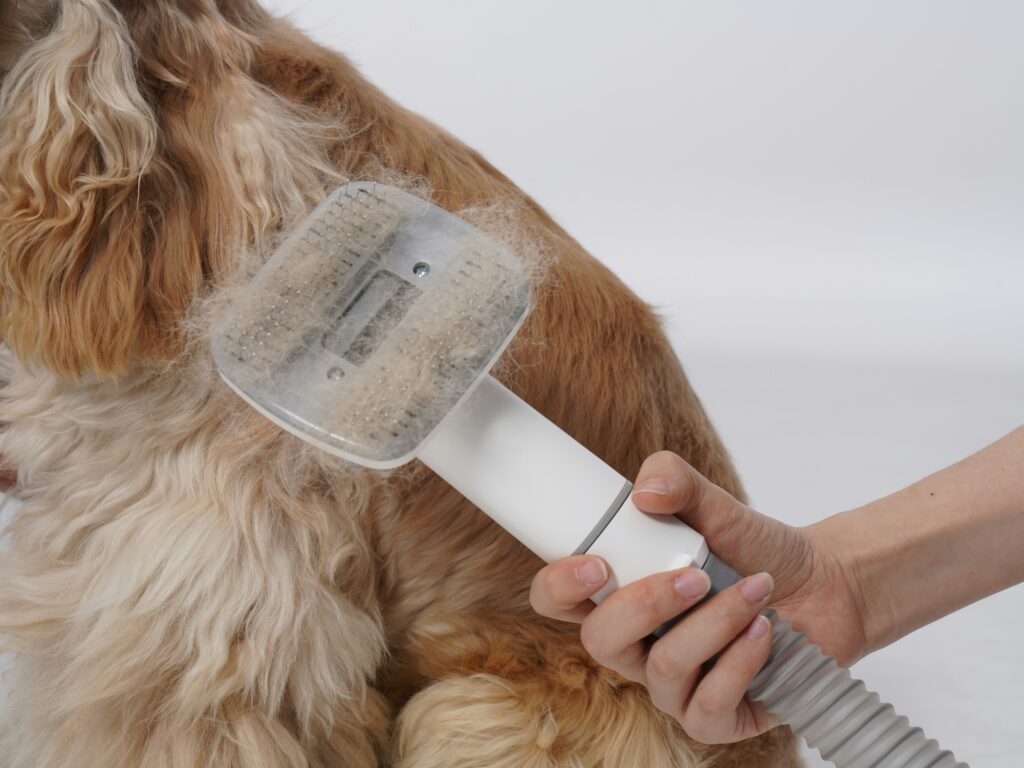
Pet hair is a different cleaning challenge than ordinary household dust. It’s bulkier, it wraps around brush rolls, and it gets embedded deep into carpet fibers in a way that standard vacuums struggle with. The good news is that the vacuum market has caught up — most major brands now make dedicated “pet” models with features specifically designed for shedding dogs and cats.
This guide covers what actually separates a good pet hair vacuum from a mediocre one, the main vacuum types worth considering, and how to think about the trade-offs between them.
Vacuum Types for Pet Hair: Quick Comparison
| Type | Best For | Strengths | Trade-offs |
| Upright | Deep carpet cleaning | Strong suction, large dustbin | Heavier, less convenient for stairs |
| Cordless/Stick | Quick cleanups, multi-surface | Lightweight, portable | Limited runtime, smaller dustbin |
| Canister | Mixed flooring, allergy households | Quiet, strong filtration | Bulkier to store and maneuver |
| Robot | Daily maintenance | Hands-free, runs automatically | Can’t do stairs/upholstery, less deep-clean power |
Top Vacuum Picks for Pet Hair in 2026
Best Overall Cordless: Dyson V15 Detect / Gen5detect
Dyson’s high-end cordless vacuums have consistently ranked among the top performers for pet hair in independent testing. The V15 Detect’s standout feature is its laser illumination system, which lights up dust and pet hair on hard floors that’s otherwise invisible — a feature that genuinely changes how thoroughly people clean once they see how much hair was actually left behind. The newer Gen5detect builds on this with an anti-tangle Motorbar head designed specifically to prevent pet hair from wrapping around the brush roll, a common complaint with older vacuum designs.
- Strengths: Laser dust detection, strong suction, anti-tangle brush design, LCD particle readout
- Trade-offs: Premium price; cordless runtime drops significantly in boost mode (often well under 10 minutes on max power)
- Best for: Pet owners who want a single high-performance cordless vacuum for daily and deep cleaning
Best Upright: Dyson Ball Animal 3
For households that want a dedicated deep-cleaning machine for carpets, the Dyson Ball Animal 3 remains a frequently recommended upright option. Its self-adjusting cleaner head is designed to seal against carpet, tile, and hardwood automatically, and whole-machine HEPA filtration helps with pet dander and allergens in addition to visible hair.
- Strengths: Strong sustained suction on carpet, automatic floor-type sealing, HEPA filtration
- Trade-offs: Heavier than cordless options; less convenient for stairs or quick spot-cleaning
- Best for: Homes with significant carpet and one or more shedding dogs
Best Value: Shark Models (NV752, PowerDetect, Rotator Pet Pro)
Shark has built a strong reputation specifically around pet hair vacuums, generally offering performance that’s competitive with premium Dyson models at a noticeably lower price. Lift-away or detachable canister designs let the main unit convert into a more portable cleaner for stairs, furniture, and car interiors, and Shark’s anti-wrap brush roll designs (using rubber fins or guards) target the brush-tangling problem directly.
- Strengths: Strong value relative to performance, lift-away/detachable designs for stairs and upholstery, anti-tangle brush rolls
- Trade-offs: Dustbins are often somewhat smaller than premium uprights; floor-type auto-detection may be less sophisticated
- Best for: Pet owners who want strong cleaning performance without paying premium prices
Best for Allergies: Miele Cat & Dog Models
Miele’s “Cat & Dog” line is specifically positioned for households where pet allergies are a concern. These models use sealed filtration systems — meaning all exhaust air passes through HEPA-rated filters with gaskets that prevent air from bypassing the filter — which matters because a HEPA filter alone doesn’t help much if air can leak around it. Miele’s canister and stick models in this line also tend to be among the quietest vacuums tested, which can matter for noise-sensitive pets.
- Strengths: Sealed HEPA filtration (true allergen capture), quiet operation, durable build with long expected lifespan
- Trade-offs: Bagged models add ongoing cost for replacement bags; premium pricing
- Best for: Households with pet allergy sufferers, or anyone prioritizing air quality alongside cleaning
Best Robot Vacuum: iRobot Roomba and Competing Models
Robot vacuums won’t replace a deep-cleaning upright or cordless vacuum for embedded pet hair in thick carpet, but they excel at daily maintenance — picking up surface hair on hardwood and low-pile carpet before it has a chance to accumulate. Newer models from iRobot and competitors increasingly include camera-based navigation that can identify and avoid pet waste, addressing a long-standing concern for pet owners considering robot vacuums.
- Strengths: Fully automated, self-emptying bases reduce maintenance, pet waste avoidance on newer models
- Trade-offs: Cannot clean stairs or upholstery; less effective on thick or deep-pile carpet than uprights
- Best for: Daily maintenance between deeper weekly cleans with another vacuum type
Features That Matter Most for Pet Hair
Sustained Suction, Not Just Peak Suction
Vacuum specifications often highlight peak suction (measured in Air Watts), but what matters for pet hair is how well that suction holds up during continuous use as the dustbin fills and the filter accumulates debris. A vacuum that loses significant power after 10-15 minutes of use will struggle more with a full-home clean than one with slightly lower peak suction but better retention. Independent lab tests (such as those from RTINGS and Consumer Reports) that measure suction over time are more useful than manufacturer peak-suction claims alone.
Anti-Tangle Brush Roll Design
Long pet hair wrapping around a standard brush roll is one of the most common frustrations with vacuums in pet households — and one of the most common reasons cleaning performance degrades over time. Brush rolls designed with conical bristle patterns, rubber fins, or specialized “hair screw” tools that actively channel hair toward the dustbin (rather than letting it accumulate on the roller) make a meaningful difference. When shopping, look specifically for anti-tangle or de-tangling brush technology rather than assuming any vacuum marketed for “pets” automatically has it.
Sealed HEPA Filtration
True HEPA filtration captures at least 99.97% of particles at 0.3 microns — small enough to include common pet allergens like Fel d 1 (cat) and Can f 1 (dog). However, the filter only helps if the system is sealed, meaning gaskets prevent air from bypassing the filter media. “HEPA-style” or “HEPA-type” filters are not the same as certified HEPA filters and generally offer weaker performance. For allergy-sensitive households, sealed HEPA systems (common in Miele’s higher-end lines) offer a meaningful step up.
Dustbin or Bag Capacity
Pet hair takes up more volume relative to its weight than typical household dust, which means dustbins fill faster in pet households than the capacity numbers might suggest. Larger capacity (or bagged systems with larger bags) reduce how often you need to stop and empty mid-clean — a relevant consideration for larger homes or multi-pet households.
Noise Level
Many dogs and cats show stress responses to loud vacuum noise, and vacuum noise levels vary more than people expect — from the mid-60s dB on quiet settings of some canister models to the high-70s/low-80s dB for some uprights at full power. For noise-sensitive pets, checking noise specifications (or independent test measurements) before buying can help avoid a vacuum that turns cleaning day into a stressful event for the household’s animals.
A Practical Two-Vacuum Strategy
Many pet owners find the best results come from combining vacuum types rather than relying on a single machine: a robot vacuum running daily handles surface maintenance on hardwood and low-pile carpet, while a more powerful cordless or upright vacuum is used weekly for a deeper clean of carpets, upholstery, and stairs. This combination addresses both the constant low-level shedding between cleanings and the periodic deep clean that embedded pet hair requires.
Maintenance Tips for Pet Hair Vacuums
- Empty the dustbin (or replace the bag) regularly — performance drops noticeably once a bin is more than about three-quarters full
- Check and clean the brush roll weekly if you have long-haired pets — tangled hair reduces rotation speed and cleaning effectiveness
- Rinse pre-motor filters monthly (for washable filters) — clogged filters reduce airflow significantly
- Replace HEPA filters per the manufacturer’s schedule (typically every 6-12 months) — saturated filters lose particle-capture efficiency
Frequently Asked Questions
What is the best type of vacuum for pet hair?
There’s no single best type — it depends on your home. Uprights and high-end cordless vacuums (like Dyson’s pet-focused models) generally offer the strongest deep-clean performance on carpet. Canister vacuums, particularly Miele’s Cat & Dog line, are strong choices for allergy-sensitive households due to sealed HEPA filtration. Robot vacuums are best for daily maintenance rather than deep cleaning.
Is Dyson or Shark better for pet hair?
Both brands perform well in independent testing. Dyson’s premium models (V15 Detect, Gen5detect, Ball Animal 3) tend to lead on raw performance and innovative features like laser dust detection, while Shark models often deliver close performance at a significantly lower price, making them a strong value option for most households.
Do I need a HEPA filter for pet hair?
A HEPA filter isn’t strictly necessary just to pick up visible pet hair, but it makes a meaningful difference for pet dander and allergens, which are much smaller than visible hair. For households with pet allergy sufferers, a sealed true-HEPA system is worth prioritizing; for households focused mainly on visible hair and shedding, it’s a nice-to-have rather than essential.
How often should pet owners vacuum?
Homes with one or two shedding pets generally benefit from vacuuming high-traffic areas several times a week, with more frequent cleaning during seasonal shedding periods (commonly spring and fall for many breeds). A robot vacuum running daily can reduce how often a full manual vacuuming session is needed.
Are robot vacuums good enough for pet hair on their own?
Robot vacuums handle daily surface maintenance well, particularly on hardwood and low-pile carpet, but they generally can’t match the deep-cleaning power of an upright or cordless vacuum on thick carpet, and they can’t clean stairs or upholstery. Most pet owners get the best results pairing a robot vacuum for daily runs with a more powerful vacuum for weekly deep cleans.
Final Thoughts
The right pet hair vacuum depends less on chasing the single “best” model and more on matching the vacuum type to your home: carpet-heavy homes benefit most from a strong upright or cordless vacuum with anti-tangle brush technology, allergy-sensitive households should prioritize sealed HEPA filtration, and busy households often get the most value from combining a daily robot vacuum with a weekly deep-clean machine. Whichever type you choose, sustained suction and anti-tangle brush design are the two features that consistently separate genuinely effective pet hair vacuums from disappointing ones.