
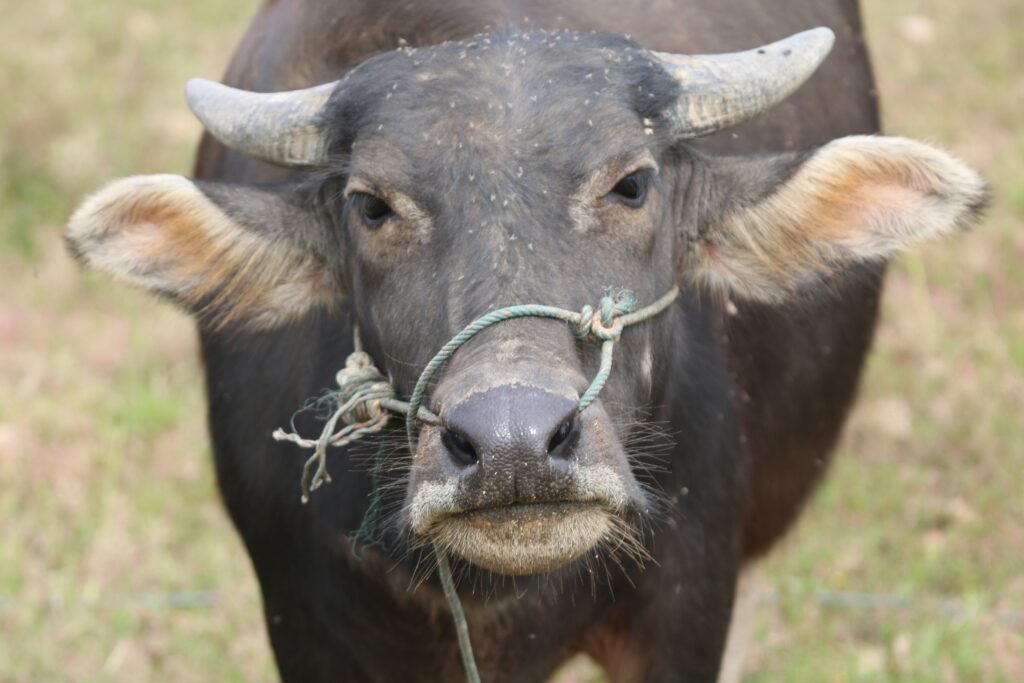
A bull with a metal ring through its nose is a familiar sight at farms, livestock shows, and county fairs, but the reason behind it has nothing to do with fashion or tradition for its own sake. The nose rings is a practical safety tool — and the science behind why it works comes down to one simple fact: a bull’s nose is one of the most sensitive parts of its body.
The Real Reason: Safety and Control
Bulls are large, powerful, and can be unpredictable, especially as they mature. A fully grown bull can weigh well over 1,000 pounds and move with surprising speed, which makes safe handling a serious concern for both the animal and the people working with it.
A ring through the nasal septum — the cartilage dividing the two nostrils — gives handlers a point of control that doesn’t rely on overpowering the animal physically. Because the septum is so sensitive, even gentle pressure on the ring is enough to get a bull’s attention and guide its movement, in a way that pulling on a halter alone often can’t achieve with an animal this size and strength.
How the Nose Ring Works
The principle is straightforward: pressure applied to the ring causes mild discomfort in the sensitive nasal septum, which encourages the bull to move away from that pressure — typically by following the direction the handler is leading. This isn’t about causing pain as punishment; it’s closer to how a horse responds to gentle pressure on the reins, giving a clear, immediate signal that the animal can learn to respond to consistently.
A length of rope or chain is sometimes attached to the ring and connected to the bull’s horns or collar. If the bull lowers its head aggressively — a typical pre-charge posture — it can step on the dangling rope itself, creating a self-correcting check on aggressive movements without the handler needing to intervene directly.
Why Bulls Specifically?
Cows are generally more docile and can usually be managed safely with a halter alone, which is why nose rings are far less common on female cattle. Bulls, particularly larger and more powerful breeds commonly used in beef production, are more likely to display aggressive behavior — especially during breeding season or when defending territory — making the additional control a nose ring provides more valuable for handler safety.
Bulls used in competitive settings like livestock shows often require a nose ring as part of standard handling equipment, frequently paired with a halter so that pressure can be applied through both points and released smoothly once the animal responds.
How Nose Rings Are Fitted
Fitting a nose ring is typically done by a veterinarian or trained handler, piercing the nasal septum and inserting a ring made of a durable, non-reactive material such as stainless steel, copper, or aluminum. Bull calves are often ringed at around 9 to 12 months old, before the animal reaches its full adult size and strength, making the process easier and the bull more accustomed to wearing the ring by the time it’s fully grown.
Once the piercing has healed, the ring itself generally doesn’t cause ongoing discomfort under normal conditions — discomfort only occurs when pressure or pulling force is applied, which is the entire point of the design.
Are Nose Rings Used on Other Animals?
| Animal | Why |
| Pigs | Smaller rings discourage rooting behavior, which can damage fencing and fields if left unchecked |
| Calves (weaning) | Temporary clip-on plastic rings with small spikes discourage nursing, helping separate calves from their mothers more gradually than abrupt weaning |
| Sheep and goats | Similar weaning-ring approaches are sometimes used, though less commonly than with cattle |
| Cows | Rarely needed — cows are generally more easily managed with a halter alone due to typically calmer temperament |
A Note on Animal Welfare
The use of nose rings on bulls is a longstanding livestock management practice, and animal welfare organizations generally don’t treat it as purely cosmetic or unnecessary — when fitted properly by trained personnel and used for genuine handling and safety purposes, it’s widely regarded as a practical tool. That said, welfare guidance does emphasize correct fitting, regular monitoring for irritation, and gentle handling technique, since the ring’s effectiveness depends on appropriate use rather than force.
Frequently Asked Questions
Does it hurt the bull to have a nose ring?
The piercing itself causes temporary discomfort similar to any piercing, but once healed, the ring doesn’t cause ongoing pain under normal conditions. Discomfort occurs specifically when pressure is applied to the ring, which is the mechanism that allows handlers to guide the animal.
Why don’t cows usually have nose rings?
Cows are generally more docile and easier to manage with a standard halter, so the additional control a nose ring provides is less often needed. Bulls, which can be larger, more powerful, and more prone to aggressive behavior, are more commonly fitted with nose rings for handler safety.
At what age are bulls fitted with nose rings?
Bull calves are commonly fitted with a nose ring around 9 to 12 months old — before the animal reaches full adult size and strength, which makes the process easier and helps the bull become accustomed to the ring over time.
Is it required by law for bulls to have nose rings?
No, fitting a nose ring isn’t legally required in most places, though many farmers choose to use them as a standard safety practice. Some competitive livestock shows do require a nose ring as part of standard handling equipment.
What is the rope or chain sometimes attached to a bull’s nose ring for?
A dangling rope or chain connected from the nose ring to the bull’s horns or collar can act as a self-correcting safety measure — if the bull lowers its head aggressively, it may step on the rope itself, helping to interrupt aggressive movements like charging.
Final Thoughts
A bull’s nose ring isn’t decorative or symbolic — it’s a handling tool that takes advantage of how sensitive the nasal septum is, giving handlers a reliable way to guide an animal that would otherwise be difficult to control safely through size and strength alone. The same basic principle — using a sensitive area to provide gentle, responsive control — explains why the practice has persisted across farming cultures for thousands of years, even as other aspects of livestock handling have changed considerably.