
Powassan virus is North America’s most severe tick-borne viral pathogen — rarer than Lyme disease, but with no treatment, no vaccine, and a fatality rate of approximately 10% in people who develop neurological disease. Cases are increasing nationally. This guide covers what Powassan virus is, its symptoms and how they progress, how long after a tick bite symptoms appear, how testing works, and the important question of whether dogs can get Powassan.
This article is for educational and informational purposes only. If you have been bitten by a tick or are experiencing symptoms that may be tick-related, consult a healthcare professional immediately.
What Is Powassan Virus?
Powassan virus (POWV) is a tick-borne flavivirus — a member of the same viral family (tick-borne encephalitis serocomplex) responsible for tick-borne encephalitis (TBE) in Europe and Asia. TBE has a licensed vaccine used routinely in many European countries; no equivalent vaccine is currently available in the United States for Powassan.
The virus was first identified in 1958 in Powassan, Ontario, Canada, after a child died from encephalitis. It circulates in a natural cycle between ticks and small mammals — primarily rodents such as chipmunks, squirrels, and groundhogs (woodchucks), which serve as reservoir hosts. When ticks feed on infected animals and then bite humans, transmission can occur.
Two distinct types of Powassan virus circulate in the United States:
- Powassan virus lineage I: Transmitted primarily by the woodchuck tick (Ixodes cookei), which typically feeds on groundhogs and rarely bites humans
- Deer tick virus (Powassan virus lineage II): Transmitted by the black-legged deer tick (Ixodes scapularis) — the same tick that carries Lyme disease, babesiosis, and anaplasmosis. This lineage is of greater public health concern because deer ticks frequently bite humans
Powassan Virus Incubation Period
The incubation period for Powassan virus — the time between tick bite and onset of symptoms — is 7 to 34 days, based on published case reports including a 2022 NIH case report from New York. The Massachusetts Department of Public Health states symptoms generally begin between one week and one month after the bite of an infected tick.
Most people who are exposed to Powassan virus never develop symptoms. An estimated 90 to 95 percent of infected individuals have either no illness or only a brief, mild flu-like illness that resolves on its own — and they are never diagnosed.
The 5 to 10 percent of infected individuals who develop significant illness follow a typical progression:
- Days 1-7 after symptom onset: Prodrome (early phase) — flu-like symptoms including fever, headache, nausea, vomiting, and weakness
- Days 7-14+: Neurological progression — in cases that advance to CNS involvement, symptoms progress to confusion, loss of coordination, speech difficulties, and in severe cases seizures
- Severe cases: Rapid progression to encephalitis (brain inflammation) or meningitis is possible; progression from early symptoms to serious neurological illness can occur within hours to days
Powassan Virus Symptoms
Powassan virus symptoms range from absent (most cases) to life-threatening neurological illness. The CDC and Massachusetts DPH describe the symptom spectrum as follows:
| Stage | Symptoms |
| Most infections (90-95%) | No symptoms or mild flu-like illness; full recovery without diagnosis |
| Early neurological symptoms | Fever, severe headache, vomiting, weakness, fatigue |
| Progressive neurological disease | Confusion, loss of coordination, difficulty speaking, memory problems |
| Severe encephalitis/meningitis | Seizures, altered consciousness, coma; rapidly progressing; requires emergency care |
A key characteristic of Powassan encephalitis on MRI imaging is hyperintensities (areas of abnormal signal) in the white matter and deep brain structures, including the thalamus and basal ganglia. This imaging pattern, combined with the clinical picture and recent tick exposure, points toward the diagnosis.
Approximately 10% of people who develop the neurological form of Powassan disease die. Approximately 50% of survivors experience lasting neurological effects including chronic headaches, muscle wasting, and memory problems.
Why Powassan Is Different from Lyme Disease
The single most important clinical distinction between Powassan and Lyme disease is the transmission time:
- Lyme disease: The deer tick must be attached for approximately 24 to 48 hours before Borrelia bacteria can transmit. Finding and removing a tick promptly is a reliable preventive measure
- Powassan virus: Can transmit in as little as 15 minutes of tick attachment. The tick that transmitted the virus may still be very small (nymph stage) and already detached or missed on a body check
This 15-minute transmission window means that diligent tick checks after outdoor activity — the cornerstone of Lyme disease prevention — cannot be relied upon to prevent Powassan exposure. A nymph deer tick the size of a poppy seed may attach, transmit Powassan, and detach before it is found.
Powassan Virus Testing: How Diagnosis Works
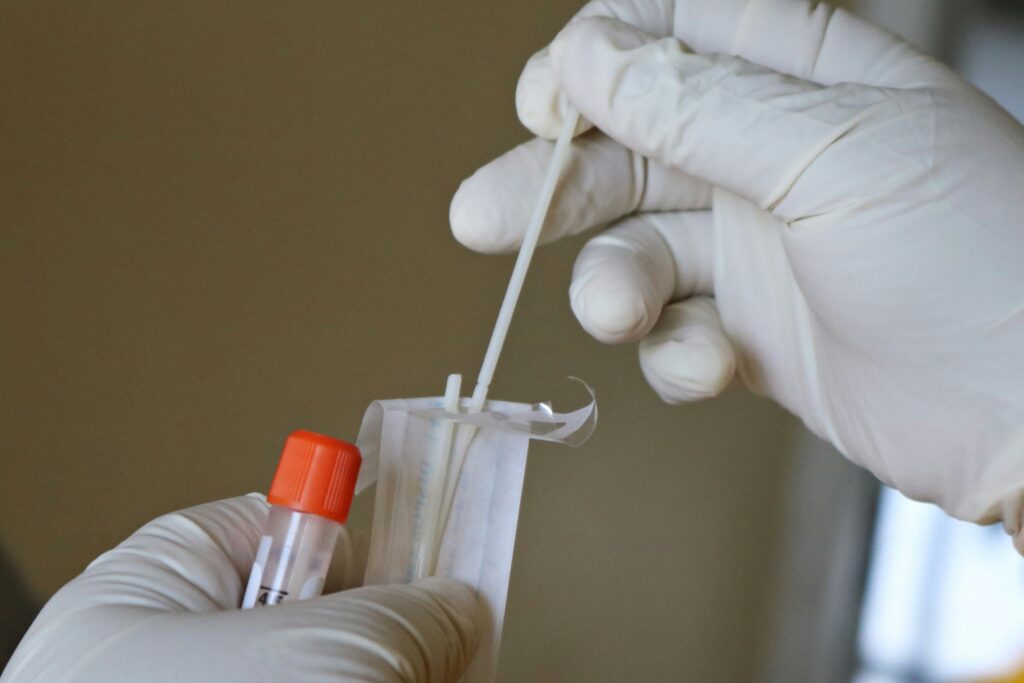
There is no commercial rapid test or home test for Powassan virus. Diagnosis requires laboratory testing through the healthcare system. If Powassan virus is suspected based on clinical presentation and tick exposure history, the following tests may be used:
Serology (Blood Tests)
The primary diagnostic method is detection of Powassan-specific antibodies in the blood. Laboratory tests look for IgM antibodies (which appear early in infection, indicating recent exposure) and IgG antibodies (which appear later and persist). A single positive IgM result is strongly suggestive of recent infection; a fourfold or greater rise in IgG titers between acute and convalescent samples confirms the diagnosis. Per the NIH case report: ‘The key to the diagnosis is a positive serology.’
PCR Testing of Cerebrospinal Fluid (CSF)
In patients with neurological symptoms, a lumbar puncture (spinal tap) may be performed to collect cerebrospinal fluid. PCR testing of CSF can detect Powassan viral RNA directly, though sensitivity is variable and a negative PCR does not rule out the diagnosis.
Where Testing Is Done
Powassan testing is not available at most commercial laboratories. Testing is conducted through state public health laboratories and CDC-qualified reference laboratories. If a physician suspects Powassan virus infection, they will contact the state health department (in Massachusetts: MDPH at 617-983-6800 or 888-658-2850) to coordinate specimen submission and testing.
There is no point-of-care test and no clinician can order Powassan serology through routine commercial labs such as Quest or LabCorp in the standard manner. The pathway to testing runs through the state health department.
Powassan Virus ICD-10 Code
For medical coding purposes, Powassan virus disease is reported under ICD-10-CM code A84.8 — ‘Other tick-borne viral encephalitides.’ This code covers Powassan virus and other tick-borne viral encephalitis conditions that do not have their own specific code. Clinicians and coders searching for ‘Powassan virus disease is reported with code’ should use A84.8.
Can Dogs Get Powassan Virus?
This is one of the most searched questions about Powassan, and the veterinary community’s current answer is: there are no confirmed naturally occurring cases of Powassan virus disease in dogs.
PetMD — one of the most authoritative veterinary consumer information sources — states: ‘Under experimental conditions, illness or evidence of infection could be induced, but no naturally occurring, symptomatic infections of Powassan virus have been identified in dogs, cats, or horses.’
dvm360, a peer-reviewed veterinary publication updated June 11, 2026, confirmed: ‘There is no evidence of Powassan virus causing disease in pets.’
This does not mean dogs are definitively immune. The veterinary literature acknowledges significant unknowns:
- Most dogs with neurological symptoms are not tested for viral encephalitis beyond rabies — Powassan infections in dogs, if they occur, would likely go undetected
- Canine Powassan infections under experimental conditions (virus injected intravenously) can produce evidence of infection — but this differs fundamentally from natural tick-bite transmission
- Whether dogs can become infected through a tick bite in field conditions and whether they could serve as amplifying hosts remains an open question in the literature
The practical takeaway for dog owners: current evidence strongly suggests that Powassan virus does not cause disease in dogs under real-world conditions. However, dogs are highly effective tick carriers — they can carry infected ticks into the home and onto furniture and bedding where those ticks may subsequently bite humans. In this way, dogs pose an indirect Powassan transmission risk to human family members, even if the dogs themselves are not at risk.
What Tick-Borne Diseases Do Dogs Get?
While Powassan appears not to affect dogs, several other tick-borne diseases are genuine and significant veterinary concerns:
- Lyme disease (Borrelia burgdorferi): Most common tick-borne disease in dogs in the Northeast; can cause fever, lameness, joint swelling, and kidney disease; a Lyme vaccine is available for dogs
- Anaplasmosis: Caused by Anaplasma phagocytophilum; symptoms include fever, lethargy, joint pain, and decreased appetite
- Ehrlichiosis: Caused by Ehrlichia canis; symptoms include fever, weight loss, nasal discharge, and in severe cases life-threatening bleeding disorders
- Rocky Mountain Spotted Fever: Caused by Rickettsia rickettsii; can be severe and rapidly fatal in dogs; symptoms include fever, vasculitis, swelling of face and legs
- Babesiosis: Parasitic infection of red blood cells; particularly serious in certain breeds (Greyhounds, American Pit Bull Terriers)
Year-round tick prevention for dogs — using veterinarian-approved tick preventatives — is strongly recommended both for canine health and as a measure to reduce the tick burden on human family members.
POWV: What the Abbreviation Means
POWV is the official scientific abbreviation for Powassan Virus, used in medical and epidemiological literature, CDC surveillance reports, and public health communications. When you see POWV in a case report, surveillance table, or public health document, it refers to Powassan virus. The disease caused by the virus is sometimes referred to as Powassan virus disease (POWVD) in clinical contexts.
Powassan Virus Cases: National and Massachusetts Data
Powassan virus case numbers are small but increasing. CDC data shows:
- Approximately 291 Powassan cases were reported in the United States from 2004 to 2022
- Approximately 239 cases were reported nationally in the most recent 10-year reporting window
- Cases are concentrated in the Northeast and Great Lakes regions, particularly New York, Massachusetts, Connecticut, and Minnesota
- The CDC notes that reported cases have been increasing in recent years
Massachusetts-specific data from Mass.gov: 61 confirmed Powassan cases from 2013 to 2023. In 2025, at least 4 Massachusetts cases were reported including a Martha’s Vineyard investigation in August 2025 and an infant case reported the same month. 2026 has been described by health experts as one of the worst tick seasons on record nationally.
How Fast Can a Tick Move?
Ticks cannot jump, fly, or drop from trees — these are common misconceptions. They are not fast-moving insects. Ticks are arachnids (related to spiders) and move very slowly.
Studies on deer tick (Ixodes scapularis) locomotion show they move approximately 4 to 18 inches per hour under normal conditions. This slow movement is why ticks use a behavior called ‘questing’ to find hosts: they climb vegetation — grass, brush, low branches — and extend their front legs outward, waiting to catch onto a passing animal or person by contact. They do not pursue, jump toward, or drop onto hosts.
The practical implication: ticks reach humans through direct contact with vegetation they are questing on, not through aerial contact. Staying on trails and avoiding brushy areas significantly reduces exposure. Ticks are unlikely to attach and begin feeding immediately — they often wander on the body for several hours looking for a suitable feeding site before attaching. This is why prompt (within 2 hours) showering and full body tick checks after outdoor activity remain valuable prevention steps for most tick-borne diseases — though not, as noted, a reliable protection against Powassan specifically.
Tick Bite Prevention Week
National Tick Bite Prevention Week is an annual awareness campaign organized by the American Lyme Disease Foundation and participating public health organizations, typically held in late April or early May to coincide with the start of peak tick season in the Northeast and upper Midwest.
The 2025 campaign ran in its usual spring window. In 2026, tick bite prevention awareness has been elevated by the description of 2026 as a particularly severe tick season. The key messages from Tick Bite Prevention Week — use repellent, wear protective clothing, do tick checks — remain the most evidence-based steps available for reducing tick-borne disease risk.
Powassan Virus Prevention: What Actually Reduces Risk
Since Powassan has no treatment and can transmit in minutes, prevention is the only effective strategy. The same measures that reduce Lyme disease risk reduce Powassan risk — with even greater urgency given the faster transmission window:
- Insect repellent: DEET 20%+ or picaridin applied to exposed skin; EPA-registered products provide reliable protection
- Permethrin-treated clothing: Kills ticks on contact; apply to clothes (not skin), shoes, and outdoor gear. Pre-treated clothing is commercially available; treatment can also be applied at home or through a service like InsectShield
- Cover up: Tuck pants into socks in tick habitat; wear long sleeves; light-colored clothing makes ticks visible before they reach skin
- Avoid tick habitat: Stay on trails, avoid brushy vegetation and leaf litter, particularly May through July when nymphs are most active
- Tick checks: After outdoor activity, check the full body — scalp, behind ears, axillae, groin, behind knees. Shower within 2 hours of outdoor activity
- Protect dogs: Use veterinarian-recommended tick preventatives on dogs year-round — this reduces the tick burden entering your home and reduces human tick exposure
Frequently Asked Questions
What is the incubation period for Powassan virus?
The incubation period for Powassan virus is 7 to 34 days — the time between tick bite and onset of symptoms, if symptoms develop. Massachusetts DPH states symptoms begin between one week and one month after the bite of an infected tick. Most people (90-95%) exposed to Powassan virus never develop symptoms.
How is Powassan virus tested?
Powassan virus is diagnosed through blood serology — detection of Powassan-specific IgM and IgG antibodies. PCR testing of cerebrospinal fluid (CSF) can also be used in patients with neurological symptoms. There is no commercial rapid test. Testing must be arranged through the state health department, which coordinates specimen submission to a qualified public health laboratory.
Can dogs get Powassan virus?
Current veterinary evidence shows no confirmed naturally occurring cases of Powassan virus disease in dogs, cats, or horses. No Powassan virus causing disease in pets has been documented under real-world conditions. However, dogs carry ticks into the home, creating indirect transmission risk to human family members. Dogs should receive year-round tick prevention for their own protection against other tick-borne diseases (Lyme, anaplasmosis, ehrlichiosis) and to reduce the tick burden in the household.
What is the ICD-10 code for Powassan virus?
Powassan virus disease is reported using ICD-10-CM code A84.8 — ‘Other tick-borne viral encephalitides.’
What does POWV stand for?
POWV is the official scientific abbreviation for Powassan Virus, used in CDC surveillance reports, medical literature, and public health communications.
How fast can a tick move?
Deer ticks move approximately 4 to 18 inches per hour. Ticks cannot jump, fly, or drop from trees. They find hosts by ‘questing’ — waiting on vegetation with legs extended to grab onto passing animals or humans. Their slow movement is why avoiding brushy vegetation and doing prompt tick checks after outdoor activity provides meaningful protection against most tick-borne diseases.
Final Thoughts
Powassan virus sits at a difficult intersection: rare enough that most people will never encounter it, but severe enough — with a 10% fatality rate in neurological cases, 50% permanent damage rate in survivors, no treatment, no vaccine, and 15-minute transmission — that awareness and prevention are genuinely worth taking seriously. The increasing case counts nationally, combined with a particularly active 2026 tick season, make this a timely topic. The good news is that the same tick prevention practices that reduce Lyme disease risk — repellent, permethrin-treated clothing, tick checks — also reduce Powassan risk. The critical difference is that for Powassan, prevention is everything: once infected, there is nothing medicine can do to treat the virus itself.This article is for educational and informational purposes only. Consult a healthcare professional for any medical concerns and a veterinarian for pet health questions.