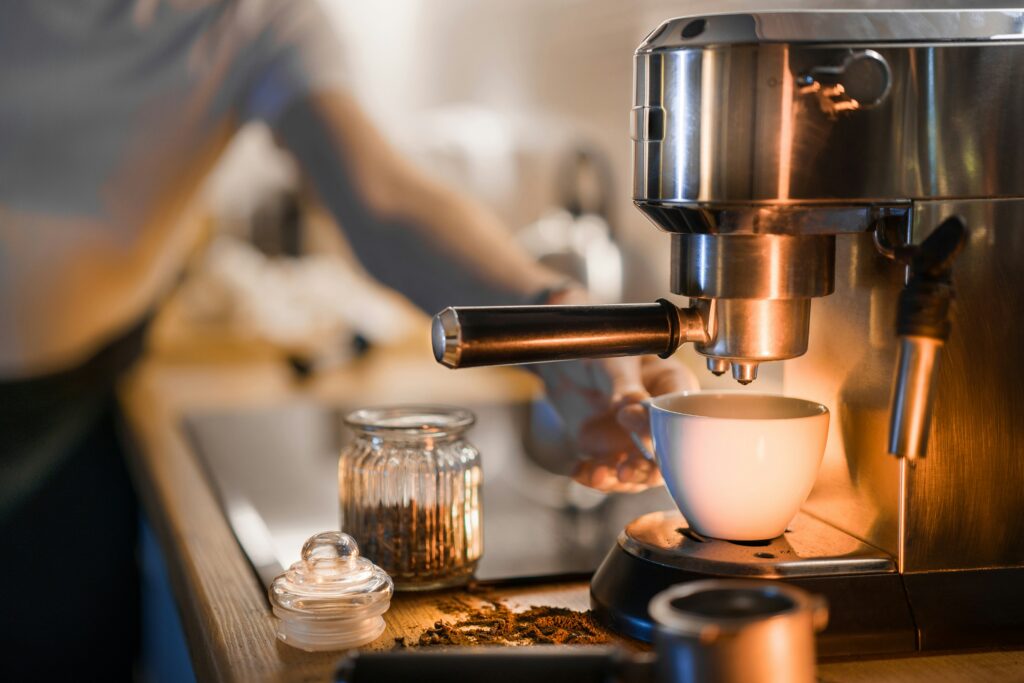
A super automatic espresso machine does everything a traditional espresso machine does — grinding, tamping, extracting, and often frothing milk — with the push of a single button. The entire process from whole beans to finished drink is automated. For households that want genuine espresso quality without learning the manual technique of a portafilter machine, a super automatic is the most practical answer.
The challenge is that the super automatic market is flooded with machines that claim great espresso but deliver watery, under-extracted coffee because of compromised grinders and insufficient coffee dosing. This guide explains what actually separates good super automatic machines from bad ones, and identifies the best options at each price tier for the US market.
What Makes a Good Super Automatic Espresso Machine
Most poor super automatic espresso comes from two specific problems, not from super automatic technology itself:
- Grind too coarse: Budget machines cannot grind fine enough for proper espresso. The grind should look like fine powder, not granulated sugar. When the grind is too coarse, water passes through the coffee puck too quickly, extracting insufficient compounds and producing watery, flavorless espresso.
- Dose too low: Many budget machines use only 7 to 9 grams of ground coffee per shot. While 7 to 9 grams is technically the traditional Italian espresso standard, it refers to very short, concentrated ristretto-style shots. For the longer, more modern espresso style most Americans prefer, a higher dose of 11 to 16 grams is needed. Budget machines using a coarse grind at a low dose produce the weakest possible extraction.
The best super automatic machines either grind fine enough for a proper puck at standard dose, or compensate with a higher dose (13 to 16+ grams) that creates sufficient resistance even at a slightly coarser grind. When evaluating any super automatic, these are the two specs that predict coffee quality more reliably than price, design, or brand recognition.
Best Super Automatic Espresso Machines: Quick Reference
| Machine | Price | Category | Best For |
| De’Longhi Magnifica Plus | ~$700–800 | Mid-range | Best overall; espresso quality + milk frother |
| De’Longhi Magnifica S | ~$350–450 | Budget | Best budget black coffee machine |
| Philips 3200 Series | ~$500–600 | Mid-range | Best for milk drinks at mid-range |
| Jura E8 | ~$1,100–1,300 | Premium | Best premium under $1,500 |
| De’Longhi Dinamica Plus | ~$800–950 | Upper mid-range | Best alternative to Magnifica Plus when on sale |
| De’Longhi PrimaDonna Soul | ~$1,200–1,500 | High-end | Best for specialty coffee lovers; flat burrs |
| Jura Z10 | ~$1,500–1,800 | Premium | Best premium overall; 32+ recipes |
| Breville Oracle Touch | ~$2,000–2,500 | Prosumer | Best semi-auto/super-auto hybrid; best espresso |
Best Super Automatic Espresso Machines: Detailed Reviews
1. De’Longhi Magnifica Plus — Best Overall Super Automatic
Price: ~$700–800 | Dose: ~13–14g | Grind settings: 13 | Recipes: 18 | Milk frother: Automatic LatteCrema (3 texture settings)
The De’Longhi Magnifica Plus is the best value super automatic espresso machine available in 2025 — a machine that produces genuinely excellent espresso thanks to two things that matter most: it grinds at a sufficiently fine setting for proper espresso extraction, and it doses at 13 to 14 grams (above the low-dose trap that ruins most budget machines). The combination delivers espresso with real intensity, complexity, and a thick crema that cheaper machines cannot replicate.
The LatteCrema automatic milk system is a genuine differentiator from budget De’Longhi models. It offers three milk texture settings — from thicker cappuccino foam to lighter latte foam — and produces microfoam quality that makes latte art possible at the lighter settings. This combination of espresso quality and milk performance at approximately $700 to $800 is why the Magnifica Plus has displaced the previously-recommended Dinamica Plus as the best value super automatic.
The touchscreen interface is intuitive, 18 pre-programmed recipes cover the standard specialty coffee menu, and four user profiles allow household members to save their preferred settings. The 1.9L water tank is large enough for extended daily use without constant refilling.
- Best for: Most households wanting genuine espresso quality with automatic milk frothing
- Key advantage: Grind fineness + dose combination produces noticeably better espresso than similarly priced alternatives
- Limitation: No cold foam capability without the separate LatteCrema Cool accessory
2. De’Longhi Magnifica S — Best Budget Super Automatic
Price: ~$350–450 | Dose: ~11–13g | Grind settings: 13 | Recipes: Espresso, Coffee, Long | Milk frother: Manual steam wand
The De’Longhi Magnifica S has been in continuous production since 2011 and remains the recommended budget super automatic because De’Longhi never broke what wasn’t broken. It uses a slightly higher coffee dose and finer grind than most competitors at its price point — approximately 11 to 13 grams at settings fine enough for reasonable espresso extraction — which is why it consistently outperforms newer machines at the same price.
The machine’s limitation is its steam wand: the standard Magnifica S uses a plastic steam wand with a small nozzle that is genuinely difficult to maneuver for proper milk texturing. For daily black coffee and espresso, this is irrelevant. For cappuccino and latte drinkers, the Magnifica S Smart variant (model ECAM250.23) adds a panarello-style wand that produces better foam with less technique. At the standard $350 to $450 price, the Magnifica S is the most practical budget entry point.
- Best for: Black coffee and espresso drinkers; budget-conscious buyers; kitchen or office use
- Key advantage: 13-year production history; proven reliability; better grind/dose than most budget competitors
- Limitation: Steam wand requires technique for good milk foam; no touchscreen; design dated
3. Philips 3200 Series — Best Mid-Range for Milk Drinks
Price: ~$500–600 | Dose: ~10–11g | Grind settings: 12 (ceramic burrs) | Recipes: 5 standard + iced coffee | Milk frother: Classic panarello wand
The Philips 3200 Series is the best alternative to the De’Longhi Magnifica S for buyers who prioritize milk drink quality at the budget-to-mid tier. The Philips uses ceramic burrs versus De’Longhi’s steel, which produces comparable grind fineness with quieter operation. The panarello milk wand standard on the Philips produces better foam with less skill than the basic Magnifica S steam wand.
The Philips 3200 Series has a slightly lower dose ceiling (around 10 to 11 grams) than the Magnifica S (11 to 13 grams), which means espresso intensity is slightly lower at equivalent settings. For espresso purists, the De’Longhi has the advantage. For households where lattes and cappuccinos dominate, the Philips 3200’s milk system makes more practical sense at this price point.
- Best for: Households primarily making milk-based drinks; quieter operation preference
- Key advantage: Better out-of-box milk frothing than basic Magnifica S; quieter ceramic grinder; touch display
4. Jura E8 — Best Premium Super Automatic Under $1,500
Price: ~$1,100–1,300 | Dose: ~14–16g | Grind settings: 6 fine-to-coarse steps | Recipes: 17 | Milk frother: Automatic fine foam technology
The Jura E8 is the best premium super automatic under $1,500 for the US market — a Swiss-made machine with Jura’s P.E.P. (Pulse Extraction Process) technology that pulses hot water through the coffee grounds during extraction, improving compound dissolution for a more complex and balanced espresso. The automatic milk system uses Jura’s Fine Foam technology to produce consistently excellent microfoam across all milk drink recipes.
Jura’s brand premium is real — you are paying more for Swiss engineering, build quality, and a reputation for decade-long reliability — but the E8 justifies the price through measurable performance advantages over De’Longhi mid-range machines: finer grind at maximum settings, higher consistent dosing, better extraction technology, and superior milk system performance. The 17 pre-programmed recipes and Bluetooth/app connectivity are practical bonuses at this tier.
- Best for: Serious espresso households willing to pay for Swiss quality; long-term ownership investment
- Key advantage: P.E.P. extraction technology; superior milk system; Swiss build quality
- Limitation: $1,100–1,300 price; fewer grind adjustment steps than De’Longhi
5. De’Longhi Dinamica Plus — Best Mid-Range Alternative
Price: ~$800–950 | Dose: ~14–16g | Grind settings: 13 | Recipes: 18 | Milk frother: Automatic LatteCrema (3 texture settings)
The Dinamica Plus was the best-value super automatic before the Magnifica Plus launched at a lower price. It remains an excellent machine: doses up to 16 grams, grinds fine enough for quality espresso, and the LatteCrema milk system performs at the same level as the Magnifica Plus. The color touchscreen and specialty coffee recipes (including flat white and cortado) reflect De’Longhi’s adaptation to the specialty coffee movement.
At $800 to $950 versus the Magnifica Plus at $700 to $800, the Dinamica Plus no longer represents the clearest value. The best time to buy the Dinamica Plus is when it appears on sale during Black Friday or promotional events, when prices can drop $200 to $300 — at which point it becomes competitive with the Magnifica Plus again.
- Best for: Buyers who find it on sale at $600–750
6. De’Longhi PrimaDonna Soul — Best for Specialty Coffee
Price: ~$1,200–1,500 | Dose: ~18–20g | Grind settings: 13 (flat burrs) | Recipes: 21 | Milk frother: Automatic LatteCrema (3 texture settings) + app control
The PrimaDonna Soul is the most technically interesting super automatic in De’Longhi’s lineup for specialty coffee enthusiasts — specifically because it is the only super automatic in its price range with flat burrs rather than conical. Flat burrs produce a more uniform particle size distribution than conical burrs, resulting in a cleaner, more refined espresso flavor that is particularly noticeable with light and medium roast specialty coffees.
The machine doses at 18 to 20 grams — the highest of any machine in this guide — which, combined with the flat burr advantage, produces espresso with a clarity and complexity approaching semi-automatic quality. The De’Longhi Coffee Link app provides full remote control and programmability. The 4.3-inch TFT color display is the largest in the De’Longhi lineup. For buyers who take specialty coffee seriously but want full automation, this is the machine.
- Best for: Specialty coffee enthusiasts who want the cleanest super automatic espresso; light roast drinkers
- Key advantage: Only super automatic in its price range with flat burrs; 18–20g dose
7. Jura Z10 — Best Premium Super Automatic
Price: ~$1,500–1,800 | Dose: ~14–16g | Grind: 2 ceramic disc grinders | Recipes: 32+ | Milk frother: Automatic fine foam + cold foam
The Jura Z10 is the most capable super automatic in the standard market — the company’s flagship home machine with 32+ pre-programmed recipes (including cold extraction recipes), dual ceramic disc grinders for precise and consistent grinding, WiFi connectivity with J.O.E. app control, and a 4.3-inch TFT color display. The cold extraction system enables genuinely cold brew-style drinks alongside the full hot espresso range.
The espresso quality from the Z10’s 16-gram dose with Jura’s fine grind and P.E.P. extraction is the best available from a super automatic without moving to prosumer equipment. The automatic milk system produces microfoam at a level that matches dedicated steam equipment in consistency if not quite in quality. At $1,500 to $1,800, the Z10 is an indulgence — but for households that make 4 to 6 drinks per day and want the best super automatic experience without a barista learning curve, nothing in this category matches it.
- Best for: Coffee enthusiast households that use the machine heavily daily; no-compromise super automatic
- Key advantage: 32+ recipes including cold extraction; best milk system; highest tier Jura quality
8. Breville Oracle Touch — Best Prosumer Super Automatic
Price: ~$2,000–2,500 | Dose: ~19–22g | Grind: Integrated conical burr grinder | Extraction: 9 bars | Milk: Automatic steam wand with microfoam
The Breville Oracle Touch is not a traditional super automatic — it is a semi-automatic espresso machine with an automated grinder and an automatic steam wand, positioned at the intersection of super automatic convenience and semi-automatic espresso quality. The Oracle Touch grinds, doses, tamps, and extracts automatically with 9-bar pressure (the commercial espresso standard), then steams milk to your specified temperature and foam level automatically.
The espresso quality from the Oracle Touch is the best of any machine in this guide — a consequence of 9-bar extraction pressure, precise dosing, and the kind of control over grind and extraction parameters that traditional super automatics with fixed brewing units cannot provide. The automatic milk wand produces genuine microfoam indistinguishable from manual steaming. For buyers with a $2,000 to $2,500 budget who want the best possible coffee quality with maximum automation, the Oracle Touch is the answer.
- Best for: Buyers who want the best espresso quality available from any automated machine; serious home espresso enthusiasts
- Limitation: $2,000+ price; larger footprint than traditional super automatics
Super Automatic vs Semi-Automatic vs Pod Machine
| Pod Machine (Nespresso) | Super Automatic | Semi-Automatic | |
| Coffee quality | Good (Original line) | Very good to excellent | Best possible at home |
| Automation level | Fully automatic | Fully automatic | Manual grind + tamp + extract |
| Uses whole beans? | No — pods only | Yes — integrated grinder | Yes — separate grinder needed |
| Freshness | Pod freshness | Ground fresh per cup | Ground fresh per cup |
| Ongoing cost | $0.70–2.25 per pod | ~$0.30–0.80 per cup (beans) | ~$0.30–0.80 per cup (beans) |
| Skill required | None | Minimal | Significant learning curve |
| Best for | Convenience; apartment use | Daily home use without technique | Serious espresso enthusiasts |
Brands Ranked: De’Longhi, Jura, Philips, Breville
De’Longhi — Best Overall Brand for Value
De’Longhi is the best super automatic brand for most US buyers across all price tiers. The Magnifica S is the budget standard; the Magnifica Plus is the best value overall; the PrimaDonna Soul is the best for specialty coffee enthusiasts. De’Longhi consistently updates its lineup for the specialty coffee market — improving grind fineness, increasing dose, and adding LatteCrema milk systems to mid-range and above machines.
Jura — Best Build Quality and Reliability
Jura is the premium benchmark — Swiss-made machines with superior build quality, better long-term reliability than most competitors, and P.E.P. extraction technology that produces measurably better espresso. The premium over De’Longhi is real: you pay $200 to $400 more for equivalent features, but the build quality and decade-long reliability record justify that premium for serious buyers. Avoid the ENA entry-level line; start at the E8 or above for the quality leap that makes the Jura premium worthwhile.
Philips — Best for Quiet Operation and Milk
Philips super automatics use ceramic burr grinders that run quieter than steel burr alternatives — a meaningful advantage for early morning brewing in apartments or shared living situations. The milk systems on the Philips 3200 and above produce reliable foam with minimal technique. Espresso intensity is slightly lower than De’Longhi at equivalent price points due to lower maximum dose, but overall performance is solid.
Breville — Best for Espresso Quality
Breville’s Oracle Touch is in a separate category from traditional super automatics — its 9-bar extraction pressure and integrated automatic steam wand produce espresso quality that traditional super automatics with fixed brewing units cannot match. Breville’s Barista Express and Barista Touch are also worth noting for buyers who want an integrated grinder with semi-automatic extraction at $700 to $1,200.
Why Most Cheap Super Automatics Fail
The super automatic market below $300 is flooded with Chinese-manufactured machines that produce weak, watery espresso consistently. The reasons are predictable and measurable:
- Grind too coarse: Budget machines grind at settings equivalent to drip coffee — too coarse for espresso extraction resistance. Water passes through the puck in seconds rather than the 25 to 30 seconds required for proper espresso.
- Dose too low: Many budget machines use 7 to 9 grams per shot — the minimum for the most concentrated short ristretto shots. For any drink longer than 1 oz, this dose produces diluted, flavorless espresso.
- Brewing unit pressure: Some budget machines claim 15 bars but regulate actual extraction at 4 to 6 bars — well below the 9 bars required for proper espresso extraction.
The minimum viable price for a super automatic that makes genuinely good espresso is approximately $350 (De’Longhi Magnifica S). Below that, you are essentially buying a convenience appliance that produces espresso-adjacent coffee rather than genuine espresso.
Frequently Asked Questions
What is the best super automatic espresso machine?
For most households, the De’Longhi Magnifica Plus (~$700–800) is the best overall super automatic — producing excellent espresso from a fine grind at 13 to 14 grams dose, with an automatic milk frother capable of microfoam quality, at a price that represents genuine value. For buyers who prioritize Swiss build quality and long-term reliability, the Jura E8 ($1,100–1,300) is the best premium option under $1,500. For the best espresso quality available from any automated machine, the Breville Oracle Touch ($2,000–2,500) has no equal.
What is a super automatic espresso machine?
A super automatic espresso machine automates the entire espresso-making process from whole beans to finished drink — grinding, dosing, tamping, extracting, and (in models with integrated milk systems) frothing milk. The user selects a drink from the menu and presses one button. The machine handles everything else. This contrasts with semi-automatic machines, which require manual grinding, tamping, and extraction timing, and pod machines, which use pre-portioned capsules instead of whole beans.
How much should I spend on a super automatic espresso machine?
The minimum for genuinely good espresso from a super automatic is approximately $350 (De’Longhi Magnifica S). Below this price, grind quality and dose are typically too compromised to produce good espresso. The best value sweet spot is $700 to $900 (De’Longhi Magnifica Plus, Dinamica Plus on sale) — machines that produce excellent espresso with automatic milk frothing at a price that represents good long-term value. Premium machines from Jura ($1,100+) and the Breville Oracle Touch ($2,000+) deliver measurably better results but require a significant investment.
Are super automatic espresso machines worth it?
Yes, for households that drink 2 to 6 espresso-based drinks daily and want bean-to-cup freshness without the time investment of semi-automatic technique. A De’Longhi Magnifica Plus at $700 to $800 typically pays back its cost within 12 to 18 months compared to buying equivalent café drinks, while producing coffee quality that pod machines and most drip brewers cannot match. The ongoing cost of whole beans ($0.30 to $0.80 per cup) is also substantially lower than pod systems like Nespresso Vertuo ($0.90 to $2.25 per pod).
What is the difference between De’Longhi and Jura super automatics?
De’Longhi offers better value across most price tiers — more features per dollar, broader range of options, and excellent espresso quality especially at the Magnifica Plus level and above. Jura offers superior build quality, longer expected lifespan, and P.E.P. extraction technology that produces measurably cleaner espresso, but at a consistent $200 to $400 premium over comparable De’Longhi specifications. For buyers who plan to keep the machine for 10+ years, the Jura premium is justifiable. For buyers optimizing value over 5 to 7 years, De’Longhi typically wins.
Final Thoughts
The super automatic market is substantially better than it was five years ago at the mid-range price tier, primarily because De’Longhi has pushed grind quality and dosing to levels that produce genuinely impressive espresso at $700 to $900. The Magnifica Plus is the clearest current recommendation for most households — it bridges the gap between pod machine convenience and semi-automatic espresso quality in a way that nothing at its price point previously managed.
For buyers willing to invest $1,100 or more, Jura’s engineering and reliability record make the premium genuinely worthwhile for long-term ownership. For the most demanding home espresso enthusiasts who want the best quality with maximum automation, the Breville Oracle Touch produces espresso that traditional super automatics simply cannot match.