
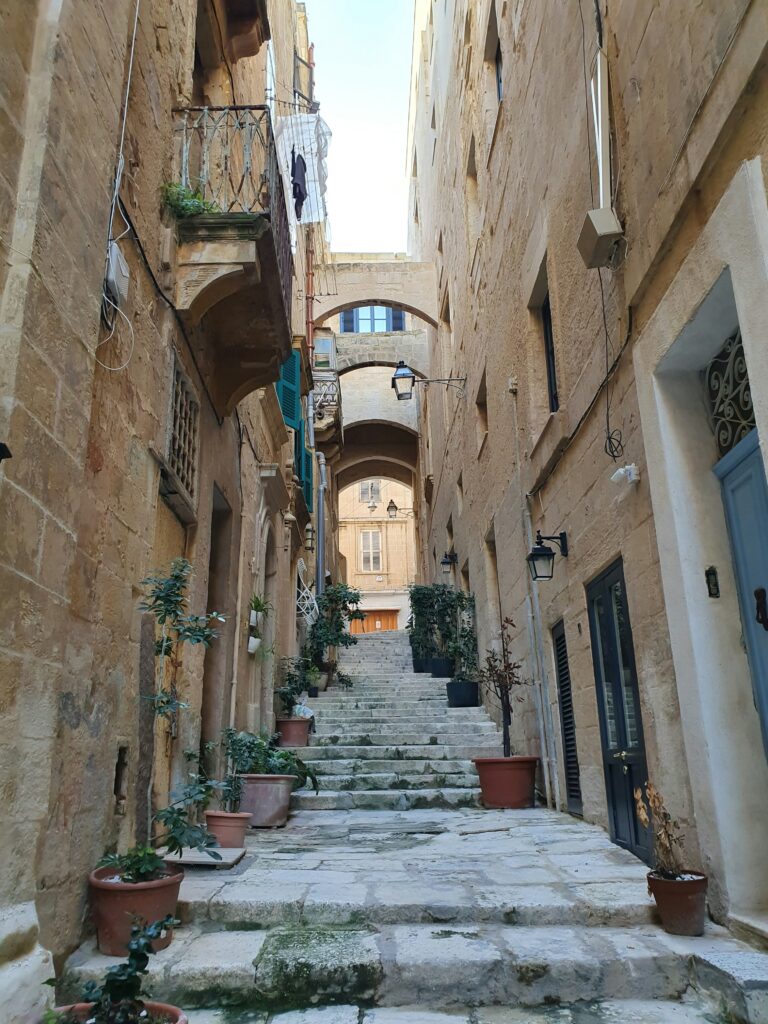
Valletta is one of Europe’s most rewarding city break destinations and its most overlooked. As the Valletta Europe smallest capital city in the European Union, squeezed onto a peninsula just one kilometer long and 600 meters wide, it packs an extraordinary concentration of history, architecture, food, and character into a space you can walk end to end in twenty minutes. This complete guide covers everything you need to know about visiting Valletta, including the best things to do, where to eat and drink, how to get around, day trips to the Three Cities and beyond, and why winter is actually one of the best times to go.
Why Visit Valletta?
Valletta is a UNESCO World Heritage Site and was named European Capital of Culture in 2018. Every street in the city core is lined with buildings of historical significance, yet the city functions as a living, working capital rather than a museum piece. People live here, cafes and bars fill the streets, and the atmosphere is genuinely Mediterranean in character.
For travelers from Northern Europe, Malta offers something rare: reliable winter sun. February temperatures regularly reach 17 to 19 degrees Celsius with blue skies and very little rain. Flight prices and accommodation costs in winter are a fraction of peak summer rates, making Valletta one of the best value winter city breaks in Europe.
The city is also extraordinarily compact. You can cover all the main sights on foot without needing transport within the city walls. Yet the density of things worth seeing, eating, and doing is higher than cities many times its size.
Valletta at a Glance
- Country: Malta
- Status: Capital city of Malta and smallest EU capital city
- Size: approximately 1 km long and 600 m wide
- Location: situated on a peninsula in the Grand Harbour on the island of Malta
- UNESCO World Heritage Site: designated 1980
- Currency: Euro
- Official languages: Maltese and English
- Plug type: UK 3-pin (Malta uses British plugs, a legacy of British rule)
Top Things to Do in Valletta
St John’s Co-Cathedral
St John’s Co-Cathedral is the single most impressive building in Valletta and one of the finest examples of Baroque interior design in Europe. The exterior is deliberately understated, which makes the interior all the more stunning when you step inside. Every inch of the walls and ceiling is decorated with intricate carvings and paintings commissioned by the Knights of St John.
The cathedral houses Caravaggio’s The Beheading of Saint John the Baptist, his largest painting and the only work he signed. Entry costs around 15 euros and includes an audio guide. Book online in advance during busy periods to avoid queuing.
Upper Barrakka Gardens
Upper Barrakka Gardens sits at the highest point of the Valletta peninsula, offering panoramic views across the Grand Harbour to the Three Cities on the opposite shore. The gardens themselves are pleasant and well maintained, with flower beds that are most impressive in spring and summer.
The views across the harbor are exceptional at any time of year. At noon each day, the Saluting Battery below the gardens fires a cannon, a tradition dating back to the period of British rule. The battery is accessible separately for a small fee and provides even closer harbor views.
Republic Street and Republic Square
Republic Street is Valletta’s main pedestrian artery, running the full length of the city from City Gate to Fort St Elmo. The historic National Library faces Republic Square, which is lined with outdoor cafes and serves as the city’s main social gathering point.
Walking the full length of Republic Street and its immediate side streets covers most of Valletta’s key buildings and architectural highlights. The honey-colored limestone that characterizes all of Valletta’s older buildings glows warmly in afternoon light.
St Lucia’s Street
St Lucia’s Street is one of the most photogenic streets in Valletta and one of the most widely shared images of the city on social media. The colorful traditional Maltese balconies, enclosed wooden structures that project from building facades, line the street in striking reds, greens, and yellows.
The street is lined with restaurants and small bars that make it a pleasant place to linger in the evening. It is quieter and more atmospheric than the busier sections of Republic Street.
Strait Street
Strait Street has one of the most colorful histories in Valletta. Once known as The Gut, it was the center of Valletta’s nightlife during the period of British naval presence, lined with bars and brothels serving British sailors from the Mediterranean Fleet.
Today it is a lively, narrow street of bars, restaurants, and live music venues that comes alive in the evening. It is one of the best places in Valletta to experience the city’s nightlife character.
Fort St Elmo
Fort St Elmo guards the tip of the Valletta peninsula where it meets the harbor entrance. The fort was central to the Great Siege of Malta in 1565 when the Knights of St John successfully defended Malta against the Ottoman Empire. The National War Museum inside the fort covers Malta’s military history from the Great Siege through World War II.
The Grand Harbour
The Grand Harbour is one of the finest natural harbors in the Mediterranean and the reason Valletta was built where it is. Taking the ferry from Sliema to Valletta gives a view of the city from the water that shows the dramatic relationship between the fortified city, its bastions, and the harbor that surrounds it.
Harbor cruises operate from various points around the waterfront and provide close-up views of the historic fortifications from sea level.
Where to Eat and Drink in Valletta
Traditional Maltese Food to Try
Pastizzi are the essential Maltese street food: small, diamond-shaped or round pastry parcels filled either with ricotta cheese or with mushy peas. They are sold warm from small kiosks and bakeries throughout Valletta and the rest of Malta for less than one euro each.
Kannoli is the Maltese version of the Sicilian classic, a crispy pastry tube filled with ricotta and often topped with pistachio cream or candied fruit. Caffe Cordina, established in 1837 and located on Republic Square, is one of the most recommended places to try them alongside excellent coffee.
Cozido and rabbit stew are traditional Maltese main courses. Rabbit, or fenek, is the national dish of Malta and appears in various forms across restaurant menus. Look for it braised in red wine or fried with garlic.
Caffe Cordina
Caffe Cordina on Republic Square has been serving coffee, cakes, and Maltese pastries since 1837. The interior is ornate and historic, the outdoor tables face the square, and the quality of the pastries is consistently excellent. A mid-morning stop here is one of the small pleasures of visiting Valletta.
Strait Street Restaurants
Strait Street offers a good concentration of restaurants across various cuisines and price points. Several serve Maltese cuisine alongside Mediterranean and Italian options. Happy hour starts early at some establishments. A pizza and drinks for two on Strait Street typically costs 25 to 35 euros, considerably less than equivalent dining in most other European capitals.
Drinks to Try
Kinnie is Malta’s most iconic soft drink, produced since 1952. It is made from bitter oranges and aromatic herbs, with a bittersweet taste that is an acquired preference but worth trying. Bajtra is a traditional Maltese liqueur made from prickly pear, with a distinctive pink color and sweet, fruity flavor. Maltese wine is produced in small quantities and is increasingly worth trying, particularly the local whites.
Day Trip: The Three Cities
The Three Cities, comprising Vittoriosa (Birgu), Senglea (L-Isla), and Cospicua (Bormla), sit across the Grand Harbour from Valletta and represent some of the oldest continuously inhabited settlements in Malta. They predate Valletta itself and were the original home of the Knights of St John before Valletta was built.
Getting There
The most enjoyable way to reach the Three Cities is by the small passenger ferry that runs from the Valletta waterfront across to Cospicua. The short crossing costs a few euros and offers excellent views of Valletta’s fortifications from the water. Alternatively, Bolt and Uber operate throughout Malta at reasonable prices.
What to See
Fort St Angelo at the tip of Vittoriosa is the most significant sight in the Three Cities. The fort has military history stretching back to the Arab period and played a central role in the Great Siege of 1565. Walking to the top provides excellent views across the harbor to Valletta. Entry to the interior costs 10 euros.
The Birgu Waterfront is a pleasant strip of restaurants and bars along the water’s edge in Vittoriosa, ideal for lunch. The waterfront area is significantly less crowded than Valletta itself.
Walking through the narrow streets of Vittoriosa and Senglea gives a sense of how Maltese harbor towns looked before tourism changed their character. Both are genuine residential communities with minimal tourist infrastructure.
Where to Stay: Valletta and Sliema
Staying in Valletta
Several boutique hotels and guesthouses operate within the city walls. Staying inside Valletta puts you within walking distance of everything and means you experience the city in the evening after day visitors leave, which transforms the atmosphere. Options range from characterful guesthouses in converted townhouses to boutique hotels in historic buildings.
Staying in Sliema
Sliema is the modern residential and hotel district directly across the harbor from Valletta, connected by a 15-minute ferry running every 30 minutes for around 4.80 euros return. It offers a wider range of accommodation, more supermarkets and everyday facilities, and a seafront promenade.
The ferry connection makes Sliema a practical base for exploring Valletta without the slightly higher prices of hotels within the city walls. The AX Victoria Hotel in Sliema shares facilities with the adjacent AX Palace Hotel, including a rooftop pool with views across to Valletta.
What to Expect
Maltese hotels are generally very good value compared to other European capitals. Five-star accommodation in winter costs a fraction of equivalent properties in London, Paris, or Rome. Many hotels include breakfast, and the quality of Maltese hotel breakfast buffets is typically high, often including traditional Maltese items alongside standard international options.
How to Get to Valletta
By Air
Malta International Airport is located approximately 8 kilometers from Valletta. Multiple European carriers serve Malta from cities across the continent. Budget airlines including Ryanair and easyJet operate routes from numerous UK and European airports, making Malta easily and affordably accessible.
Flight time from London is approximately 3 hours. From other European cities, flights typically range from 2 to 4 hours.
From the Airport
Public buses connect Malta Airport to Valletta and Sliema. The journey takes 30 to 45 minutes. Bolt and Uber also operate from the airport at competitive prices, making the taxi option more affordable than in many other European countries.
Getting Around Valletta and Malta
Within Valletta, walking is the only practical transport. The city is entirely pedestrian-friendly and small enough that nothing is more than a 15-minute walk from anything else.
For travel between Valletta, Sliema, and other parts of Malta, the options are:
- Sliema Ferry: the most scenic way to travel between Sliema and Valletta, 15 minutes, 4.80 euros return, runs every 30 minutes
- Bolt and Uber: both operate throughout Malta and are very reasonably priced compared to equivalent European markets
- Public buses: Malta has an extensive bus network covering the whole island. Useful for reaching Marsaxlokk, Mdina, and other destinations
- Ferry to the Three Cities: passenger ferry from the Valletta waterfront to Cospicua
Best Time to Visit Valletta
Winter (November to March)
Winter is genuinely one of the best times to visit Valletta. Daytime temperatures sit between 14 and 19 degrees Celsius, sunshine is common, and the tourist crowds are minimal. Flight and accommodation prices drop significantly. Most restaurants have outdoor heaters and covered seating, making evening dining perfectly comfortable.
February is particularly good, often combining reliable sunshine with the lowest prices of the year.
Spring (April to June)
Spring brings warming temperatures, the botanical gardens in full bloom, and the run-up to the busy summer season. April and May offer an excellent balance of good weather, reasonable prices, and manageable visitor numbers.
Summer (July to September)
Summer is peak season with the highest temperatures, reaching 32 to 35 degrees Celsius, the largest crowds, and highest prices. The heat can make walking the city less comfortable midday. Book accommodation well in advance for summer visits.
Practical Travel Information
- Currency: Euro. Cards accepted almost everywhere, but carry some cash for ferries, small kiosks, and local markets.
- Plug type: Malta uses UK-style 3-pin plugs. UK visitors need no adapter. Other European visitors should bring an adapter.
- Language: English is an official language and spoken universally. No language barrier for English speakers.
- Safety: Malta is considered one of the safest countries in Europe. Solo travel including solo female travel is very safe throughout Valletta and Sliema, including at night.
- Tipping: not expected but appreciated for good service. A small tip is appropriate in restaurants.
- Walking shoes: Valletta’s streets are hilly and cobbled in places. Comfortable flat shoes are essential.
Frequently Asked Questions
Is Valletta worth visiting?
Absolutely. Valletta is one of Europe’s most underrated capitals and offers exceptional value for money compared to other European city break destinations. The combination of history, architecture, food, Mediterranean climate, and easy access from across Europe makes it worth the trip. Winter visits in particular offer outstanding value.
How many days do you need in Valletta?
Two to three days is enough to cover Valletta’s main highlights comfortably without rushing. Add a day for the Three Cities and another for Gozo or Marsaxlokk if your schedule allows. Five days gives a relaxed pace with time for day trips and repeated visits to favorite spots.
Why is Valletta the smallest capital in Europe?
Valletta was purpose-built by the Knights of St John following the Great Siege of Malta in 1565. The Knights chose a specific peninsula within the Grand Harbour for its defensibility and built the city to a planned grid layout within tight geographic constraints. The peninsula itself limits the city’s size. As the capital of one of Europe’s smallest countries, Valletta was designed as a fortified administrative and military center rather than a large urban city.
Is Malta expensive for tourists?
Malta is generally affordable by Western European standards, particularly in winter. Food and drink outside hotels cost noticeably less than in cities like London, Paris, or Amsterdam. Hotel prices vary significantly by season, with winter rates often 40 to 60 percent lower than summer peak. Transport via Bolt and Uber is very reasonably priced. Overall, Malta offers good value without compromising on quality.
Final Thoughts
Valletta stands as one of Europe’s genuinely great small capitals. Its extraordinary density of history and architecture, its warm Mediterranean climate, its excellent food, and its compact walkable character combine to create a city break experience that consistently surprises visitors who did not know quite what to expect.
For winter travel in particular, it is hard to beat. While Northern Europe sits under grey skies and cold temperatures, Valletta offers sunshine, warm streets, empty heritage sites, and prices that make the whole trip feel like remarkable value. Go in February and you might have St John’s Co-Cathedral almost to yourself.