
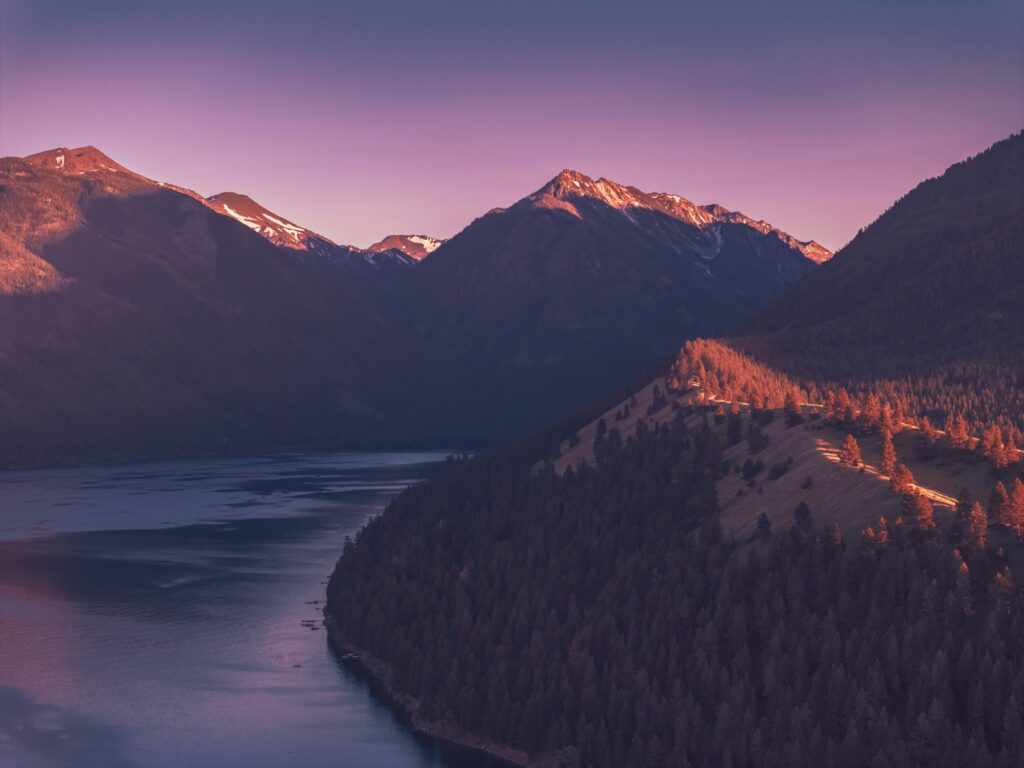
The Wallowa Mountains, often called the “Alps of Oregon,” remain one of the most underrated mountain destinations in the Pacific Northwest. Rising dramatically out of flat northeast Oregon grassland, this glacier-carved range surrounds Wallowa Lake and the small towns of Joseph and Enterprise, delivering scenery that genuinely surprises first-time visitors who have never heard of the area despite its proximity to Boise, Spokane, and Portland.
This guide covers everything needed to plan a Wallowa Mountains trip: how to get there, where to stay across every budget, the best things to do around Wallowa Lake and in Joseph, the Eagle Cap Wilderness, and a sample 4-day itinerary.
About the Wallowa Mountains
The Wallowa Mountains earned their “Alps of Oregon” nickname from the way the range rises sharply out of surrounding flat grassland, with no foothills easing the transition — a visual drama that catches most first-time visitors off guard. Glaciers shaped the terrain over thousands of years, though no glaciers remain active in the range today. Multiple rivers ring the mountains’ base. The area holds deep significance as the original homeland of the Nez Perce people, who lived in the Wallowa Valley for generations before forced removal in the 19th century.
How to Get to the Wallowa Mountains
| From | Distance | Drive Time |
| Portland, Oregon | 330 miles | ~5.5 hours |
| Boise, Idaho | 240 miles | ~4 hours |
| Spokane, Washington | 200 miles | ~4 hours |
A car is essential — there is no practical way to explore the Wallowa Mountains region without one. If flying, the nearest major airports are in Portland, Boise, and Spokane, all requiring a rental car for the final leg of the journey. Booking.com is a solid option for comparing rental car rates.
Where to Stay Near the Wallowa Mountains
| Tier | Option | Price | Notes |
| Backcountry | Eagle Cap Wilderness / Wallowa-Whitman NF | Free (permit may apply) | |
| $ | Wallowa Lake State Park Campground | Standard NY-equivalent state park fee | |
| $ | Little Alps Day Use Area (4 sites) | Cash + envelope, first-come | |
| $$ | Hotels/motels in Joseph and Enterprise | Varies | |
| $$$ | Wallowa Lake Lodge | Moderate–splurge |
The Wallowa Lake Lodge is the classic stay in the area — a historic property built in 1923 on the lake’s south shore, with a strong restaurant and a cozy, century-old character that distinguishes it from standard area motels. It runs slightly more expensive than typical regional lodging but is widely considered worth the splurge for at least part of a multi-day trip.
Things to Do in Joseph, Oregon
Joseph is the closest town to Wallowa Lake and the area’s main hub for dining and shopping. The town is notable for its many large bronze statues lining Main Street, alongside a genuinely strong concentration of independent shops and restaurants for a town of its size.
- Arrowhead Chocolates — the standout stop in Joseph, known for excellent handmade chocolates and a notably good salted caramel mocha
- The Ice Cream Station (attached to Mad Mary’s) — solid ice cream stop on Main Street
- beecrowbee — a boutique specializing in natural soaps, lotions, and home goods
- Moonlight Graphics — apparel and gear featuring original Oregon and Wallowa-themed designs
Wallowa Lake: Two Sides, Two Experiences
| Feature | Wallowa County Park (north end) | Wallowa Lake State Park (south end) |
| Cost | Free | Free day parking |
| Best for | Sunset views; combined lake + mountain views | Facilities; trailhead access; camping |
| Swimming | Yes, designated area (cold even in July) | Yes, designated swimming area |
| Watersports | Kayak/paddleboard launch | Kayak put-in plus rentals available |
| Facilities | Picnic tables, boat ramp, beach | Boat ramp, beach, picnic areas, campground |
| Overall feel | Smaller but better views | More facilities, more “nature-y” feel |
Wallowa County Park, at the lake’s northernmost point near Joseph, offers simultaneous views of both the lake and the mountains, and the angle of sunset here is genuinely spectacular — the sky frequently turns bright pink behind the peaks, casting an orange glow across the snow-capped ridgelines. Wallowa Lake State Park, at the southern end, has more developed facilities, serves as a key trailhead hub, and includes a designated swimming area along with kayak rentals for visitors without their own gear.
Best Hikes and Outdoor Activities
East Moraine Community Forest
Privately owned until 2020, East Moraine Community Forest opened to the public recently and offers a hike to the top of the glacial moraine forming the lake’s eastern edge, starting from the West Side Trailhead. The trail rewards hikers with sweeping lake-and-mountain views from the top, and in late June, passes through fields thick with peak-season wildflowers — a genuine highlight of the hike independent of the summit views.
Wallowa Lake Tramway
The Wallowa Lake Tramway delivers expansive mountain views with minimal physical effort, making it an excellent half-day or full-day option for visitors who want the payoff of elevation without a demanding climb. Short hiking trails at the top extend the visit for those wanting to explore further.
BC Creek Falls
A roughly 2-mile trail from the Little Alps Picnic Area leads through forest, across a wooden bridge, and partway up the mountainside to BC Creek Falls — a waterfall noticeably larger and louder than its modest trail length suggests. A wooden bridge crossing the creek allows viewing the falls from multiple angles before returning via the same route.
Chief Joseph Mountain
Visible from Wallowa Lake, Chief Joseph Mountain involves significant elevation gain but rewards hikers with strong views from the summit, making it one of the more demanding day-hike options in the immediate Wallowa Lake area.
Eagle Cap Wilderness
Eagle Cap Wilderness, within the Wallowa-Whitman National Forest, holds the region’s most remote and rewarding terrain. Most trails into the wilderness are long enough to require overnight backpacking, but the Ice Lakes Trail stands out as one of the few long-distance routes achievable in a single day — a genuinely gorgeous trail with strong views throughout, and a worthwhile push for hikers comfortable with a longer day.
Nez Perce History in the Area
The Wallowa Valley carries deep significance for the Nez Perce Tribe, who inhabited the area for generations. Two sites worth visiting for historical context:
- Old Chief Joseph Gravesite — located just outside Joseph and part of the Nez Perce National Historical Park
- Iwetemlaykin State Heritage Site — combines walking trails and strong mountain views with interpretive context on the area’s significance to the Nez Perce; “Iwetemlaykin” translates to “at the edge of the lake” in the Nez Perce language
Sample 4-Day Wallowa Mountains Itinerary
| Day | Morning / Midday | Afternoon / Evening |
| 1 | Wallowa Lake Tramway; lunch at the summit of Mount Howard | Shopping and chocolate in Joseph (Arrowhead Chocolates) |
| 2 | Hike in Wallowa-Whitman National Forest (or Eagle Cap Wilderness) | Dinner at Wallowa Lake Lodge |
| 3 | Hike East Moraine Community Forest to the glacial moraine top | Kayak rental and paddling at Wallowa Lake State Park |
| 4 | Hike to BC Creek Falls or explore Nez Perce history sites | Relax on the beach or kayak from Wallowa County Park |
Tips for Visiting the Wallowa Mountains
- Download offline maps before your trip — cell service is reliable in Joseph but largely absent on the other side of Wallowa Lake, including around the Wallowa Lake Tramway and Wallowa Lake State Park. Download Google Maps for offline use or save AllTrails routes in advance.
- Pack for rapidly changing weather — conditions at elevation, particularly in the Eagle Cap Wilderness or at the top of the Wallowa Lake Tramway on Mount Howard, can be significantly colder and more volatile than conditions at lake level. Bring layers and waterproof clothing regardless of the forecast in town.
- Book camping well in advance — Wallowa Lake State Park’s campground is popular and fills up, particularly in peak summer.
- Confirm Little Alps Day Use Area’s exact location before relying on it — it does not appear on Google Maps and is located beside the Wallowa Lake Trailhead parking area near the Wallowa Falls Hydroelectric Plant.
For details on hiking the Eagle Cap Wilderness and the Ice Lakes Trail, see our guide to hiking in the Eagle Cap Wilderness.
For a complete guide to riding the tramway, see our guide to the Wallowa Lake Tramway.
Best Time of Year to Visit the Wallowa Mountains
Summer (June through early September) is the primary visiting season for the Wallowa Mountains, when both campgrounds operate, lake water reaches its (still genuinely cold) summer temperature, and the full network of trails into the Eagle Cap Wilderness and Wallowa-Whitman National Forest is snow-free and accessible. Late June specifically rewards visitors with peak wildflower season along trails like East Moraine Community Forest, where fields of varied wildflowers carpet the route to the moraine’s summit. Early fall brings fewer crowds and cooler hiking temperatures, though high-elevation trails and the Wallowa Lake Tramway summit can see snow arrive earlier than in the valley below. Winter access to the high country is genuinely limited, and most visitors restrict winter trips to the towns of Joseph and Enterprise rather than the surrounding wilderness.
Why the Wallowa Mountains Remain Underrated
Despite scenery that genuinely rivals better-known Pacific Northwest mountain destinations, the Wallowa Mountains see a fraction of the visitor traffic found in places like the Columbia River Gorge or Mount Hood — largely a function of remoteness. The range sits roughly 5.5 hours from Portland and even further from most major West Coast population centers, meaning it requires real commitment to reach rather than functioning as a convenient day trip or weekend add-on. For travelers willing to make the drive, this remoteness translates directly into a quieter, less developed experience: trails without significant crowding, towns that retain a genuine small-town character rather than a heavily tourist-oriented feel, and a sense of discovery that has become increasingly rare in the more accessible corners of Oregon’s outdoor recreation scene.
The region’s relative obscurity also means infrastructure remains modest by national park standards — there is no shuttle system, limited cell service away from town, and a genuine reliance on self-sufficiency for anyone venturing into the Eagle Cap Wilderness. This is part of the appeal for experienced outdoor travelers, but it also means the standard advance planning that matters less in more developed destinations (reservations, offline maps, weather preparedness) becomes considerably more important here.
Visitors coming from a typical national park or major destination trip should adjust expectations around amenities accordingly. Restaurant options in Joseph and Enterprise are good for towns of their size but limited compared to a larger tourist hub, grocery and gas stops should be planned around the towns rather than assumed along the way, and anyone heading into the Eagle Cap Wilderness or onto longer trails should carry the standard backcountry essentials — extra water, a paper map as backup to digital navigation, and layered clothing for the area’s genuinely volatile mountain weather.
The reward for this extra planning is consistently described by visitors as disproportionate to the effort involved: alpine lake views, dramatic granite peaks, and a level of solitude on trails that has become difficult to find in more heavily marketed corners of the Pacific Northwest.
Travelers combining the Wallowa Mountains with a broader Pacific Northwest road trip often pair the region with stops in Boise or the Columbia River Gorge, given the relatively comparable drive times from both. Building in a buffer day on either end of the trip for the long drive is worth factoring into planning, since the remoteness that gives the Wallowas their quiet, uncrowded character also means there is no quick way in or out.
Families traveling with children will find the area generally manageable thanks to the range of easy options available — Wallowa County Park’s beach, the tramway ride to Mount Howard, and the flat trails at East Moraine Community Forest all work well for younger hikers, while the more demanding routes into the Eagle Cap Wilderness and up Chief Joseph Mountain are better suited to older kids or adult-only groups.
Booking ahead for any of the higher-demand stays, particularly the Wallowa Lake Lodge during the peak summer months, is strongly recommended given the limited overall lodging inventory across Joseph, Enterprise, and the immediate lake area.
Related Guides
Source: Oregon Tourism official website.
Source: Wallowa-Whitman National Forest guide.
Bottom Line
| Nickname | The Alps of Oregon |
| Nearest major airports | Portland (5.5 hrs), Boise (4 hrs), Spokane (4 hrs) |
| Best budget stay | Wallowa Lake State Park Campground or backcountry camping |
| Best splurge stay | Wallowa Lake Lodge — historic 1923 property on the south shore |
| Best sunset spot | Wallowa County Park (north end of the lake) |
| Best easy mountain views | Wallowa Lake Tramway — minimal effort, big payoff |
| Best wildflower hike | East Moraine Community Forest — peak bloom late June |
| Best single-day wilderness hike | Ice Lakes Trail, Eagle Cap Wilderness |
| Best chocolate/coffee stop | Arrowhead Chocolates in Joseph |
| Cell service warning | Reliable in Joseph; largely absent on the lake’s south/tramway side |
| Recommended trip length | 4–5 days minimum to cover the highlights properly |
Frequently Asked Questions
Where are the Wallowa Mountains located?
The Wallowa Mountains are located in northeast Oregon, surrounding Wallowa Lake near the towns of Joseph and Enterprise. The range is roughly 330 miles (5.5 hours) from Portland, 240 miles (4 hours) from Boise, Idaho, and 200 miles (4 hours) from Spokane, Washington.
Why are the Wallowa Mountains called the Alps of Oregon?
The Wallowa Mountains earned the nickname “Alps of Oregon” because the range rises dramatically out of surrounding flat grassland with no gradual foothill transition, creating a visually striking, sudden mountain backdrop similar to the European Alps. The range was shaped by glaciers, though no active glaciers remain in the Wallowas today.
What is there to do at Wallowa Lake?
Wallowa Lake offers swimming at designated areas on both ends (Wallowa County Park to the north, Wallowa Lake State Park to the south), kayaking and paddleboarding, the Wallowa Lake Tramway for mountain views with minimal hiking, multiple hiking trails including East Moraine Community Forest and BC Creek Falls, and access to the broader Eagle Cap Wilderness and Wallowa-Whitman National Forest for longer hikes.
Is the Eagle Cap Wilderness good for day hikes?
Most trails into the Eagle Cap Wilderness are long enough to require overnight backpacking to complete. The Ice Lakes Trail is a notable exception — one of the few long-distance routes in the wilderness that can be completed in a single day, offering strong views throughout and a worthwhile challenge for hikers prepared for a longer day.
How many days should I spend in the Wallowa Mountains?
A minimum of 4 to 5 days is recommended to properly experience the Wallowa Mountains region, allowing time for the Wallowa Lake Tramway, hiking in the Wallowa-Whitman National Forest or Eagle Cap Wilderness, exploring Joseph’s shops and restaurants, and spending time at both ends of Wallowa Lake. Shorter trips are possible but will require prioritizing among the area’s main attractions.