
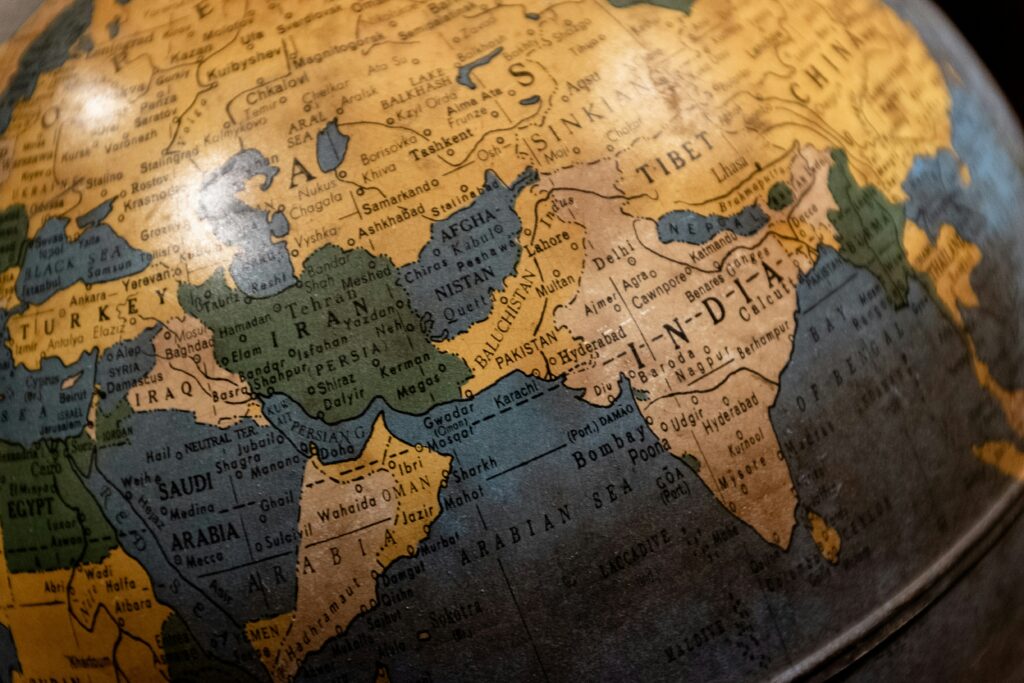
The year 2100 is close enough to take seriously and far enough away to be genuinely uncertain. Anyone born today in a developed country has a realistic chance of being alive then. The children being born right now will be in their mid-70s. The world they will inhabit in 2100 will be shaped by decisions being made today — on climate, technology, governance, and population — and by forces already in motion that nothing can stop.
This is not a list of predictions. It is a serious look at where the best available evidence, scientific projections, and credible forecasts point. Some of what follows is alarming. Some is genuinely exciting. Most of it is simply the logical consequence of where we already are in 2026.
1. The Climate of 2100: Hotter Than Any Human Has Experienced
The single most consequential factor shaping the world in 2100 is how much the average global temperature increases from today’s levels. The IPCC Sixth Assessment Report outlines a range of scenarios depending on how aggressively humanity reduces carbon emissions over the coming decades.
The best realistic scenario — aggressive global decarbonization starting immediately — produces warming of approximately 1.5 to 2 degrees Celsius above pre-industrial levels by 2100. The worst plausible scenario — continued high emissions throughout this century — produces warming of 4 to 5 degrees Celsius. For context, the difference between today’s average global temperature and the last ice age is approximately 5 to 6 degrees.
Even the best case scenario is not comfortable. A 1.5 degree warmer world means sea levels roughly 0.3 to 0.5 meters higher than today, the elimination of most tropical coral reefs, significantly more frequent extreme heat events, and intensified hurricanes, droughts, and wildfire seasons. Coastal areas will need substantial investment in flood defense or gradual abandonment.
A 3 to 4 degree scenario — the trajectory we are currently on with existing policies — means uninhabitable heat in parts of South Asia, the Middle East, and sub-Saharan Africa for months each year, sea levels 0.5 to 1 meter higher, catastrophic disruption to agricultural systems, and the displacement of hundreds of millions of people. Many of the world’s most celebrated natural landscapes and coastlines would be permanently altered.
The emissions decisions of the next 10 to 20 years will determine which of these futures materializes. This is not speculative — the physics is settled and the range of outcomes is well-documented.
2. World Population in 2100: Peak and Decline
The UN World Population Prospects 2022 revision projects the global population will peak at approximately 10.4 billion people around 2080 and then begin a slow decline as fertility rates fall below replacement level in more and more countries.
This peak-and-decline trajectory is a significant revision from earlier projections that saw population continuing to grow through 2100. The driver is the global demographic transition: as countries develop economically, as women gain access to education and healthcare, and as urbanization increases, fertility rates fall. This pattern has already played out in Europe, East Asia, and parts of Latin America, and it is accelerating across Africa and South Asia.
The geographic distribution of that population will be radically different from today. Africa is projected to roughly triple its population to over 3.5 billion by 2100, accounting for nearly 40 percent of all humans alive. Sub-Saharan African nations will be among the most populous countries on earth. Asia will remain the most populous continent but will have peaked and begun declining. Europe, East Asia including China and Japan, and much of the Americas will face significant population decline and rapid aging.
A world with an aging, declining population in the currently dominant economies and a young, growing population concentrated in Africa represents a fundamental shift in economic power, cultural influence, and geopolitical weight. The institutions, companies, and products shaped by Western and East Asian economies today may not reflect the dominant cultures of the world in 2100.
3. Humans in 2100: Longer Lives, Modified Biology
The question of what humans in 2100 will physically be like is one of the most contested areas of future speculation. Two very different trajectories are plausible.
Extended Natural Lifespan
The more conservative projection is that continued advances in medicine, genomics, and preventive healthcare will extend average life expectancy in wealthy countries to 90 to 100 years by 2100. This is a natural continuation of the trend that has already added 30 years to average lifespans over the past century.
The compressing of disease into a shorter period at the end of life — what gerontologists call the compression of morbidity — means people would remain healthy and functional for more of their additional years, rather than simply surviving longer in poor health.
Genetic and Biological Modification
The more radical possibility involves deliberate modification of the human genome. CRISPR gene editing, already demonstrated in human embryos, could theoretically allow the elimination of hereditary diseases. The same technology could also be used to select for physical or cognitive traits.
Whether and how extensively this is done will depend on regulatory frameworks developed over the next few decades. The ethical debates are enormous. A world in which wealthy families can afford genetic optimization of their children while others cannot would accelerate inequality in a fundamentally new biological dimension.
Brain-computer interfaces, prosthetics that exceed natural limb capability, and pharmaceutical enhancement of cognitive function may make the boundary between human and machine meaningfully blurred by 2100. What it means to be ‘unmodified’ could be as unusual in 2100 as being unvaccinated was unusual in the mid-20th century.
4. Artificial Intelligence by 2100: The Defining Variable
Nothing will shape the world in 2100 more than the trajectory of artificial intelligence. This is not hyperbole — it is a serious assessment shared by researchers across the political and technological spectrum.
The key question is whether Artificial General Intelligence — AI that matches or exceeds human cognitive ability across all domains — will be developed before 2100. If it is, it fundamentally changes every other forecast on this list. If it is not, AI still transforms the economy, labor markets, and daily life, but within recognizable human institutions.
A 2022 survey of AI researchers found a median estimate of roughly 50 percent probability of human-level AI by 2059. If AGI is achieved, the subsequent development of systems dramatically more capable than humans could follow rapidly — a scenario some researchers call the Singularity. A superintelligent AI operating at our service could, in principle, accelerate scientific discovery, solve climate change, cure diseases, and produce abundance at a scale impossible to currently imagine.
The risk scenario is equally significant. An AI system with goals misaligned with human values and the capability to pursue them at superhuman speed represents a civilizational risk that several serious researchers consider among the most important problems humanity currently faces.
Even without AGI, AI systems by 2100 will have automated most routine cognitive tasks, transformed healthcare diagnosis and treatment, conducted much of scientific research, and managed most of the logistical and administrative infrastructure of modern economies. The world of knowledge work in 2100 will be unrecognizable compared to 2026.
5. Work and the Economy in 2100
The nature of work will be one of the most contested social questions of the 21st century. Automation is already displacing certain categories of routine work. As AI and robotics improve, they will move up the skill ladder, eventually performing tasks that currently require significant human expertise.
The spectrum of possibilities ranges from mass unemployment requiring entirely new social contracts — such as universal basic income — to the continuous creation of new job categories that absorb displaced workers, as has happened with previous waves of automation.
What seems more certain is that the average working week will be significantly shorter by 2100. The transition from 60-hour working weeks in the 19th century to 40-hour weeks in the 20th century has an analog in the likely transition to 20 to 30 hour weeks as AI handles more of what currently fills human working time.
The social and psychological consequences are substantial. Cultures built around the identity and status provided by work will need to evolve. The question of how people find meaning, community, and purpose in a world where traditional employment occupies less of their time is not a trivial one — it is a central challenge of the coming century.
6. Geopolitics in 2100: A Different World Order
The geopolitical order of 2100 will differ substantially from today’s. The factors driving change are already visible.
China’s population is declining and aging rapidly. By 2100, India is projected to be the world’s most populous country, followed by Nigeria and several other African nations. Economic power follows population, productivity, and technology. A world where the largest economies are in Africa and South Asia represents a shift without historical precedent in the modern era.
Climate change will create significant pressures on geopolitical stability. Countries losing agricultural capacity or experiencing uninhabitable heat will generate migration flows at scales that dwarf anything seen in recent history. The countries receiving those flows will face social and political pressures of their own.
Resource competition — for water, arable land, rare earth minerals needed for clean energy technology, and eventually for habitable territory — will drive conflicts that have little precedent in the resource environment of the 20th century.
The optimistic scenario is a world that develops stronger international institutions capable of managing these pressures cooperatively — the way previous centuries developed institutions to manage trade, disease, and nuclear weapons. The pessimistic scenario is fragmentation, nationalism, and a series of climate-driven conflicts that leave large parts of the world destabilized.
7. Energy and Technology in 2100
By 2100, it is near-certain that global energy will be primarily generated from renewable sources. The cost of solar and wind power has fallen 90 percent in the past decade and continues declining. The trajectory points toward a world where clean energy is effectively free to generate, with costs residing primarily in storage and distribution infrastructure.
Nuclear fusion — which has been 30 years away for the past 70 years — is now seeing genuine scientific progress. Several companies have achieved net energy gain in fusion reactions in the early 2020s. Commercial fusion power by mid-century is plausible; if achieved, it essentially ends the energy constraint on human civilization.
Transportation will be fully electrified. Internal combustion engines will be historical artifacts. Autonomous vehicles will handle most ground transportation. Hypersonic aircraft and potentially sub-orbital point-to-point travel may make intercontinental journeys a matter of hours rather than days.
Space activity will be substantially greater than today. Whether that includes permanent human settlement on the Moon or Mars depends on technological progress and political will that is genuinely uncertain. What is more certain is that low-Earth orbit will be considerably more industrialized and that asteroid mining and space-based solar power are technically feasible within this century.
8. Will Humans Survive to 2100? The Existential Risk Question
Any honest assessment of the world in 2100 must acknowledge the possibility that humanity does not reach it in recognizable form — or at all. This is not science fiction. It is a serious concern among researchers who study existential and catastrophic risks.
The primary risk categories are: misaligned artificial general intelligence, engineered pandemics (biological weapons or laboratory accidents with enhanced pathogens), nuclear war, and runaway climate change producing cascading civilizational collapse. Philosopher Toby Ord, in his 2020 book The Precipice, estimates the overall probability of civilizational collapse or human extinction this century at approximately 1 in 6.
That estimate is contested. Many researchers consider it too high; some consider it too low. What is not contested is that these risks are real, that they are larger now than in previous centuries due to the power of the technologies involved, and that humanity has no established institutions or track record for managing them.
The encouraging historical fact is that humanity has faced apparently existential risks before — most notably during the Cold War nuclear standoff — and managed to navigate them through a combination of deterrence, diplomacy, and luck. Whether that record extends through a century of increasingly powerful and accessible technology remains to be seen.
Frequently Asked Questions
What will the world population be in 2100?
According to the UN World Population Prospects 2022 revision, the world population is projected to peak at approximately 10.4 billion around 2080 and then begin declining as fertility rates fall globally. By 2100, some projections show population at around 10 to 10.5 billion, with significant aging and decline in Europe, East Asia, and parts of the Americas, and continued growth concentrated in Africa.
How hot will it be in 2100?
The IPCC projects global average temperature increases of 1.5 to 2 degrees Celsius above pre-industrial levels in an aggressive decarbonization scenario, and 3.5 to 5 degrees in a high-emissions scenario. The world is currently on a trajectory toward approximately 2.5 to 3 degrees of warming by 2100 with existing policies, though the trajectory can change significantly based on actions taken in the next two decades.
Will artificial intelligence replace all jobs by 2100?
It is plausible but not certain. If Artificial General Intelligence is achieved — which many AI researchers consider likely before 2100 — AI systems could perform virtually all cognitive and physical tasks better than humans. If AGI is not achieved, AI will still automate a large share of current jobs but new categories of human work will emerge, as has historically happened with previous automation waves. The more confident prediction is that the nature and volume of human work will change dramatically, with significantly shorter working weeks becoming standard.
What will humans look like in 2100?
Natural human biology will not change significantly in 75 years — evolution operates on much longer timescales. However, humans in 2100 will likely live significantly longer, with average lifespans in wealthy countries potentially reaching 90 to 100 years. Genetic medicine may eliminate many hereditary diseases. More controversial is the prospect of genetic enhancement — selecting for traits in embryos — which is technically feasible but heavily contested ethically and likely to be unevenly available across economic classes.
Will humans be on Mars by 2100?
It is plausible. Several credible programs are targeting crewed Mars missions before 2040, and a permanent Mars base by 2100 is within the range of technological and economic possibility. Whether it happens depends on continued investment, no major civilizational disruptions, and solutions to the substantial health challenges of long-duration spaceflight including radiation exposure and bone density loss. A Mars colony of hundreds or thousands of people by 2100 is possible; a self-sustaining colony of millions is much less certain.
Final Thoughts
The world in 2100 will be shaped above all by three variables whose values we do not yet know: how much the climate warms, whether artificial general intelligence is achieved, and whether humanity develops the institutional capacity to manage these unprecedented challenges cooperatively rather than competitively.
The range of outcomes is genuinely wide — from a world of extraordinary abundance and extended human health enabled by clean energy and beneficial AI, to a severely disrupted world struggling with climate displacement, resource conflict, and technologies that outpaced governance. The outcomes are not predetermined.
The decisions being made now — on emissions, on AI safety, on global institutions, on education and healthcare access — are the decisions that will determine which 2100 actually arrives. That makes thinking seriously about 2100 not an idle exercise in speculation, but one of the most practically important things we can do.