
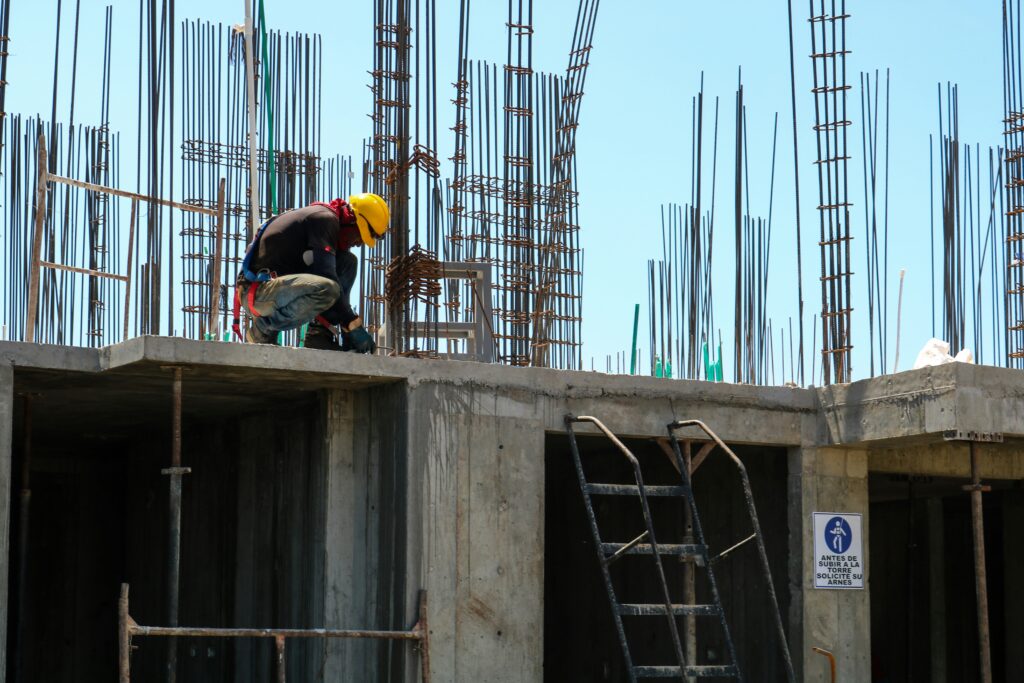
Shoring in construction is a method of providing temporary or permanent structural support to prevent soil, walls, or existing structures from collapsing during excavation and building work. Without proper shoring, trenches cave in, walls buckle, and adjacent structures shift — all of which create dangerous and expensive problems on any construction site.
This guide covers every major shoring method used in modern construction, the factors that determine which system is appropriate, OSHA compliance requirements, and the step-by-step process for correct shoring installation.
What Is Shoring in Construction?
According to OSHA’s official standard 29 CFR 1926.650, shoring (or a shoring system) is defined as a structure — such as a metal hydraulic, mechanical, or timber shoring system — that supports the sides of an excavation and is designed to prevent cave-ins.
In broader practice, shoring in construction refers to any system of supports used to stabilize soil, existing walls, or structural elements during excavation, renovation, demolition, or new construction work. The shoring can be temporary — removed once the structure becomes self-supporting — or permanent, left in place as part of the finished work.
Key benefits of proper shoring include:
- Preventing soil collapse and trench cave-ins
- Protecting workers and surrounding structures and utilities
- Creating safe, accessible working conditions in confined excavations
- Minimizing project delays from unexpected structural failures
- Meeting regulatory compliance under OSHA and local building codes
10 Types of Shoring in Construction
Different shoring systems address different site conditions, soil types, and project requirements. Here is a complete breakdown of the most common shoring methods used in modern construction.
1. Hydraulic Shoring
Hydraulic shoring uses aluminum hydraulic cylinders (crossbraces) as the main structural element, often paired with vertical or horizontal rails. The hydraulic mechanism allows fast adjustment to different trench widths and soil conditions without manual repositioning.
Steel plates are typically used alongside hydraulic systems to prevent soil from pushing between the support elements. This combination is particularly effective in trenches where conditions change as excavation deepens.
Common use: Trench and excavation support in urban environments, utility installation, and areas with unstable soil.
2. Sheet Pile Shoring
Sheet pile shoring involves driving interlocking U-shaped or Z-shaped steel sheets vertically into the ground to form a continuous barrier. The interlocking design creates a relatively watertight wall that resists both soil pressure and water infiltration.
Sheet piles are especially effective at separating a construction area from adjacent bodies of water or high water table zones. They can be extracted and reused after the project is complete or left in place as a permanent structure.
Common use: Harbor construction, marine projects, waterfront foundations, and flood control structures.
3. H and I-Beam Shoring (Soldier Pile Walls)
Also called soldier pile walls, H-beam and I-beam shoring drives steel H or I-shaped beams vertically into the ground at regular intervals. Horizontal lagging — typically timber planks or precast concrete panels — is then placed between the beams as excavation proceeds to retain the soil between piles.
This system is flexible and cost-effective for medium-depth excavations where water infiltration is not a primary concern. It allows for efficient installation in a variety of soil types.
Common use: Deep trench walls, basement excavations, and cut-and-cover tunnel construction.
4. Soil Nail Shoring
Soil nailing inserts steel bars or rods into pre-drilled holes throughout the soil mass, then applies a shotcrete facing to the excavation face. The nails are typically angled downward at 10 to 20 degrees and left in place permanently, becoming part of the reinforced soil structure.
Unlike most shoring systems that work from the top down, soil nailing reinforces the existing soil rather than replacing it with a structural wall. It is particularly effective in slopes and cuts where conventional retaining walls cannot be installed.
Common use: Stabilization of steep cuts, highway embankments, and slopes in unstable terrain.
5. Diaphragm Wall Shoring
Diaphragm walls are reinforced concrete walls constructed within a trench excavated using specialized equipment. The trench is filled with bentonite slurry during excavation to support the walls, then steel reinforcement cages are lowered in and concrete is placed by tremie pipe, displacing the slurry.
The resulting wall is extremely stiff, effectively watertight, and capable of carrying structural loads. It is one of the most expensive shoring methods but essential for deep excavations in constrained urban environments.
Common use: Deep excavations for basements and tunnels in city centers, metro systems, and underground structures where space is extremely limited.
6. Contiguous Pile Shoring
Contiguous pile shoring constructs a wall from a row of bored concrete piles placed with small gaps of approximately 2 to 6 inches between each pile. The gaps are small enough that minimal soil movement occurs between piles under normal conditions.
This system is faster and less expensive than a full diaphragm wall and works well in cohesive soils that can bridge the small gaps between piles. It is not suitable for granular soils or high water table conditions.
Common use: Deep excavations in cohesive soils with limited space and moderate groundwater concerns.
7. Secant Pile Shoring
Secant pile shoring creates a continuous interlocking wall by alternating un-reinforced primary piles with reinforced secondary piles that overlap and cut into the primary piles. This produces a wall with no gaps between elements, creating a significantly better water barrier than contiguous piling.
The secondary piles are drilled after the primary piles have partially cured, cutting through them to create the interlock. The result is a stiff, relatively watertight retaining wall suitable for challenging ground conditions.
Common use: Deep excavations with high groundwater, tight site constraints, or adjacent sensitive structures.
8. Raking Shoring
Raking shoring uses inclined structural members (rakers) placed at an angle between an unstable wall and a bearing point in the ground. The angle transfers lateral forces from the wall into the ground rather than requiring a vertical support structure.
Wall plates distribute the load over a larger wall area and reduce the risk of localized failure at contact points. The rakers must be carefully sized and angled based on the loads involved and the bearing capacity of the ground.
Common use: Temporary support for leaning or damaged walls, trench and excavation support, and emergency stabilization.
9. Flying Shoring
Flying shoring provides horizontal support between two parallel walls without any contact with the ground between them. Horizontal beams span the gap between the walls and are connected to vertical members that transfer loads back to each wall at appropriate points.
The system is called flying shoring because the horizontal support appears to span across open space. It is particularly useful when the ground between two structures cannot bear the load of conventional shoring or when access is required in the space between walls.
Common use: Stabilization of adjacent structures during demolition, renovation of terraced buildings, and high-rise construction where intermediate support is needed.
10. Dead Shoring
Dead shoring provides direct vertical support for a structure’s load-bearing elements. Two vertical posts connected by a horizontal needle beam are installed beneath a wall or column to temporarily carry the full vertical load of the structure above.
This allows critical structural elements such as beams, columns, or load-bearing walls to be repaired, replaced, or modified while the building above remains stable. It is carefully engineered to match the exact loads involved.
Common use: Historic building renovations, structural repairs, underpinning work, and situations where original foundations or supports need replacement.
Key Factors in Choosing a Shoring System
No single shoring method works for every situation. Selecting the right system requires careful analysis of multiple site and project factors.
Soil Type and Condition
Soil classification is the foundation of shoring design. OSHA’s standard classifies soils into three types based on cohesion, unconfined compressive strength, and fissuring.
Type A soils such as hard compacted clay are the most stable. Type B soils including silty sand and granular cohesive soils present moderate risk. Type C soils such as gravel, sand, and soft or fissured materials are the least stable and require the most robust shoring systems.
Sandy and granular soils typically require sheet pile or hydraulic systems that eliminate gaps. Cohesive clay soils can support contiguous pile walls. Soft or saturated soils generally require the most robust systems such as secant piling or diaphragm walls.
Load-Bearing Requirements
The shoring system must support not only the weight of retained soil but also any surcharge loads — the additional forces from vehicles, equipment, stored materials, and adjacent structures near the excavation. OSHA requires that surcharge loads from equipment weighing more than 20,000 pounds be specifically accounted for in shoring design.
For excavations 20 feet or deeper, OSHA mandates that the protective system design be prepared or approved by a registered professional engineer.
Groundwater Level
High water tables significantly affect shoring requirements. Water-bearing soils exert both soil pressure and hydrostatic pressure on shoring systems. Methods like sheet piling, secant piles, and diaphragm walls are specifically designed to address both types of pressure.
Space Constraints and Adjacent Structures
Urban construction sites with adjacent buildings, utilities, or roads often require shoring systems with minimal footprint. Contiguous and secant pile walls, diaphragm walls, and soil nailing are preferred in these situations because they are constructed within the footprint of the excavation itself without requiring working space behind the wall.
Environmental and Regulatory Requirements
Shoring work near waterways, protected habitats, or contaminated land must comply with environmental regulations beyond standard OSHA requirements. Vibration from driven pile installation can affect adjacent structures and utilities, which may preclude certain methods in sensitive locations.
OSHA Shoring Requirements in Construction
OSHA’s primary shoring regulations are contained in 29 CFR 1926, Subpart P — Excavations. Key requirements include:
- Trenches 5 feet deep or greater require a protective system (sloping, shoring, or shielding) unless excavated entirely in stable rock
- Trenches less than 5 feet deep may still require protection if a competent person determines hazardous ground movement is possible
- Trenches 20 feet or deeper require protective system design by or approved by a registered professional engineer
- A competent person must inspect trenches before each work shift and after weather events or any condition that could affect the shoring
- Workers must not enter a trench that has not been properly inspected and shored
- Materials and equipment must be kept at least 2 feet from the trench edge to reduce surcharge loading
Employers must also ensure safe entry and exit points exist and that atmospheric hazards are monitored in deep or confined excavations.
The Shoring Process: Step by Step
Step 1: Site Assessment and Planning
Before any shoring begins, a thorough site investigation is required. This includes soil testing and classification, groundwater assessment, utility location, analysis of adjacent structures, and review of applicable regulations.
The output is a shoring plan that specifies the system type, member sizes, installation sequence, and monitoring requirements. For complex or deep excavations, this plan must be prepared by a professional engineer.
Step 2: Installation
The shoring system is installed in sequence with the excavation, working from the top downward. Installation must be closely coordinated with excavation work. OSHA permits excavation no more than 2 feet below the bottom of installed shoring members, provided the system is designed for the full trench depth and no soil loss indicators are present.
Workers installing shoring must be trained and competent in the specific system being used. All components must be installed per the design specifications and manufacturer requirements.
Step 3: Monitoring and Inspection
A competent person inspects the shoring system before each work shift, after rain or other weather events, and after any event that could affect stability. Inspection records should be maintained throughout the project.
Any signs of distress — cracking, deflection, soil boiling, or unusual water seepage — must be addressed immediately. Workers must be removed from the excavation until the condition is assessed and remedied.
Step 4: Removal
Temporary shoring removal must only proceed when the permanent structure is confirmed to be self-supporting. Backfilling and shoring removal are coordinated so that the shoring is not removed ahead of backfill. Removal progresses from the bottom upward for most systems.
Shoring vs Scaffolding: Key Difference
Shoring and scaffolding both provide temporary construction support but serve entirely different purposes. Shoring supports soil, walls, or structural elements to prevent collapse — it is a structural safety system. Scaffolding provides working platforms for workers to access elevated areas of a structure — it is an access system.
The two systems are governed by separate OSHA standards and require different design considerations. They may be used simultaneously on the same project but address different hazards.
Frequently Asked Questions
What is shoring in construction?
Shoring in construction is a system of structural supports used to stabilize soil, walls, or existing structures during excavation, renovation, or construction work. It prevents cave-ins, wall collapses, and structural failures. OSHA defines shoring as a structure such as a hydraulic, mechanical, or timber system that supports excavation sides and prevents cave-ins under 29 CFR 1926.650.
What is the most common type of shoring in construction?
Hydraulic shoring and sheet pile shoring are among the most widely used methods. Hydraulic shoring is standard for utility trenches and urban excavations due to its speed and adjustability. Sheet pile shoring dominates marine and waterfront construction. For deeper urban excavations, contiguous and secant pile walls are increasingly common.
When is shoring required by OSHA?
OSHA requires a protective system for any trench 5 feet deep or greater in most soil conditions. For excavations less than 5 feet, a competent person must determine whether hazardous ground movement is possible. For trenches 20 feet or deeper, a registered professional engineer must design or approve the protective system. Full requirements are in OSHA 29 CFR 1926 Subpart P.
What is the difference between temporary and permanent shoring?
Temporary shoring is installed to stabilize a structure or excavation during construction and removed once the permanent structure is self-supporting. Permanent shoring is intended to remain in place indefinitely as part of the finished structure. Soil nails and diaphragm walls are often permanent. Hydraulic shoring and raking shoring are typically temporary.
Final Thoughts
Shoring in construction is not optional on most projects — it is a safety requirement and, in many cases, a legal one. Choosing the right shoring method requires matching the system to the soil conditions, load requirements, depth, and site constraints of each specific project.
The difference between a safe excavation and a catastrophic trench collapse often comes down to whether the right shoring system was selected, properly designed, and correctly installed. Following OSHA standards and engaging qualified engineers for complex shoring work is not just compliance — it is the foundation of a safe construction operation.