
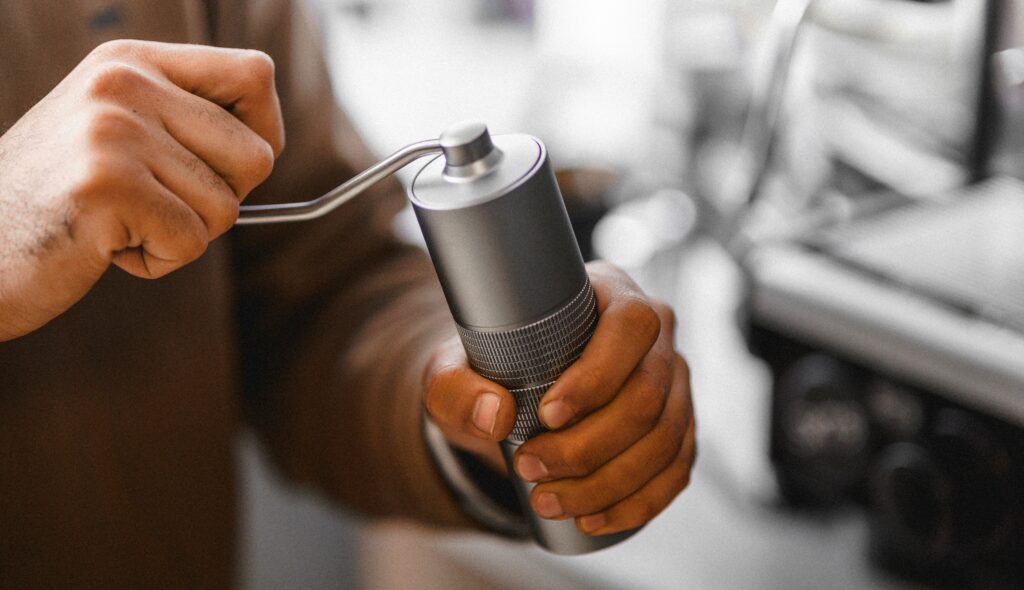
Manual coffee grinders have gone from a niche curiosity to a genuinely competitive category in home coffee equipment over the past few years. The best hand grinders in 2025 produce grind consistency that rivals electric burr grinders costing several times more — and the portability, quieter operation, and lower price point have made them the default choice for a significant share of serious home coffee brewers.
This guide covers the best manual coffee grinders in 2025 across all budget tiers and use cases, with the information you need to choose the right grinder for how you brew.
Best Manual Coffee Grinders: Quick Reference
| Grinder | Price | Burr Size | Best For | Category |
| 1Zpresso JX-Pro | ~$160 | 48mm steel | Pour over + espresso | Best overall |
| Timemore Chestnut C2 | ~$50–60 | 38mm steel | Pour over; budget entry | Best value |
| Comandante C40 MK4 | ~$200–230 | 39mm nitrogen steel | Pour over; precision | Best premium |
| 1Zpresso Q2 | ~$80–90 | Small steel | Travel; Aeropress | Best for travel |
| Hario Skerton Pro | ~$45–55 | Ceramic | Budget; occasional use | Best budget |
| Timemore Nano | ~$40–50 | Small steel | Budget travel | Best budget travel |
| 1Zpresso K-Plus | ~$180–200 | 48mm steel | Espresso focus | Best for espresso |
Best Manual Coffee Grinders: Detailed Reviews
1. 1Zpresso JX-Pro — Best Overall Manual Coffee Grinder
Price: ~$160 | Burr: 48mm stainless steel | Capacity: ~35g | Weight: ~540g
The 1Zpresso JX-Pro is the most recommended manual coffee grinder across the specialty coffee community in 2025 — a Taiwanese-made hand grinder with a 48mm stainless steel burr set that produces grind consistency competitive with electric burr grinders in the $300 to $400 range. At $160, it represents an exceptional price-to-performance ratio that no other hand grinder in this range has matched.
The JX-Pro’s external adjustment system is one of its standout practical features — you can change the grind setting by turning a numbered ring on the outside of the grinder without opening it or removing the upper burr. Each click of the adjustment is precise and repeatable: 90 clicks from closed to fully open gives you a very granular range of grind sizes from espresso-fine to French press coarse. The numbered markings make it easy to return to a specific setting after changing it.
Grinding speed is faster than most hand grinders thanks to the large 48mm burr and high-quality steel construction — approximately 30 to 45 seconds for a 20g dose for pour over, which is noticeably faster than smaller-burr alternatives. The grinder handles all brew methods including espresso, though espresso grinding is more demanding and slower than pour over.
- Best for: Daily pour over and filter coffee brewing; occasional espresso; home use
- Key advantage: External grind adjustment; 48mm burrs; grind consistency vs price
- Limitation: Heavy at 540g; not ideal as the primary travel grinder
2. Timemore Chestnut C2 — Best Value Manual Coffee Grinder
Price: ~$50–60 | Burr: 38mm stainless steel | Capacity: ~25g | Weight: ~240g
The Timemore Chestnut C2 is the best entry-level manual coffee grinder available — a Chinese-made hand grinder with 38mm stainless steel burrs that produces a significantly more consistent grind than anything else in its price range. At $50 to $60, the C2 outperforms grinders costing two to three times more and represents the clearest argument for why cheap ceramic-burr grinders are not worth buying.
The C2’s aluminum body is noticeably well-made for its price — solid feel, smooth bearing, and a grind quality that works well for pour over, Aeropress, and French press. The main limitation is burr size: 38mm burrs grind slower and produce slightly less consistency at very fine espresso settings than larger-burr premium grinders. For filter coffee brewing (the C2’s sweet spot), the results are excellent.
Timemore updates the C2 regularly — the current version (C2 Max and C2 Pro variants) has improved burr geometry over earlier iterations. The C2 is the right starting point for anyone trying their first manual grinder before deciding whether to invest more.
- Best for: First manual grinder; daily pour over on a budget; Aeropress and French press
- Key advantage: Best grind quality under $60; well-built; widely available
- Limitation: 38mm burrs slower than larger premium grinders; not ideal for espresso
3. Comandante C40 MK4 — Best Premium Manual Coffee Grinder
Price: ~$200–230 | Burr: 39mm nitrogen-treated high-alloy steel | Capacity: ~30–35g | Weight: ~330g
The Comandante C40 is the most recognized premium manual coffee grinder in the world — a German-engineered hand grinder with nitrogen-treated high-alloy steel burrs (marketed as N1Trox steel) that the company claims extends burr life and improves cutting performance over standard stainless steel. Used by World Barista Championship competitors and in specialty coffee shops globally, the C40 MK4 is the benchmark for hand grinder quality in pour over and filter brewing.
The C40’s grind quality — particularly for light roast pour over coffee where subtle flavor differences are most apparent — is exceptionally clean and uniform. The wooden body is ergonomic and the design has become iconic in specialty coffee circles. The MK4 version improved the previous design with a more stable bearing system and refined burr geometry.
At $200 to $230, the Comandante is a genuine investment. The 1Zpresso JX-Pro produces comparable results for most users at $160 — the Comandante premium is partly about grind quality at the very fine end and partly about the brand’s reputation and aesthetics. For serious pour over enthusiasts who want the best available hand grinder and appreciate the engineering, the C40 MK4 delivers.
- Best for: Pour over enthusiasts; light roast specialty coffee; gift for a serious coffee drinker
- Key advantage: Nitrogen-treated steel burrs; iconic design; benchmark grind quality
- Limitation: $200+ price; the JX-Pro delivers most of the performance for less
4. 1Zpresso Q2 — Best Manual Grinder for Travel
Price: ~$80–90 | Burr: Small stainless steel | Capacity: ~15–18g | Weight: ~160g
The 1Zpresso Q2 is the best travel-specific manual coffee grinder — small enough to fit inside an Aeropress chamber (making it extremely compact to pack), light at 160g, and designed with a travel pouch included. Despite its compact size, the Q2 produces a grind quality well above what its size and price would suggest, making it the clear choice for coffee travelers who don’t want to compromise on cup quality.
The Q2’s main limitation is its small capacity — approximately 15 to 18g per grind, which is enough for a single cup. For multiple cups, you’ll need to grind in batches. For solo travelers or couples who split a single Aeropress, this is not a real constraint. For groups, the larger 1Zpresso JX-Pro or a different approach is more practical.
- Best for: Solo coffee travelers; Aeropress users on the road; minimalist travel kit
- Fits inside an Aeropress chamber — packs into an incredibly small footprint
- Limitation: Small capacity limits it to 1–2 cups per grind session
5. Hario Skerton Pro — Best Budget Manual Coffee Grinder
Price: ~$45–55 | Burr: Ceramic | Capacity: ~100g | Weight: ~280g
The Hario Skerton Pro is the most widely available and reliable budget manual grinder — a Japanese-made hand grinder with ceramic burrs that has been a consistent recommendation for beginners for years. The Skerton Pro updated the earlier Skerton with a stabilizer spring that reduces burr wobble (a common issue in the original model), improving grind consistency significantly over its predecessor.
The ceramic burr limitation is real compared to steel alternatives: the Skerton Pro grinds slower, requires more effort, and produces less consistent results at very coarse and very fine settings than steel-burr grinders in the same price range (including the Timemore C2). However, ceramic burrs are extremely durable, never rust, and the Skerton Pro’s large glass capacity jar makes it one of the few budget grinders suitable for grinding multiple cups at once.
For occasional brewing or as a pure budget entry point, the Skerton Pro is reliable. For daily brewing, the Timemore C2 at a comparable price delivers noticeably better grind quality.
- Best for: Budget buyers; occasional use; households wanting large-batch capacity
- Limitation: Ceramic burrs grind slower with more effort than steel alternatives
6. 1Zpresso K-Plus — Best Manual Grinder for Espresso
Price: ~$180–200 | Burr: 48mm stainless steel | Capacity: ~30g | Weight: ~700g
Grinding for espresso with a manual grinder is demanding — espresso requires a very fine, highly consistent grind, and the effort of grinding 18 to 20 grams of coffee at espresso fineness is significant. The 1Zpresso K-Plus is the most practical choice for anyone committed to manual espresso grinding — its 48mm burrs handle espresso grinds more efficiently than smaller-burr alternatives, and the external click adjustment system allows the extremely precise micro-adjustments that espresso extraction requires.
The K-Plus is heavier than the JX-Pro at approximately 700g and requires more grinding effort for espresso than pour over. It is not the right choice for casual espresso users or for those who primarily brew filter coffee. For dedicated home espresso enthusiasts who want a manual option — particularly for travel where portability matters more than electric convenience — the K-Plus delivers.
- Best for: Manual espresso grinding; dedicated espresso enthusiasts
- Limitation: Heavy at 700g; significant effort for espresso grinding; not ideal for filter coffee
Manual vs Electric Coffee Grinder: How to Decide
| Factor | Manual Grinder | Electric Grinder |
| Price | Better value at most quality tiers | Higher cost for equivalent grind quality |
| Grind consistency | Excellent at $100+ price points | Excellent at $150+ (Baratza Encore) |
| Speed | 30–90 seconds manual effort | 15–30 seconds automatic |
| Portability | Ideal — no power needed | Requires power outlet |
| Noise | Nearly silent | Noticeable motor noise |
| Best for | Travel; apartments; anyone wanting value | Daily home use; multiple cups; convenience |
The honest comparison: a $160 manual grinder (1Zpresso JX-Pro) produces grind quality equivalent to a $300 to $350 electric burr grinder (Baratza Virtuoso+). If you’re grinding one to two cups per day and don’t mind the 30 to 45 seconds of manual effort, a hand grinder delivers exceptional value. If you’re grinding for multiple people or want zero morning effort, an electric grinder is more practical.
What to Look for in a Manual Coffee Grinder
Burr Material: Steel vs Ceramic
Most budget manual grinders use ceramic burrs; most quality grinders at $50 and above use steel. Contrary to marketing claims from some manufacturers, ceramic is not inherently superior to steel in a manual grinder. For home use, high-quality steel burrs outperform ceramic in three important ways: faster grinding speed, more consistent grind size distribution (particularly at coarse settings for pour over and French press), and easier adjustment precision.
Ceramic does have genuine advantages: it never rusts, requires no break-in period, and lasts extremely long with proper care. But for the majority of home brewers doing daily filter coffee, steel burrs produce better practical results. The Hario Skerton Pro is the recommended ceramic option when portability and budget are the priority.
Burr Size
Larger burrs grind faster and often produce more consistent results. The most common burr sizes in manual grinders:
- 35–38mm: Entry to mid-range (Timemore C2, Hario Skerton Pro). Adequate for filter coffee; slower for espresso.
- 39–40mm: Mid to premium range (Comandante C40). Good balance of speed and consistency.
- 47–48mm: Upper mid to premium (1Zpresso JX-Pro, K-Plus). Fastest manual grinding; best grind consistency.
Grind Adjustment System
How you change the grind setting matters significantly in daily use. The two main systems:
- External step adjustment (1Zpresso JX-Pro, K-Plus): A numbered ring on the outside of the grinder that clicks between settings. Easy to change without opening the grinder; numbered clicks make it simple to return to a known setting. The best system for practical daily use.
- Internal adjustment (Timemore C2, Hario Skerton): Requires removing the top burr to access the adjustment nut. Less convenient but adequate if you settle on a setting and rarely change it.
- Stepless adjustment (Comandante C40): Smooth continuous adjustment without clicks. More granular control but requires more attention when dialing in espresso settings.
Capacity
Manual grinder capacity ranges from approximately 15g (1Zpresso Q2 travel size) to 100g+ (Hario Skerton Pro with its large glass jar). For a single cup of pour over, you need approximately 15 to 20g of coffee. For two cups, 30 to 40g. Most quality mid-range grinders hold 25 to 35g comfortably — enough for one to two cups without refilling.
Bearing Quality
The bearing system stabilizes the central burr shaft during grinding, reducing wobble that causes inconsistent grind size. Premium grinders use precision bearings with minimal play — you can feel the difference immediately when turning the handle. Cheap grinders with loose bearings produce a noticeably less consistent grind regardless of burr quality. When evaluating any manual grinder, shake the handle lightly side to side before grinding — excessive movement indicates poor bearing quality.
Why Cheap Manual Grinders Aren’t Worth It
Amazon and retail sites are flooded with cheap manual coffee grinders priced $15 to $30 that look nearly identical to quality grinders. Most are blade grinders in disguise or low-quality burr grinders with excessive bearing play and inconsistent adjustment systems.
The problems with cheap manual grinders: they produce a mix of fine powder and coarse chunks rather than a uniform grind — this means some particles over-extract (producing bitterness) while others under-extract (producing sourness) in the same cup. The result is a muddy, unpleasant cup that is not representative of what good coffee tastes like.
The cheapest reliable entry point for a quality manual grinder is approximately $45 to $50 — the Hario Skerton Pro or Timemore Nano. Below that price, you are buying a bad experience that will make even good coffee beans taste disappointing.
Frequently Asked Questions
What is the best manual coffee grinder?
For most people, the 1Zpresso JX-Pro at approximately $160 is the best overall manual coffee grinder — it produces grind quality competitive with electric grinders costing $300 or more, grinds quickly thanks to its 48mm burrs, and has the best external adjustment system in its price range. For a budget entry point, the Timemore Chestnut C2 at $50 to $60 is the best value available and significantly outperforms similarly priced alternatives. For the absolute best pour over grind quality with premium aesthetics, the Comandante C40 MK4 is the benchmark.
Is a manual coffee grinder worth it?
Yes — at comparable price points, manual grinders consistently outperform electric grinders on grind quality. A $160 manual grinder (1Zpresso JX-Pro) produces grind consistency equivalent to an electric burr grinder in the $300 to $350 range (Baratza Virtuoso+). The trade-off is 30 to 45 seconds of manual grinding per cup. For one to two cups per day, most people find this trivially easy once it becomes a habit. For multiple cups or multiple people, an electric grinder is more practical.
What is the difference between a burr grinder and a blade grinder?
A burr grinder uses two abrasive surfaces (burrs) to crush coffee beans between them, producing a consistent and uniform particle size. A blade grinder uses a spinning blade (like a blender) that chops beans randomly, producing a mix of fine powder and coarse chunks. For any serious coffee brewing — pour over, espresso, French press, Aeropress — a burr grinder is essential. Blade grinders cannot produce the consistent grind needed for predictable extraction and should be avoided for quality coffee brewing.
Can you grind espresso with a manual grinder?
Yes, but it requires a grinder with sufficient burr quality and the willingness to put in significant effort. Espresso requires a very fine, highly consistent grind, and grinding 18 to 20 grams at espresso fineness takes 60 to 90 seconds of sustained effort on most manual grinders. The 1Zpresso JX-Pro handles espresso adequately; the 1Zpresso K-Plus is specifically designed for espresso grinding with more precise micro-adjustment capabilities. The Timemore C2 and Hario Skerton Pro are not recommended for espresso.
How long does a manual coffee grinder last?
Quality manual grinders from established brands (1Zpresso, Timemore, Comandante, Hario) typically last many years with normal use. Steel burrs maintain their cutting geometry for approximately 500 to 800 grams of coffee before noticeable dulling in budget grinders; premium burrs (Comandante’s N1Trox steel, 1Zpresso’s steel) maintain performance significantly longer. Many quality manual grinders offer replacement burr sets, allowing you to restore performance rather than replace the entire grinder.
Final Thoughts
The best manual coffee grinder for you depends primarily on your brewing method and how much you want to invest. For daily pour over or filter coffee with exceptional value, the 1Zpresso JX-Pro is the clear recommendation. For the best entry-level starting point, the Timemore Chestnut C2 delivers quality far above its price. For the pinnacle of pour over grinding with no budget constraint, the Comandante C40 MK4 is the benchmark.
Whatever you choose, the grinder will make a more noticeable difference to your coffee quality than almost any other equipment upgrade. Fresh-ground coffee with a quality burr grinder — even at medium price points — produces a cup that pre-ground coffee simply cannot match.