
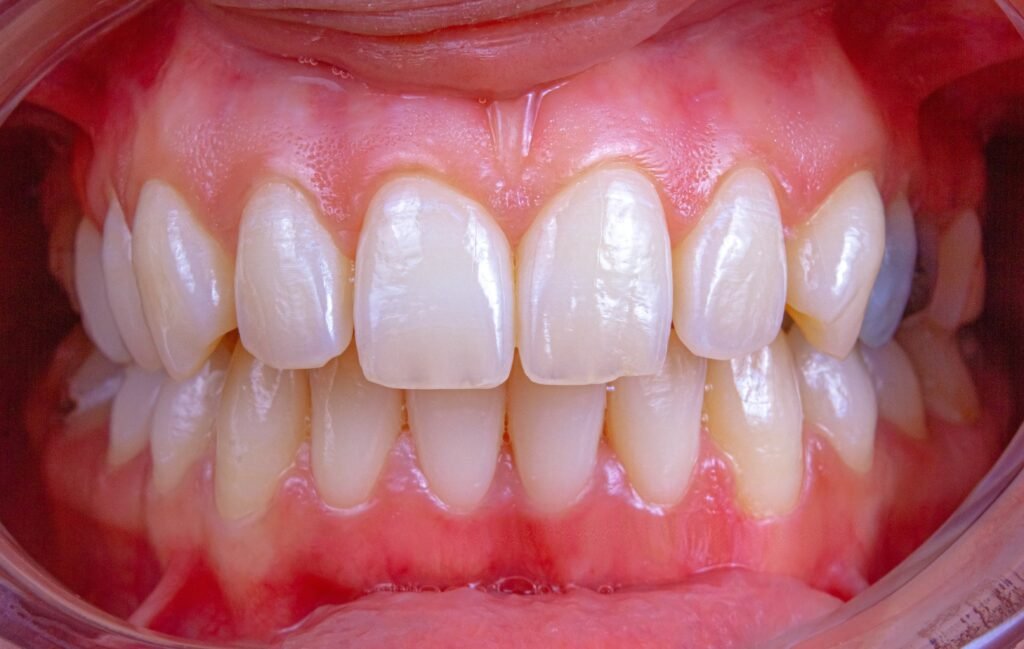
Dental concerns ranging from bite alignment to gum exposure to sudden tooth looseness are among the most searched health topics — and for good reason. Many people want to understand what is happening in their mouth, what they can do at home, and when they genuinely need to see a dentist. This guide covers six common dental concerns: overbite correction (including natural approaches and clinical treatments), fixing a gummy smile, correct resting teeth position, what to do about a loose tooth, whether cracked teeth can heal naturally, and how to handle a loose dental filling before you can see a dentist.
Important: Dental conditions range from minor cosmetic concerns to serious medical issues. This guide provides educational information — for any dental problem that involves pain, swelling, bleeding, or sudden change, see a dentist promptly. Delaying treatment for serious dental issues consistently makes them worse and more expensive to treat.
For home health essentials, lifestyle guides, and home maintenance tips, see our lifestyle section on TheChronex.
How to Fix an Overbite
An overbite is when the upper front teeth overlap the lower front teeth vertically more than normal. A small overbite (1-3mm) is completely normal and healthy — most people have some vertical overlap. A deep overbite (more than 4-5mm overlap, or more than one-third of the lower teeth hidden behind the upper teeth) can cause jaw pain, excessive tooth wear, gum damage, and aesthetic concerns.
| Overbite Severity | Description and Implication |
| Normal (1-3mm) | Healthy — upper teeth slightly overlap lower teeth; no treatment needed |
| Moderate (4-6mm) | Monitoring recommended; treatment if causing wear or discomfort |
| Deep (7mm+) | Treatment recommended — risk of jaw problems, tooth wear, gum damage |
| Skeletal overbite | Caused by jaw bone structure — requires orthodontic or surgical treatment |
| Dental overbite | Caused by tooth position — often correctable with orthodontics alone |
Can You Fix an Overbite Naturally?
For adults, a true structural overbite cannot be corrected naturally without professional orthodontic or dental treatment — the teeth and jaw bones do not reposition themselves based on exercises or posture changes alone. However, there are habits that can prevent an overbite from worsening and supportive practices that complement professional treatment:
- Stop habits that worsen overbite: Thumb sucking, prolonged pacifier use, tongue thrusting, and nail biting all worsen overbites over time — eliminating these habits prevents progression
- Correct tongue posture: The tongue should rest on the roof of the mouth (the palate), not against the back of the lower teeth. Low tongue posture pushes lower teeth inward and allows the upper teeth to protrude further. Practicing correct tongue position does not correct an existing overbite but may help prevent worsening
- Jaw exercises: Chewing exercises, particularly chewing harder foods, can strengthen the jaw muscles — but exercises alone do not move teeth or correct overbite
- Posture awareness: Forward head posture (common with screen use) is associated with jaw misalignment — improving overall posture reduces muscle tension but does not structurally fix an overbite
How to Fix an Overbite — Clinical Treatments
| Treatment | How It Works |
| Braces (traditional) | Move teeth gradually with brackets and wires; most effective for dental overbites |
| Clear aligners (Invisalign) | Custom trays that gradually shift teeth; effective for mild-moderate overbites |
| Retainers with bite plates | Appliances that help reposition bite; often used in children and teens |
| Herbst appliance | Fixed jaw-repositioning appliance used during growth phase; very effective in children |
| Tooth extraction | Removing teeth (often premolars) creates space for upper teeth to retract |
| Orthognathic surgery | Jaw surgery for severe skeletal overbites; most effective but most invasive |
Overbite treatment is most effective and least invasive during childhood and adolescence when the jaw is still growing — adults can still be treated successfully but treatment typically takes longer. Average treatment duration: 18-24 months for braces or clear aligners in moderate overbite cases.
How to Fix a Gummy Smile
A gummy smile — where more gum tissue than typical is visible when smiling — is defined by most dentists as showing 3mm or more of gum tissue above the upper teeth. The causes determine the treatment options:
Causes of a Gummy Smile
- Excessive gum tissue: Too much gum covering the teeth, making teeth appear shorter than they are — most common cause
- Short upper lip: A lip that lifts too high when smiling, exposing more gum than average
- Hyperactive lip elevator muscle: The muscle that lifts the upper lip contracts too much when smiling
- Vertical maxillary excess: The upper jaw (maxilla) grew too far downward — a skeletal cause
- Altered passive eruption: Teeth did not fully erupt, leaving more gum tissue covering them
How to Fix a Gummy Smile — Treatment Options
- Laser gum contouring: The most common treatment — a dental laser removes excess gum tissue to expose more tooth. Minimally invasive, done in one appointment, local anesthesia. Cost: $300-3,000 depending on extent
- Gingivectomy: Surgical removal of excess gum tissue — more traditional than laser but equally effective. Often combined with crown lengthening
- Lip repositioning surgery: A surgical procedure that limits how high the upper lip rises when smiling — addresses the lip cause rather than the gum tissue
- Botox injections: Injecting botulinum toxin into the lip elevator muscle reduces its range of motion, lowering the lip’s peak smile height. Temporary (3-6 months), non-surgical, $100-500 per treatment — requires ongoing maintenance
- Orthognathic surgery: For skeletal causes (vertical maxillary excess) — jaw surgery to reposition the upper jaw is the most comprehensive solution but also the most significant procedure
Can You Fix a Gummy Smile Without Surgery?
Botox/dysport injections are the primary non-surgical option for gummy smiles caused by a hyperactive lip muscle — they limit lip elevation when smiling. Lip repositioning can sometimes be done with less invasive techniques. Laser gum contouring is minimally invasive (not truly surgical). For skeletal causes or significant gum overgrowth, more involved treatment is required. Discuss the cause of your specific gummy smile with a dentist or periodontist to determine which approach applies.
How to Fix Resting Teeth Position
Resting teeth position — where your teeth sit when your mouth is relaxed and closed — has significant effects on jaw comfort, tooth wear, and facial muscle tension. The correct resting position is:
- Lips gently closed, touching lightly or very slightly apart
- Upper and lower teeth slightly separated — teeth should NOT be touching at rest
- Tongue resting on the roof of the mouth (the palate), just behind the upper front teeth
- Jaw muscles relaxed — no clenching or tension in the masseter muscles (cheeks)
Signs Your Resting Teeth Position Is Incorrect
- Teeth clenching at rest (even mildly) — causes jaw pain, headaches, and accelerated tooth wear
- Tongue pressing against the back of the lower teeth — can push lower teeth forward over time
- Open bite at rest — gap between upper and lower teeth when mouth is closed (not normal)
- Teeth always touching — teeth should only contact during chewing and swallowing, not constantly at rest
How to Correct Resting Teeth Position
- Awareness practice: Throughout the day, periodically check your jaw position — if your teeth are clenched or touching, consciously relax the jaw muscles and separate the teeth slightly
- Tongue posture training: Practice placing your tongue on the palate (the N position — as if saying the letter N but holding the tongue there). Over weeks, this becomes habitual for many people
- Stress reduction: Teeth clenching at rest is often stress-related — stress management through exercise, sleep, and mindfulness reduces muscle tension
- Night guard: If you clench or grind while sleeping, a custom night guard from a dentist protects teeth from wear and helps retrain jaw position over time
- Myofunctional therapy: A specialized therapy for tongue and jaw muscle retraining — often used for children but available for adults; can correct tongue posture and resting bite position
How to Fix a Loose Tooth
A loose tooth in an adult is always a signal to see a dentist — adult teeth do not naturally become loose, and looseness indicates one of several underlying problems that require professional treatment.
Causes of a Loose Adult Tooth
| Cause | Signs and Urgency |
| Gum disease (periodontitis) | Gum recession, bleeding, bone loss visible on X-ray; requires periodontal treatment |
| Dental trauma/injury | After a blow to the mouth; may be splinted or may stabilize; see dentist promptly |
| Teeth grinding (bruxism) | Gradual loosening from excessive force; night guard and bite adjustment help |
| Bone loss from infection | Tooth abscess can destroy surrounding bone; urgent treatment required |
| Osteoporosis | Reduced bone density can affect jaw bone; dental evaluation important |
| Pregnancy hormones | Temporary loosening during pregnancy; typically resolves postpartum |
What to Do About a Loose Tooth
- Do not wiggle or push the tooth — movement can increase ligament damage and worsen looseness
- Eat soft foods until you can see a dentist — avoid hard, crunchy, or chewy foods that put pressure on the loose tooth
- Maintain gentle oral hygiene — brush very gently around the loose tooth; skip flossing directly between the loose tooth and its neighbors if it causes movement
- See a dentist as soon as possible — a loose tooth from gum disease or infection requires prompt treatment. A traumatically loosened tooth has the best chance of stabilizing if treated within the first few hours to days
Can a loose tooth tighten back up? Sometimes — a tooth loosened by trauma or early gum disease can stabilize with appropriate treatment. A dentist may splint it to adjacent teeth to allow healing. However, a tooth loosened by severe bone loss from advanced periodontitis is unlikely to tighten significantly without bone regeneration procedures. Early treatment gives the best outcomes.
How to Fix a Cracked Tooth Naturally
A cracked tooth cannot heal on its own — unlike bone, tooth enamel does not regenerate or repair itself. Once cracked, the crack will not reverse without dental treatment. What you can do at home is manage discomfort and protect the tooth until you can see a dentist:
Cracked Tooth — What to Do at Home
- Rinse with warm salt water (1/4 teaspoon salt in 8 oz warm water) — reduces bacteria and soothes irritated tissue around the crack
- Avoid chewing on the cracked tooth — use the opposite side of your mouth for all chewing to prevent the crack from propagating
- Avoid temperature extremes — very hot or cold foods and drinks often trigger sharp pain in cracked teeth; the crack exposes the dentin layer which is highly sensitive to temperature
- Over-the-counter pain relief: Ibuprofen (Advil, Motrin) reduces inflammation; clove oil (eugenol) applied with a cotton ball can temporarily numb the area
- Dental wax (available at pharmacies): If a sharp edge of the cracked tooth is cutting the tongue or cheek, covering it with dental wax provides temporary protection
Types of Tooth Cracks and Their Treatments
| Crack Type | Description and Treatment |
| Craze line | Hairline surface crack in enamel only; no pain; no treatment needed; cosmetic bonding optional |
| Fractured cusp | Piece of chewing surface breaks; usually not painful; crown or onlay to restore |
| Cracked tooth | Crack from chewing surface toward root; crown; root canal if pulp involved |
| Split tooth | Tooth split completely into two segments; often requires extraction |
| Vertical root fracture | Crack starts at root; usually extracted; sometimes root resection |
Surface craze lines (very fine cracks visible in enamel that do not cause pain or sensitivity) are extremely common and do not require treatment. If your ‘cracked tooth’ is painless and only visible as a hairline marking on the enamel surface, it is likely a craze line — monitor it and mention it at your next dental checkup. Any crack that causes pain, sensitivity, or visible chipping requires prompt professional evaluation.
How to Fix a Loose Dental Filling
A loose or lost dental filling is a common dental emergency that needs prompt attention — but it is rarely a crisis requiring an ER visit. Here is what to do:
Immediate Steps for a Loose Filling
- Do not swallow the filling — if it comes out completely, keep it. While swallowing a small filling is not dangerous (it will pass naturally), having the old filling can help your dentist assess the size and material of the replacement needed
- Rinse the affected area with warm water — remove any food debris from the cavity
- Apply clove oil or dental cement: Temporary dental cement kits (Dentemp, Recapit) are available over the counter at pharmacies for around $5-10 — follow the instructions to temporarily re-seal the cavity until your dental appointment
- Avoid hard, sticky, or chewy foods on that side of the mouth — hard foods can dislodge the temporary material or damage the exposed tooth
- If the exposed area is sensitive: the dentin underneath the lost filling is exposed and sensitive to temperature and pressure. Avoid very hot or cold foods and use sensitive toothpaste gently over the area
Temporary Dental Cement — How to Use
- Clean and dry the tooth as much as possible
- Mix the cement according to package directions (usually a paste consistency)
- Place a small amount of cement in the cavity — press gently with a clean fingertip or the applicator provided
- Bite down gently to seat the material and confirm your bite is comfortable — the temporary material is soft and you can adjust it while it is fresh
- Allow to set per the instructions (usually 30-60 minutes before eating)
- Temporary cement lasts days to weeks — it is not a permanent solution and the filling needs professional replacement
Why Loose Fillings Need Professional Replacement
A loose or lost filling exposes the underlying tooth structure to bacteria, food, and moisture — conditions that accelerate tooth decay. What starts as a simple filling replacement can become a root canal or crown if the exposed area decays significantly. See your dentist within a few days to a week for a loose filling. If the tooth develops pain, throbbing, or swelling before your appointment, that indicates infection and requires urgent dental care.
For home maintenance guides, smoke detector safety, and practical lifestyle tips, see our home and lifestyle section on TheChronex.
For finding a dentist and understanding dental costs, see American Dental Association — find a dentist. For dental emergency guidance, see MouthHealthy.org — dental emergencies guide.
For smoke detector battery guides, home maintenance, and lifestyle tips, see our article on smoke detector battery guide and home maintenance tips on TheChronex.
Bottom Line
| Fix overbite naturally | Cannot be corrected without treatment; habits like tongue posture help prevent worsening |
| Overbite treatment | Braces, clear aligners, or jaw surgery depending on severity and cause |
| Gummy smile fix | Laser gum contouring (most common); Botox for lip cause; surgery for skeletal cause |
| Correct resting teeth position | Teeth slightly apart at rest; tongue on palate; jaw muscles relaxed; awareness practice |
| Loose tooth | See dentist promptly; do not wiggle; soft foods; may stabilize with treatment |
| Cracked tooth naturally | Cannot heal — manage pain, avoid chewing on it, see dentist; craze lines are harmless |
| Loose filling | Temporary cement (Dentemp) as bridge; see dentist within days; avoid hard foods |
| When to seek urgent care | Pain, swelling, throbbing, fever, or spreading infection — do not delay |
Frequently Asked Questions
Can you fix an overbite naturally?
A structural overbite in adults cannot be corrected naturally — teeth and jaw bones do not reposition themselves without orthodontic forces. What natural approaches can do is prevent the overbite from worsening: stopping habits like thumb sucking or nail biting, practicing correct tongue posture (tongue resting on the palate), and improving overall posture all reduce factors that contribute to overbite progression. To actually correct an existing overbite, professional treatment is required — braces and clear aligners (like Invisalign) are the most common approaches, with orthodontic appliances during childhood and jaw surgery for severe skeletal cases.
How do you fix a gummy smile?
Gummy smile treatment depends on the cause. For excess gum tissue covering teeth, laser gum contouring is the most common solution — a dental laser removes excess tissue to expose more of the tooth in a single minimally invasive appointment. For a hyperactive lip muscle that lifts too high when smiling, Botox injections into the elevator muscle are an effective temporary treatment (lasting 3-6 months). Lip repositioning surgery offers a more permanent solution for the lip cause. Severe skeletal causes (upper jaw overgrowth) require orthognathic surgery. Discuss your specific case with a dentist or periodontist to determine the most appropriate approach.
What should I do about a loose tooth?
A loose adult tooth requires dental attention — it does not correct itself without treatment. In the meantime: do not wiggle or push the tooth, eat only soft foods on the opposite side, and maintain gentle oral hygiene around it. See a dentist as soon as possible. The most common causes are gum disease (periodontitis), dental trauma, or teeth grinding — all of which can be treated effectively when caught early. A tooth loosened by trauma has the best chance of stabilizing if evaluated within the first 24-48 hours. Prompt treatment consistently produces better outcomes than waiting.
Can a cracked tooth heal naturally?
No — tooth enamel cannot regenerate or repair itself once cracked. A cracked tooth will not heal without dental treatment. At home, you can manage discomfort by rinsing with warm salt water, avoiding chewing on the tooth, staying away from temperature extremes, and using over-the-counter clove oil for temporary pain relief. However, these are only temporary measures — see a dentist for evaluation. The treatment depends on the crack type: surface craze lines require no treatment; a cracked cusp may need a crown; a deep crack reaching the pulp may need a root canal; a split tooth may need extraction. Early treatment prevents the crack from propagating and gives better outcomes.
What do I do about a loose dental filling?
For a loose or lost dental filling: remove any debris by rinsing with warm water, pick up a temporary dental cement kit (Dentemp or Recapit) from a pharmacy and apply it to temporarily seal the cavity, avoid hard and sticky foods on that side, and see your dentist within a few days to a week. Temporary dental cement is not a permanent solution — the exposed tooth structure can decay rapidly without a proper filling. If the tooth develops pain, throbbing, or swelling before your appointment, that indicates possible infection and requires urgent dental care rather than waiting for a routine appointment.