
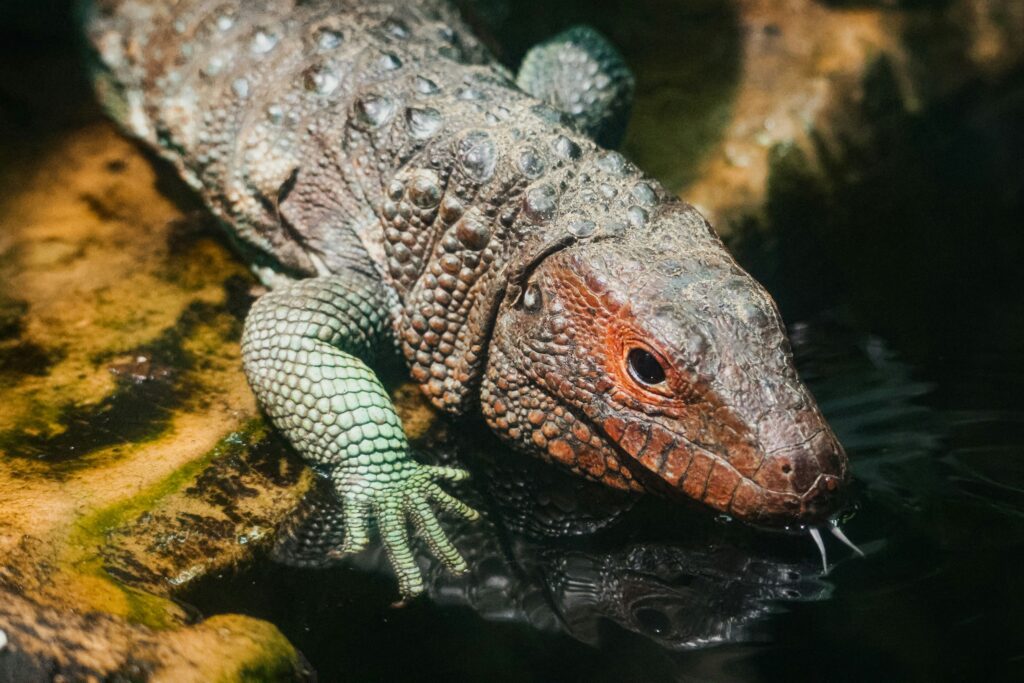
The red-eyed crocodile skink is one of the most visually striking lizards in the reptile hobby — and also one of the most misunderstood. That dramatic orange-red ring around each eye gives them an almost prehistoric look, which makes sense given that they come from the tropical forests of New Guinea, one of the most biodiverse places on Earth.
Quick facts: red-eyed crocodile skinks (Tribolonotus gracilis) grow to 7–10 inches, live 8–14 years in captivity, need 80–100% humidity, and eat live insects every other day as adults. They are crepuscular, meaning most active at dawn and dusk, and are more of a visual display animal than a hands-on pet.
Here is everything you need to set them up correctly from the start — enclosure size, substrate, temperature, humidity, diet, handling, health, price, and where to find one.
Red-Eyed Crocodile Skink: At a Glance
| Spec | Detail |
| Scientific name | Tribolonotus gracilis |
| Common names | Red-eyed crocodile skink, orange-eyed crocodile skink |
| Origin | New Guinea (Papua New Guinea and Indonesian Papua) |
| Adult size | 7–10 inches total length including tail |
| Lifespan | 8–10 years typical; up to 12–14 years with excellent care |
| Activity pattern | Crepuscular — most active at dawn and dusk; some nocturnal activity |
| Diet | Insectivore — live insects only; no vegetation |
| Humidity | 80–100% — non-negotiable |
| Temperature | 75–84°F (24–29°C); cooler is better than too hot |
| Minimum enclosure | 24″L x 18″W x 18″H for a single adult |
| Handling tolerance | Low — more visual display animal than hands-on pet |
| Price | $100–$300 for captive bred; wild-caught cheaper but not recommended |
| Experience level | Intermediate — specific humidity needs require effort |
What Is a Red-Eyed Crocodile Skink?
Red-eyed crocodile skinks are small lizards native to the tropical rainforests of New Guinea, where they live among leaf litter on the forest floor near streams and other water sources. Their name comes from the striking orange-red ring of scales surrounding each of their dark brown eyes — one of the most distinctive features of any lizard in captivity.
They are called ‘crocodile’ skinks because of their heavily keeled, armor-like scales, which give them a textured, prehistoric appearance similar to a tiny crocodile. Unlike many popular pet lizards, they do not enjoy frequent handling and will vocalize (a raspy, alarm-like cry) when distressed — sometimes causing a startled drop reflex in the handler. Juveniles may also play dead when threatened.
Males and females are distinguishable by experience keepers: males are slightly larger and have gray-blue pores on the underside of their feet. Juveniles look similar to adults by around 6 months of age. Sexual maturity is reached at 3–4 years.
Enclosure: Size, Setup, and Type
Minimum Enclosure Size
For a single adult red-eyed crocodile skink, the minimum recommended enclosure is 24″ long x 18″ wide x 18″ tall — equivalent to about 20 gallons. A 30″ x 12″ or 18″ x 18″ footprint also works well. Floor space is more important than climbing height for this terrestrial species.
For a pair (one male, one female), increase to a 55-gallon or larger. Two males should never be housed together — they will fight and stress each other. Two females can coexist in a 10–20 gallon enclosure with adequate space.
Best Enclosure Type
Glass terrariums with front-opening doors are ideal because they retain humidity much better than screen-sided enclosures. If using a screen-top enclosure, cover 70–80% of the top with acrylic, glass, or plastic wrap to retain moisture — but ensure enough airflow to prevent mold growth and stagnant air, which causes respiratory infections.
A bioactive setup — using live plants, a deep substrate layer, and a clean-up crew of springtails and isopods — is highly recommended. It maintains humidity naturally, reduces maintenance, and provides enrichment. Suitable plants include Sansevieria (snake plant), orchids, and bromeliads, which stay relatively small and tolerate the conditions.
Substrate
The substrate needs to retain moisture and allow burrowing. Recommended options:
- Coconut fiber (coir) mixed with organic topsoil — 3–6 inches deep
- ABG mix (a bioactive substrate blend of tree fern fiber, peat, orchid bark, and charcoal)
- Tropical terrarium mixes from brands like Zoo Med or Exo Terra
Avoid sand, paper towels, or other dry substrates — they cannot maintain the high humidity this species requires and can cause health problems.
Temperature and Humidity
Temperature
Red-eyed crocodile skinks come from cool, humid New Guinea forests. They do not need intense heat and are actually more tolerant of cooler temperatures than many tropical reptiles. Aim for:
- Warm side: 82–84°F (28–29°C)
- Cool side: 72–75°F (22–24°C)
- Night temperature: Can drop to 68–70°F (20–21°C) — this is fine and reflects natural conditions
Provide a low-wattage heat source on one side of the enclosure — a heat mat under the tank, a low-wattage ceramic heat emitter, or a small deep heat projector. Avoid hot basking spots above 85°F — overheating is a serious risk.
Humidity — The Most Critical Factor
Humidity is the single most important — and most commonly neglected — aspect of red-eyed crocodile skink care. They need 80–100% relative humidity at all times. Insufficient humidity causes retained shed (dysecdysis), respiratory infections, and long-term health decline.
How to maintain humidity:
- Mist the enclosure once or twice daily — morning and evening
- Use a deep, moisture-retaining substrate
- Cover most of the screen top if using a screen-lid enclosure
- Include a large shallow water area or water feature — these skinks spend time near water in the wild
- Monitor with a digital hygrometer — analog stick-on gauges are unreliable
A large water dish or small water feature on the cool side of the enclosure serves double duty: it provides drinking water, a potential egg-laying site, and contributes to ambient humidity.
Diet: What to Feed a Red-Eyed Crocodile Skink
Red-eyed crocodile skinks are strict insectivores. They eat no vegetation, fruit, or other plant matter — do not attempt to offer these. Their diet in captivity should consist entirely of appropriately sized live insects.
Feeder Insects
- Staple feeders: small dubia roaches, small crickets, black soldier fly larvae (BSFL/Calci-Worms)
- Supplements: mealworms, small hornworms, small waxworms (sparingly — high fat content)
- Occasional treats: red wigglers (earthworms), small silkworms
Size guide: feeder insects should be no wider than the space between the skink’s eyes — roughly half the width of the head. Offering prey that is too large causes stress and can lead to impaction or regurgitation.
Feeding Frequency
- Juveniles (under 1 year): feed daily
- Adults: feed every other day — 3–5 appropriately sized insects per feeding
Supplementation
Dust feeder insects with calcium powder at every feeding for juveniles and every other feeding for adults. Use a multivitamin supplement once every 1–2 weeks. ReptiCalcium without D3 is appropriate for setups with UVB lighting; use calcium with D3 if no UVB is present.
Lighting
While red-eyed crocodile skinks are crepuscular and spend little time in direct light, providing low-level UVB lighting (a 5.0 UVB tube at the top of the enclosure) is now recommended by most care guides. UVB aids in vitamin D3 synthesis and calcium metabolism, even for skinks that do not bask extensively. A 12-hour light cycle (12 hours on, 12 hours off) mimics natural tropical day length.
Handling: How Much Is Too Much?
Red-eyed crocodile skinks are not handling-tolerant lizards by nature. They are secretive, stress easily, and communicate distress through loud vocalizations — a raspy cry that can startle new keepers. Some individuals become more tolerant with regular, gentle interaction over time, but many never fully accept handling.
Best practices:
- Keep handling sessions short — under 5 minutes initially
- Support the full body when holding — never restrain or squeeze
- If the skink vocalizes or tries to escape, return it to the enclosure
- Avoid handling for at least 48 hours after feeding
- Young skinks may play dead — this is a stress response, not a health issue
If you are interested in other exotic pet care and wildlife topics, our guide to crocodile vs alligator: which is more dangerous covers the full comparison between the wild relatives of this fascinating species.
Red-Eyed Crocodile Skink Price and Where to Buy
Captive bred red-eyed crocodile skinks typically cost $100–$300 in the US depending on the breeder, age, and sex. Wild-caught specimens are available for less but are strongly discouraged for three reasons: they are significantly more stressed and less tolerant of captivity, carry higher parasite loads, and their collection contributes to wild population pressure in New Guinea.
Where to find captive bred red-eyed crocodile skinks:
- ReptilesNCritters, Underground Reptiles, and similar online reptile retailers
- Reptile expos — Tinley Park, White Plains, Daytona Beach, and others regularly feature crocodile skinks
- MorphMarket — a verified online marketplace connecting buyers with reputable breeders
- Local reptile clubs and herpetological societies often have breeder networks
ReptiFiles’ comprehensive red-eyed crocodile skink care sheet at reptifiles.com/red-eyed-crocodile-skink-care-sheet is regularly updated and is one of the most research-backed free resources available for this species.
Common Health Issues
Retained Shed (Dysecdysis)
The most common health problem in captivity — almost always caused by insufficient humidity. Retained shed around the eyes (spectacles), toes, or tail tip can restrict blood flow and cause permanent damage. If you notice incomplete shed, increase humidity immediately and offer a humid hide (a small container with damp sphagnum moss). Never forcibly peel retained shed — soak gently in warm, shallow water for 15–20 minutes.
Respiratory Infections
Wheezing, mucus around the nose, and labored breathing indicate a respiratory infection — typically caused by temperatures that are too cool and humidity that is too high without adequate ventilation. This requires veterinary treatment with antibiotics.
Parasites
Wild-caught specimens commonly carry internal and external parasites. A fecal exam by a reptile veterinarian is strongly recommended for any new acquisition, especially wild-caught individuals. Captive bred animals from reputable breeders are typically parasite-free.
Bottom Line
| ✅ Adult size | 7–10 inches |
| ✅ Lifespan | 8–10 years typical; up to 12–14 with excellent care |
| ✅ Most important care factor | Humidity — 80–100% at all times; insufficient humidity causes most health problems |
| ✅ Diet | Live insects only — no plants, no frozen/thawed |
| ✅ Handling | Low tolerance — visual display animal, not a hands-on pet |
| ✅ Price | $100–$300 captive bred — always choose CB over wild caught |
| ✅ Experience level | Intermediate — not impossible for beginners but requires research |
Frequently Asked Questions
How big do red-eyed crocodile skinks get?
Red-eyed crocodile skinks reach 7–10 inches in total length including the tail at full adult size. Males are slightly larger than females. Some individuals reach 10 inches but this is on the larger end of the range.
How long do red-eyed crocodile skinks live?
In captivity, red-eyed crocodile skinks typically live 8–10 years. With excellent care, some individuals have been reported to live 12–14 years. Wild individuals typically live around 6 years. Lifespan data for this species is still limited as captive keeping is relatively recent.
What do red-eyed crocodile skinks eat?
Red-eyed crocodile skinks are strict insectivores. Feed live insects — small dubia roaches, crickets, and black soldier fly larvae are the best staple feeders. Dust with calcium at every feeding for juveniles and every other feeding for adults. Adults should be fed every other day; juveniles daily.
What size enclosure does a red-eyed crocodile skink need?
The minimum enclosure for a single adult is 24″ L x 18″ W x 18″ H. Floor space is more important than climbing height. A 20-gallon glass terrarium is the minimum; larger is always better. For a pair, use a 55-gallon or equivalent.
How much do red-eyed crocodile skinks cost?
Captive bred red-eyed crocodile skinks typically cost $100–$300 in the US. Wild-caught specimens are cheaper but are not recommended due to health and ethical concerns. Always purchase from a reputable breeder who can confirm the animal is captive bred.
Are red-eyed crocodile skinks good pets for beginners?
They are considered intermediate level — not impossible for beginners, but they require specific humidity conditions that take effort to maintain, and they are not hands-on pets. If you want a lizard you can handle regularly, a blue-tongued skink or leopard gecko is a better starting point. If you want a fascinating visual display animal with specific care needs, red-eyed crocodile skinks are excellent once you understand their requirements.