
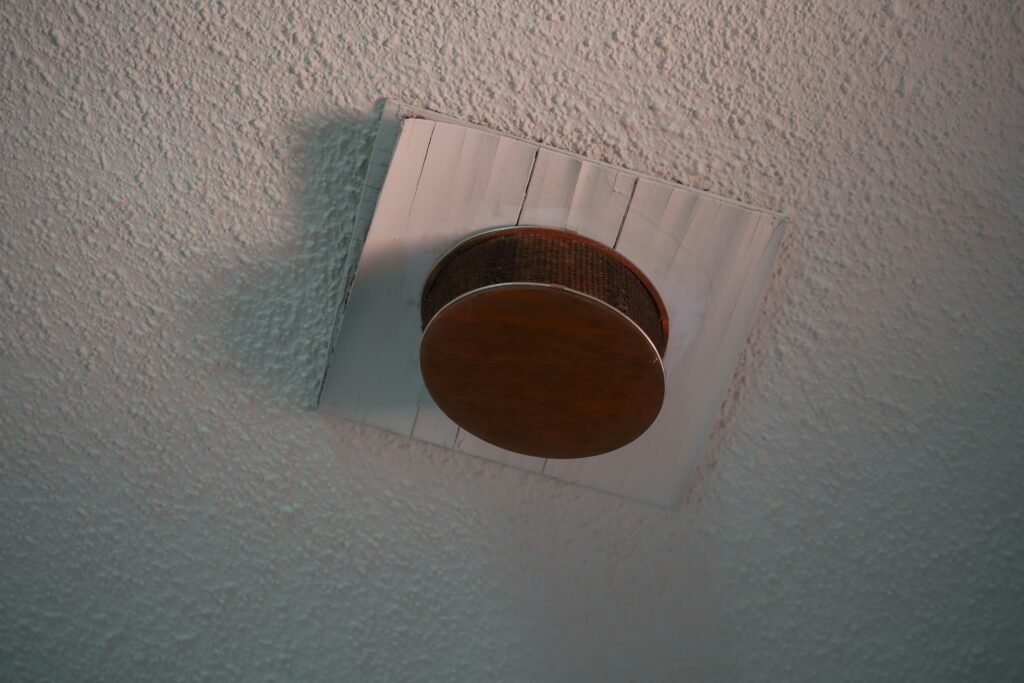
Not all smoke detectors are the same — they use different sensing technologies, different power sources, and have different strengths and weaknesses depending on the type of fire. Understanding the difference between ionization and photoelectric smoke detectors, hardwired versus battery-powered units, and what brands like Kidde, First Alert, and Firex offer helps you choose and maintain the right protection for your home. This guide covers every major smoke detector type and brand, how to replace a smoke detector, and when old detectors need to be replaced.
For smoke detector battery types, how to change batteries in Kidde and First Alert detectors, how long batteries last, and 10-year sealed battery models, see our article on smoke detector battery guide — what battery, how to change, how long they last.
Types of Smoke Detectors — Ionization vs Photoelectric vs Dual Sensor
There are three main smoke detection technologies used in residential smoke alarms:
| Type | How It Works | Best For |
| Ionization | Radioactive source ionizes air; smoke disrupts current | Fast-flaming fires; kitchen grease fires |
| Photoelectric | Light beam detects smoke particles | Slow-smoldering fires; bedroom/living room |
| Dual sensor | Both ionization + photoelectric in one unit | Comprehensive coverage for any fire type |
Ionization Smoke Detectors
Ionization smoke detectors use a tiny amount of radioactive material (Americium-241) to ionize air between two electrically charged plates. When smoke enters the chamber, it disrupts the ion current, triggering the alarm. Ionization detectors respond faster to flaming, fast-moving fires and are typically 30-90 seconds faster than photoelectric detectors at detecting this type of fire. They are more prone to nuisance alarms from cooking smoke and steam, which is why they should not be placed within 20 feet of a kitchen or bathroom.
Photoelectric Smoke Detectors
Photoelectric smoke detectors use a light beam and a light sensor at an angle inside the sensing chamber. When smoke particles enter the chamber, they scatter the light beam onto the sensor, triggering the alarm. Photoelectric detectors are significantly better at detecting slow, smoldering fires — the type that often start in bedroom furniture, upholstered chairs, or electrical wiring and produce dense smoke before bursting into flames. The NFPA and fire safety experts increasingly recommend photoelectric detectors for bedrooms and living areas because slow-smoldering fires are more likely to occur while people are asleep.
Dual Sensor Smoke Detector — The Best of Both
A dual sensor smoke detector (also called a combination smoke detector) contains both ionization and photoelectric sensing elements in a single unit. This provides comprehensive coverage for both fast-flaming fires (better detected by ionization) and slow-smoldering fires (better detected by photoelectric). Fire safety authorities including the NFPA recommend either installing both types in each area or using dual sensor detectors. Popular dual sensor models include the Kidde KN-COSM-B and the First Alert SA7760 combo smoke alarm.
Hardwired vs Battery Powered Smoke Detectors
| Feature | Hardwired | Battery Powered |
| Power source | Home electrical wiring (120V AC) | Battery only (9V or AA) |
| Backup | Battery backup for power outages | No backup — dies when battery dies |
| Interconnection | Most models can be interconnected | Wireless interconnect available on some |
| Installation | Requires electrical connection | No wiring needed; mount anywhere |
| Best use | New construction; permanent installation | Rental units; hard-to-wire locations |
| Cost | Higher (professional install often needed) | Lower (DIY install) |
Hard Wired Smoke Detector — How They Work
Hardwired smoke detectors connect directly to your home’s 120-volt AC electrical system, typically on a dedicated circuit. They draw continuous power from the house wiring and use a battery (usually 9V) only as a backup in case of power failure. Most modern hardwired smoke detectors use interconnect wiring — when one detector goes into alarm, all interconnected detectors in the home sound simultaneously, providing the best possible warning regardless of where a fire starts. This is a significant safety advantage over standalone battery-only detectors. New residential construction in the United States is required by code to have hardwired, interconnected smoke detectors.
Hardwired Smoke Detector Battery — Backup Power
The battery in a hardwired smoke detector is a backup — it keeps the alarm operational during power outages. The battery does not power the alarm during normal operation. Replace the backup battery at least once per year, or when the low-battery chirp sounds. Removing the backup battery from a hardwired detector does not disable the alarm’s primary function (it will still operate on house power), but leaves it unprotected during outages.
Battery Powered Smoke Detector — Placement and Advantages
Battery-powered smoke detectors are ideal for locations where hardwiring is impractical: rental apartments (where tenants cannot modify wiring), finished basements with no accessible wiring, attic spaces, garages, and any location that needs additional coverage beyond hardwired units. Their main vulnerability is battery failure — if the battery dies and is not replaced, the detector provides no protection. The annual battery replacement habit is especially critical for battery-only detectors. Sealed 10-year lithium battery detectors eliminate this concern for most of the detector’s lifespan.
Kidde Smoke Alarm — Brand Review and Models
Kidde is one of the two dominant residential smoke alarm brands in the United States (along with First Alert). Kidde is owned by Carrier Global and manufactures a full range of smoke alarms, carbon monoxide detectors, combination units, and fire extinguishers.
Kidde Smoke Detector Lineup — Key Models
| Model | Type | Key Feature |
| Kidde i9010 | Ionization, battery (9V) | Entry-level; 9V; most affordable |
| Kidde P3010K | Photoelectric, battery | Photoelectric sensing; 9V battery |
| Kidde KN-COSM-B | Dual sensor (smoke + CO) | Combination smoke and CO; 9V |
| Kidde i12010S | Ionization, hardwired | Hardwired with 9V backup |
| Kidde 10-Year (i12060) | Ionization, sealed 10-yr battery | No battery changes for 10 years |
| Kidde Firex i4618AC | Ionization, hardwired | Legacy hardwired model |
Kidde Smoke Alarm — Strengths and Considerations
- Kidde detectors are widely available at Home Depot, Lowe’s, Amazon, and hardware stores nationally
- Kidde hardwired models are interconnectable — when one sounds, all sound
- Kidde’s 10-year sealed battery detectors eliminate annual battery replacement
- Kidde has issued recalls on specific models — check the CPSC website (cpsc.gov) with your model number before purchasing a used or older Kidde detector
- The Kidde Firex line (originally a separate brand, now owned by Kidde) is common in older homes installed by contractors
First Alert Smoke Detector — Brand Review
First Alert is the other major residential smoke alarm brand, manufactured by BRK Brands (a subsidiary of Resideo Technologies). First Alert products are known for reliability, and the brand has strong recognition from its decades of consumer marketing.
First Alert Key Models
- First Alert SA303CN3: Ionization, 9V battery — basic reliable unit
- First Alert SA511CN2-3ST: Sealed 10-year battery, interconnectable — strong all-around pick
- First Alert SCO5CN: Combination smoke + CO detector, 9V battery
- First Alert ZCOMBO: Z-Wave smart home compatible combination detector
- First Alert BRK 9120B: Hardwired ionization with 9V backup — very popular contractor install
First Alert vs Kidde — Which Is Better?
Both First Alert and Kidde are reputable brands that meet UL safety certification standards. The practical differences between them are minor:
- Reliability: Both brands have long track records of reliable operation in millions of US homes
- Value: Kidde entry-level models are often slightly cheaper; First Alert often prices slightly higher but includes additional features
- Recall history: Both brands have had product recalls — always check the CPSC database for your specific model
- Smart home: Both offer smart/connected versions; First Alert’s Z-Wave products integrate more widely with smart home systems
- Recommendation: Either brand from an established retailer is a solid choice — focus on the detector type (ionization vs photoelectric vs dual) more than the brand
Firex Smoke Detector — What You Need to Know
Firex is a smoke detector brand originally manufactured by Pittway Corporation, later acquired by Honeywell, and now owned by Kidde. Many homes, particularly those built in the 1990s and 2000s, have Firex detectors installed by contractors. Key facts about Firex detectors:
- Firex detectors are interchangeable with Kidde hardwired models on the same interconnect system
- The Firex i4618AC is one of the most common older hardwired models — still found in many homes
- Firex detectors that are more than 10 years old should be replaced — smoke detector sensors degrade over time
- Replacement Firex/Kidde models use the same wiring harness and mounting bracket, making swap-outs straightforward
- Check for any open recalls on your Firex model at cpsc.gov before assuming it is functioning correctly
Black Smoke Detector — Aesthetic and Functional Options
Standard smoke detectors are almost universally white — designed to blend with white ceilings. However, black smoke detectors are available for homes with dark ceilings, modern minimalist interiors, or design-conscious spaces where white alarms look out of place. Key black smoke detector options:
- Kidde offers select models in black — check the Kidde website for current black-finish availability
- First Alert has limited black model availability — check current stock as offerings change
- Smoke detector covers and skins: Third-party products can paint or skin existing white detectors — use only non-flammable materials designed specifically for this purpose
- Black smoke detectors function identically to white models — color is aesthetic only and does not affect performance
How to Replace a Smoke Detector — Complete Guide
When to Replace Your Smoke Detector
| Replacement Trigger | Action |
| Detector is 10+ years old | Replace regardless of apparent function — sensor degrades |
| End-of-life chirp (3 chirps every 30 sec) | Replace entire unit — battery replacement won’t fix this |
| Failed test button | Replace — detector is not functioning |
| Yellow/discolored unit | Signs of age; replace as precaution |
| Active product recall | Replace immediately with a non-recalled model |
| False alarms frequently | Detector may be faulty; consider replacement |
How to Replace a Smoke Detector — Step by Step
- Turn off power to the circuit if replacing a hardwired detector (locate the breaker for the smoke detector circuit)
- Remove the old detector — twist counterclockwise off the mounting bracket
- For hardwired units: disconnect the wiring harness connector (usually a white plug — it simply unplugs)
- Remove the old mounting bracket — typically 2 screws into the ceiling or junction box
- Install the new mounting bracket — use the same screws if the holes align, or use the new screws provided
- For hardwired: connect the new wiring harness to the ceiling wiring connector
- Attach the new detector to the bracket — twist clockwise until it locks
- For hardwired: restore power at the breaker
- Press the test button — the alarm should sound
Old Smoke Detector — What to Do With It
Old smoke detectors should not be thrown in the trash if they contain an ionization sensor — they contain a tiny amount of radioactive Americium-241. While the amount is extremely small and poses no practical health risk in normal use, proper disposal is recommended. Most municipalities accept old ionization smoke detectors through household hazardous waste programs. Manufacturers including Kidde and First Alert provide mail-in recycling programs for old detectors. Photoelectric-only detectors can typically go in regular recycling or trash — check your local waste management guidelines.
For smoke detector battery types, how to change batteries, and how long smoke detector batteries last, see our article on smoke detector battery guide — what battery, how to change, how long they last.
For official smoke detector placement and testing guidance, see NFPA — Smoke Alarms in the Home. For product recall checks on your specific model, see CPSC — Consumer Product Safety Commission recalls database.
For home safety and lifestyle guides including door repair and home improvement tips, see our home improvement and lifestyle section on TheChronex.
Smoke Detector Maintenance Schedule — Annual Safety Checklist
Maintaining smoke detectors is one of the simplest and most important home safety tasks. Follow this annual maintenance schedule to ensure your detectors are always ready. Monthly: test every smoke detector in the home by pressing and holding the test button — the alarm should sound loudly within 3-5 seconds. Replace the battery in any detector that does not respond to the test. Twice yearly (at daylight saving time changes in spring and fall): replace the batteries in all standard battery-powered and hardwired backup batteries — use this recurring event as your annual battery replacement reminder. Annually: vacuum the detector gently with a soft brush attachment to remove dust and insects that can interfere with sensing; check the manufacture date (printed inside the cover or on the back label) and note how old each detector is. Every 10 years: replace all smoke detectors regardless of type and apparent condition — sensors degrade over time and a 10-year-old detector may not reliably detect smoke even if it appears functional. Check for recalls: periodically check cpsc.gov with your smoke detector’s model number to see if your units are subject to any active safety recalls. A smoke detector that is recalled, too old, or failing tests should be replaced immediately — working smoke detectors cut the risk of dying in a home fire in half.
Bottom Line
| Best overall smoke detector type | Dual sensor — covers both flaming and smoldering fires |
| Ionization best for | Fast-flaming fires; away from kitchen (20+ feet) |
| Photoelectric best for | Slow-smoldering fires; bedrooms and living rooms |
| Hardwired vs battery | Hardwired preferred (interconnected); battery OK for rentals/additions |
| Kidde vs First Alert | Both are reliable — focus on sensor type, not brand |
| Firex detectors | Now owned by Kidde; compatible with Kidde systems; replace if 10+ years old |
| Replace smoke detector when | 10 years old; end-of-life chirp; fails test button; active recall |
| Dispose of old detector | Ionization models: household hazardous waste or manufacturer recycling |
Frequently Asked Questions
What is the difference between ionization and photoelectric smoke detectors?
Ionization smoke detectors use a small radioactive source to detect smoke from fast-flaming fires — they respond faster to the quick-combustion fires that produce less visible smoke. Photoelectric detectors use a light beam and are better at detecting slow-smoldering fires that produce dense smoke before open flames appear. Both types are UL-listed and acceptable, but fire safety authorities increasingly recommend photoelectric detectors for bedrooms (where smoldering fires are more dangerous because people are asleep) and dual-sensor detectors (which contain both technologies) for comprehensive protection.
Is Kidde or First Alert a better smoke detector?
Both Kidde and First Alert are reliable, UL-listed smoke detector brands with decades of track records in American homes. The practical difference between equivalent models from each brand is minimal. Both have had product recalls on specific models — always check the CPSC database (cpsc.gov) for your specific model number. For most homeowners, the more important choice is between ionization, photoelectric, or dual-sensor technology rather than the brand. Either brand’s dual-sensor or photoelectric detector provides good residential coverage.
How do I replace a hardwired smoke detector?
To replace a hardwired smoke detector: turn off the circuit breaker for the smoke alarm circuit, remove the old detector by twisting it counterclockwise off the mounting bracket, unplug the wiring harness connector (it simply unplugs), remove the old mounting bracket, install the new bracket, connect the new detector’s wiring harness to the ceiling connector, attach the new detector to the bracket, restore power at the breaker, and press the test button. Most modern hardwired smoke detectors are designed to fit the same mounting holes and use the same wiring connector type, making the swap straightforward in most cases.
When should I replace my smoke detector?
Replace your smoke detector when: it is 10 years old or older (the NFPA recommends replacement every 10 years regardless of apparent condition, as sensors degrade); when it emits an end-of-life chirp pattern (3 chirps every 30 seconds, distinct from the 1-chirp-per-minute low battery warning); when it fails the test button test even after battery replacement; when it has a yellowed or discolored housing; or when it is subject to an active CPSC product recall. The 10-year replacement rule is the most important — a smoke detector that is old enough may not reliably detect smoke even if it appears to be working.