
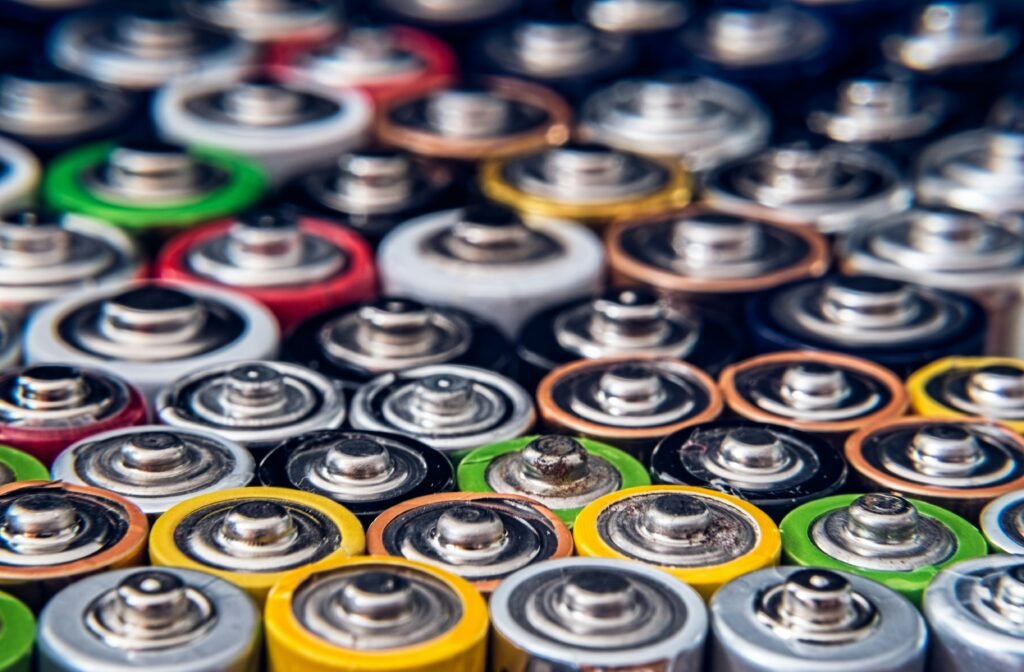
The 1.5-volt battery is the most common battery type used in everyday household devices — from TV remotes and flashlights to smoke detectors and children’s toys. Despite being ubiquitous, many people are unsure of the exact voltage, dimensions, and differences between AA, AAA, C, and D batteries. This guide explains everything: what a 1.5V battery is, the exact voltage of AA and D batteries, precise AA battery dimensions, a full battery sizes chart, and the difference between alkaline and lithium 1.5V batteries.
For rechargeable lithium-ion batteries, N battery sizes, LR44 and E90 equivalents, and LICB specialty batteries, see our article on rechargeable li-ion batteries, N battery, LR44, E90, LICB, and specialty battery guide.
What Is a 1.5V Battery?
A 1.5-volt (1.5V) battery is a battery that produces a nominal voltage of 1.5 volts in its fully charged or fresh state. This is the standard voltage for most common household battery sizes including AA, AAA, C, and D. The 1.5V designation refers to the electromotive force (EMF) the battery provides — it is the electrical pressure that drives current through a device. As a battery discharges, its voltage drops gradually from 1.5V toward 0.9-1.0V, at which point most devices stop functioning reliably.
What Chemistry Makes a 1.5V Battery?
| Chemistry | Nominal Voltage | Common Examples |
| Alkaline | 1.5V | Duracell, Energizer, Rayovac AA/AAA/C/D |
| Carbon-zinc (zinc-carbon) | 1.5V | Budget/store brand batteries |
| Lithium iron disulfide | 1.5V | Energizer Ultimate Lithium AA/AAA |
| Silver oxide | 1.5V | Button cells: LR44, SR44, AG13 |
| Zinc-air | 1.4-1.45V | Hearing aid batteries (slightly under 1.5V) |
Note: Lithium-ion (Li-ion) rechargeable batteries have a nominal voltage of 3.6-3.7V per cell — they are NOT 1.5V batteries. When people refer to ‘1.5V rechargeable batteries,’ they mean either NiMH rechargeable AA/AAA batteries (which are actually 1.2V nominal, slightly below 1.5V) or newer USB-rechargeable AA batteries that use a built-in boost converter to deliver a constant 1.5V output.
AA Battery Voltage — How Many Volts Is an AA Battery?
An AA battery has a nominal voltage of 1.5 volts when fresh and alkaline. Here is what that means in practice:
| AA Battery State | Voltage |
| Fresh alkaline AA | 1.5V to 1.65V (slightly above nominal when brand new) |
| Partially discharged | 1.3V to 1.4V (device usually still functions) |
| Nearly depleted | 1.0V to 1.2V (device may malfunction or shut off) |
| Depleted | Below 1.0V (device will not function) |
| Lithium AA (fresh) | 1.8V (higher initial voltage; stabilizes to 1.5V quickly) |
| NiMH rechargeable AA | 1.2V nominal (slightly lower than alkaline 1.5V) |
Does AA Battery Voltage Matter for Devices?
Most devices designed for AA batteries are engineered to work across the full discharge range of an alkaline AA — from 1.65V (fresh) down to about 1.0V (depleted). The nominal 1.5V is the midpoint voltage used in device specifications. High-drain devices like digital cameras, gaming controllers, and LED flashlights are more sensitive to voltage drop and may stop working at 1.2V even though the battery still has some charge remaining. Low-drain devices like clocks and TV remotes continue working nearly until the battery is fully depleted.
Volts of a AA Battery vs AAA Battery
Both AA and AAA batteries have the same nominal voltage of 1.5 volts. The difference is not voltage — it is size and capacity. An AA battery is larger and holds significantly more energy (typically 2,500-3,000 mAh for alkaline) than an AAA battery (typically 1,000-1,200 mAh for alkaline). This means an AA battery will power a device for longer than an AAA battery, but both deliver the same 1.5V to the device.
D Battery Voltage — How Many Volts Is a D Battery?
A D battery has a nominal voltage of 1.5 volts — the same as AA and AAA batteries. The D battery (also known as D cell) is simply a much larger battery with far greater energy capacity, not a higher-voltage battery.
| Battery Size | Voltage | Capacity (typical alkaline) |
| AAA | 1.5V | 1,000-1,200 mAh |
| AA | 1.5V | 2,500-3,000 mAh |
| C | 1.5V | 7,000-8,000 mAh |
| D | 1.5V | 12,000-18,000 mAh |
| N | 1.5V | 800-1,000 mAh |
| 9V | 9V | 550-600 mAh |
What Are D Batteries Used For?
D batteries are used in high-drain or long-duration devices that need a large reservoir of energy: large flashlights and lanterns (especially camping and emergency lights), boom boxes and portable radios, large toys and ride-on vehicles, emergency backup lighting, and some medical devices. The D cell’s large physical size allows it to hold 4-6 times more energy than an AA battery at the same 1.5V, making it ideal wherever long battery life matters more than compact size.
D Cell Battery Size and Dimensions
The D cell battery has standardized dimensions defined by ANSI and IEC standards:
| Dimension | D Cell (D Battery) Measurement |
| Diameter | 33.2 mm (1.307 inches) |
| Height/Length | 61.5 mm (2.421 inches) |
| Weight (typical alkaline) | ~160 grams (5.6 oz) |
| IEC designation | LR20 (alkaline) / R20 (carbon-zinc) |
| ANSI designation | D / E95 (alkaline) |
AA Battery Dimensions — Exact Size of AA Battery
The AA battery is the most commonly used battery size in the world. Its dimensions are standardized by ANSI and IEC:
| Dimension | AA Battery Measurement |
| Diameter | 14.5 mm (0.571 inches) |
| Height/Length | 50.5 mm (1.988 inches) |
| Weight (typical alkaline) | ~23 grams (0.81 oz) |
| IEC designation | LR6 (alkaline) / R6 (carbon-zinc) |
| ANSI designation | AA / MN1500 / E91 |
| Terminal type | Button positive (+) top; flat negative (-) bottom |
AA Battery Volume
The AA battery’s volume can be calculated from its cylindrical dimensions: diameter 14.5mm (radius 7.25mm) and height 50.5mm. Volume = π × r² × h = 3.14159 × 7.25² × 50.5 = approximately 8,340 cubic millimeters (8.34 cm³ or 0.509 cubic inches). This compact volume combined with its 2,500-3,000 mAh energy density makes the AA one of the most energy-dense affordable battery formats available.
Complete Battery Sizes Chart — All Common 1.5V Sizes
| Size | Voltage | Diameter | Height | Capacity (mAh) | IEC |
| AAA | 1.5V | 10.5 mm | 44.5 mm | 1,000-1,200 | LR03 |
| AA | 1.5V | 14.5 mm | 50.5 mm | 2,500-3,000 | LR6 |
| C | 1.5V | 26.2 mm | 50.0 mm | 7,000-8,000 | LR14 |
| D | 1.5V | 33.2 mm | 61.5 mm | 12,000-18,000 | LR20 |
| N | 1.5V | 12.0 mm | 30.2 mm | 800-1,000 | LR1 |
| A | 1.5V | 17.0 mm | 50.0 mm | 2,200-2,400 | LR23* |
Note: The ‘A’ size battery is uncommon in consumer products — it is primarily used in sub-C battery packs for power tools. The N battery is small like AAA but shorter. All sizes listed deliver 1.5V nominal voltage regardless of physical size.
1.5V Lithium Battery vs Alkaline — What Is the Difference?
Both lithium and alkaline batteries in AA and AAA sizes nominally deliver 1.5V, but there are important differences:
| Factor | Alkaline 1.5V | Lithium 1.5V |
| Initial voltage | 1.5V-1.65V | 1.7V-1.8V (levels quickly) |
| Discharge curve | Gradual voltage drop | Flat — stays near 1.5V longer |
| Capacity | 2,500-3,000 mAh (AA) | 3,000-3,500 mAh (AA) — ~33% more |
| Weight | Heavier | Lighter — about 1/3 lighter |
| Temperature range | -20°C to 54°C | -40°C to 60°C |
| Shelf life | 5-10 years | 15-20 years |
| Price | Low | 2-4x more expensive |
| Best for | Everyday devices; remotes; clocks | High-drain devices; extreme temps; long storage |
1.5V Coin Cell Battery
Coin cell batteries (also called button cells) at 1.5V use silver oxide chemistry. Common 1.5V coin cells include the LR44 (AG13), SR44, LR41 (AG3), and similar sizes. These are used in watches, small calculators, hearing aids, key fobs, and medical devices. The LR44 is the most common 1.5V coin cell — it measures 11.6mm diameter × 5.4mm height. Silver oxide coin cells (SR prefix) hold their voltage more consistently than alkaline coin cells (LR prefix) and are preferred for precision devices like watches.
How to Read Battery Labels — Understanding Battery Designations
Battery labels use a combination of size letters, chemistry codes, and IEC/ANSI designations that can be confusing. Here is a quick reference:
- LR prefix (e.g., LR6, LR03): L = alkaline (lithium-manganese), R = round cell — these are standard alkaline batteries
- SR prefix (e.g., SR44): S = silver oxide — used in precision coin cells
- CR prefix (e.g., CR2032): C = lithium manganese dioxide — common in electronics; 3V not 1.5V
- R prefix without L (e.g., R6): Carbon-zinc (cheaper, lower capacity than alkaline)
- Number codes: LR6 = AA; LR03 = AAA; LR14 = C; LR20 = D; LR1 = N
- ANSI codes: MN1500 = AA alkaline; MN2400 = AAA alkaline; MN1400 = C alkaline; MN1300 = D alkaline
For rechargeable lithium-ion batteries, N battery, coin cell equivalents, and specialty batteries like LR44, E90, and LICB, see our article on rechargeable li-ion batteries, N battery, LR44, E90, LICB, and specialty battery guide.
For battery safety and proper disposal information, see Call2Recycle — battery recycling locator. For battery specifications and standards, see Energizer — battery reference guide.
For smoke detector battery types including 9V and how to replace them, see our article on smoke detector battery guide — what battery, how to change, and how long they last.
Battery Safety, Storage, and Disposal Guide
Proper battery handling extends their life and keeps your household safe. For storage: keep batteries in a cool, dry location — heat accelerates self-discharge and can cause leakage. The ideal storage temperature for alkaline batteries is between 50°F and 70°F (10-21°C). Do not store batteries in the refrigerator — condensation can damage them. Store batteries in their original packaging or a dedicated battery organizer; loose batteries rattling together can short-circuit if terminals touch. Remove batteries from devices you will not use for a month or more — old batteries left in devices frequently leak, causing corrosive damage to battery contacts. For disposal: alkaline AA, AAA, C, and D batteries are not classified as hazardous waste in most US states and can be disposed of in regular household trash. However, recycling is strongly encouraged — Call2Recycle drop-off locations accept household batteries at thousands of retail locations nationwide including Home Depot, Lowe’s, and Best Buy. Lithium batteries (including Li-ion from phones and laptops) and 9V batteries should always be recycled, not trashed. Tape the terminals of 9V batteries before disposal — the two terminals close together can spark if they contact metal in a trash bag. Never puncture, crush, or expose batteries to fire — all battery types can release harmful chemicals or ignite if physically damaged. If a battery leaks inside a device, wear gloves, wipe the contacts with a cotton swab dipped in vinegar (for alkaline leaks) or baking soda solution, allow to dry completely, then test the device. Corroded contacts can often be restored; heavily corroded battery compartments may need professional repair or the device should be replaced.
Understanding battery chemistry and sizing helps you buy the right battery the first time, avoid wasting money on the wrong type, and ensure your devices get reliable power. The guidance above applies to the vast majority of common household battery purchases — for unusual or specialty sizes not covered here, check the device manual which will list the exact battery designation needed.
Choosing the Right Battery — Alkaline vs Lithium vs Carbon-Zinc
With so many battery options on shelves, choosing correctly saves money and frustration. Alkaline batteries are the best value for most everyday applications — TV remotes, clocks, flashlights, toys, and most household devices. Duracell and Energizer are the gold standard; store-brand alkalines from Costco (Kirkland), Walmart (Great Value), and Amazon Basics are manufactured to similar specifications and offer strong value. Lithium primary batteries (Energizer Ultimate Lithium, Energizer Lithium) are worth the premium cost in four specific situations: devices stored for long periods without use (emergency supplies, seasonal items), devices used in extreme cold below -20°C such as outdoor cameras and flashlights, high-drain devices where lithium’s flat discharge curve delivers better performance (digital cameras, LED flashlights, gaming controllers), and smoke detectors where the 15-20 year shelf life provides maximum reliability. Carbon-zinc batteries (the plain R6 or R03 designation without L prefix) are the cheapest option — they have lower capacity and shorter shelf life than alkaline and are best avoided unless cost is the absolute priority and the device is low-drain (basic clocks, simple toys). They perform poorly in cold and high-drain applications. For rechargeable needs: NiMH rechargeable AA (Panasonic Eneloop) makes the most economic and environmental sense for any device you use frequently. The upfront cost pays back quickly — a set of four Eneloop AAs at $15 replaces dozens of alkaline packs over their 2,100-cycle lifespan, saving both money and the environmental cost of disposing hundreds of single-use batteries. The 1.2V output of NiMH versus 1.5V for alkaline rarely causes device compatibility issues in practice — the vast majority of 1.5V devices function normally with 1.2V NiMH rechargeables.
Bottom Line
| What is a 1.5V battery? | Standard household battery voltage — AA, AAA, C, D all deliver 1.5V |
| AA battery voltage | 1.5V nominal; fresh alkaline may read 1.5-1.65V |
| D battery voltage | 1.5V — same as AA; just larger with much more capacity |
| AA battery dimensions | 14.5mm diameter × 50.5mm height; IEC code LR6 |
| D cell dimensions | 33.2mm diameter × 61.5mm height; IEC code LR20 |
| AAA voltage | 1.5V — same as AA; smaller with less capacity (1,000-1,200 mAh) |
| Alkaline vs lithium 1.5V | Lithium lasts longer, works in extreme temps, costs more |
| 1.5V coin cell | LR44 (AG13) most common; silver oxide best for watches |
| Battery size chart | AAA→AA→C→D: all 1.5V, increasing in size and capacity |
Frequently Asked Questions
What is a 1.5V battery?
A 1.5-volt battery is a battery with a nominal output voltage of 1.5 volts — the standard voltage for most common household battery sizes including AA, AAA, C, and D. Despite their different physical sizes, all of these battery types deliver the same 1.5V to devices. The difference between sizes is not voltage but capacity: a D battery holds about 12,000-18,000 mAh compared to an AA’s 2,500-3,000 mAh, meaning the D battery powers a device much longer at the same voltage. Battery chemistry (alkaline, lithium, or carbon-zinc) affects performance and lifespan but all common 1.5V chemistries deliver the same nominal 1.5V output.
What is the voltage of an AA battery?
An AA battery has a nominal voltage of 1.5 volts. A fresh alkaline AA may measure slightly above this — typically 1.5V to 1.65V — before any load is applied. Under load during normal use, the voltage settles to approximately 1.5V. As the battery discharges, the voltage gradually drops: at 1.3V the battery is partially depleted but most devices still function; at 1.0-1.2V the battery is nearly depleted and devices may malfunction. Lithium AA batteries (like Energizer Ultimate Lithium) maintain closer to 1.5V throughout most of their discharge cycle, which is one reason they outperform alkaline batteries in high-drain devices.
How many volts is a D battery?
A D battery has a nominal voltage of 1.5 volts — exactly the same as AA and AAA batteries. The D battery’s large physical size does not indicate higher voltage; it indicates higher energy capacity. A typical alkaline D battery holds 12,000-18,000 milliamp-hours (mAh) of charge compared to about 2,500-3,000 mAh for an AA battery. This means a D battery can power the same device 5-7 times longer than an AA battery, while delivering identical 1.5V. D batteries are used in devices that need long battery life rather than compact size, such as large flashlights, lanterns, and portable radios.
What are the dimensions of an AA battery?
The standard AA battery measures 14.5 millimeters (0.571 inches) in diameter and 50.5 millimeters (1.988 inches) in height. These dimensions are defined by ANSI and IEC standards and are consistent across all manufacturers — a Duracell AA and an Energizer AA are the same physical size. The AA battery uses a button positive (+) terminal on top and a flat negative (-) terminal on the bottom. Its IEC designation is LR6 (for alkaline) and its common ANSI designations include AA, MN1500, an